APS outlines wildfire mitigation upgrades and public-safety power shutoff plans affecting Show Low
Loading...
Summary
APS officials described vegetation management, grid hardening, cameras and a new public-safety power shutoff (PSPS) protocol that could affect two feeders serving Show Low, and said PSPS events would be rare, forecastable and targeted.
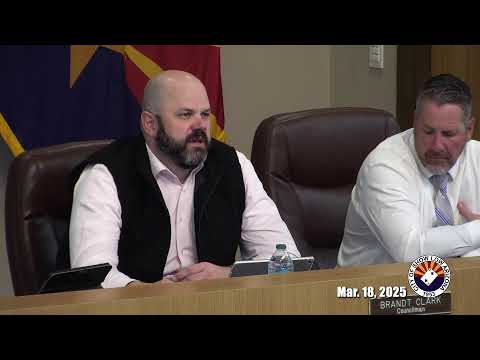
APS representatives told the Show Low City Council on March 18 that the utility has expanded wildfire mitigation work across northern Arizona and is prepared to use public-safety power shutoffs (PSPS) as a last-resort tool in extreme conditions.
The presentation, led by Joe Weathersby, northeast division manager for Arizona Public Service (APS), and Janet Dean, APS northeast public affairs manager, outlined a multi-pronged approach that includes vegetation management, pole-focused defensible-space work, hazard-tree removal beyond rights-of-way, grid hardening (including non-reclosing devices during fire season), non-expulsion fusing, pole mesh wrapping, increased patrols using drones and helicopters, and AI-linked camera detection.
Why it matters: APS officials said the measures are intended to reduce the chance that utility infrastructure sparks or spreads wildfires. The new PSPS protocol specifically could cut power to targeted lines in extreme conditions to avoid ignition when weather modeling, fuel moisture and other indices indicate heightened fire risk.
Weathersby described the utility's long-running vegetation program and recent technology upgrades, saying APS now treats thousands of poles with a defensible-space approach and has installed devices that change reclose behavior during fire season. "During fire mitigation season, we turn it to what we call one shot. It won't reclose three times," he said. He also described mesh pole wrapping that delays fire impact on wooden poles and newer fuse technology intended to avoid emitting sparks to the ground.
Dean emphasized detection and forecasting capabilities, including AI cameras and meteorological modeling, and said PSPS is a last-resort tool. "This PSPS is truly a last tool in our toolbox," she said, adding that APS has meteorologists and fire scientists who monitor conditions and that federal and state partners have access to APS camera feeds.
APS said the utility has identified about 250 feeder lines considered high-risk and trialed PSPS on 13 feeders last year; the program has been expanded to 65 feeders this year. Dean said two feeders in Show Low are among lines APS has identified as at-risk and that the impact if a PSPS were called would be "targeted," not wholesale across northern Arizona. She specified that the airport feeder is not included but two Deuce-area feeders could be affected.
APS described the PSPS decision timeline it expects to use: early forecasting days in advance, increased coordination with county emergency managers about five days out, direct communication to potentially affected customers about four days before an event, and repeated messaging leading up to any shutoff. APS estimated that, based on a historical review, PSPS events in Northern Arizona would be rare and that an average event might last about 20 hours, though the utility said it could not guarantee that length and that complex restoration or damage could extend outages.
Council members asked for clarification about reclose behavior, the metrics APS uses to change operational posture, and how targeted maps and customer lists will be finalized. Dean said APS would deliver more detailed customer lists in the coming weeks and is coordinating with local public-information officers and emergency managers. "About five days in advance I'm probably going to be talking to our County Emergency Managers because they're a key partner," she said.
APS said it will continue outreach, mailers, and partner meetings (including attending a White Mountain Fire Preparedness meeting) and encouraged residents to sign up for APS and county alert systems. The utility also offered to attend local community meetings and said staff would be available for questions.
Ending: Council members thanked APS for the briefing and stressed the need for continued coordination with city departments and emergency managers. APS reiterated that PSPS is a data-driven, last-resort action and that the utility believes the combination of mitigation measures will reduce wildfire risk and the need for shutoffs.