Get Full Government Meeting Transcripts, Videos, & Alerts Forever!
Get email alerts on the Vital Records topic
No spam. Unsubscribe anytime.
Committee lays over bill to modernize Minnesota marriage records and fees
Summary
Senate File 1409, sponsored by Senator Mann, would allow remote marriage applications, eliminate a premarital education reduced‑fee option and create a county‑level correction process for marriage records; the committee laid the bill over to resolve fee reallocation and cross‑committee language.
Senate File 1409, a bill to modernize Minnesota's marriage records statutes, received testimony on March 19 and was laid over by the Senate Judiciary and Public Safety Committee for further coordination on fee language and related bills.
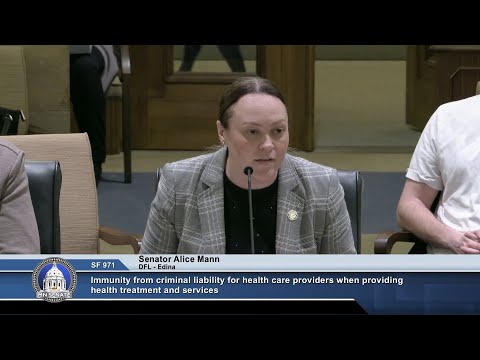
Senator Mann described the bill as streamlining marriage record provisions: permitting remote marriage applications, consolidating officiant definitions and creating an administrative correction process for marriage records. "Allowing couples to apply remotely... makes it more accessible and convenient," Senator Mann said.
County registrars and statewide advisory committees supported the changes. Wendy Levitt, who works with marriage records in St. Louis County, told the committee that remote applications adopted during the COVID pandemic improved accessibility and that the premarital education reduced fee is difficult to administer. "By eliminating the reduced fee option, we can increase funding for programs such as the Minnesota Family Resiliency Partnership Fund," Levitt said, describing a proposed reallocation that would increase the fund's share per license.
Barbara Olsen of Hennepin County and the Vital Records Advisory Committee asked for a fee reallocation so local registrars receive a larger share to cover rising operational costs; she recommended increasing the marriage certificate fee from $9 to $20 and reallocating $30 back to local registrars. Olsen also asked for a single, equitable pathway for officiant registration after a 2023 change that introduced several pathways.
Committee counsel and members asked clarifying questions about data elements on marriage certificates (such as place of birth and prior married names), the definition of uncertified vs. certified copies, and how out‑of‑state applicants are treated. Testifiers said place of birth had been collected historically at the Department of Health's request but is no longer needed; counties currently rely on oath statements rather than routine verification of divorces before issuing licenses.
Action: Senate File 1409 was laid over for further work on fee reallocation and cross‑committee coordination; no committee recommendation to the floor was made.
Why it matters: The bill would change administrative practice for marriage licenses across Minnesota, shift fee revenue shares, and create a county process to correct errors in marriage records—changes that affect registrars, residents applying for driver licenses and passports, and state funds that receive a portion of license fees.