Get Full Government Meeting Transcripts, Videos, & Alerts Forever!
Get email alerts on the Mental Health Housing topic
No spam. Unsubscribe anytime.
Minn. bill would fund supplemental rates for Hiawatha Valley mental health housing program
Summary
Lawmakers heard testimony on House File 1358, which would let counties negotiate a supplementary services rate for up to 53 beds operated by Hiawatha Valley Mental Health Center to support staffing, retention and supportive services for people with serious mental health and substance use needs in southeastern Minnesota.
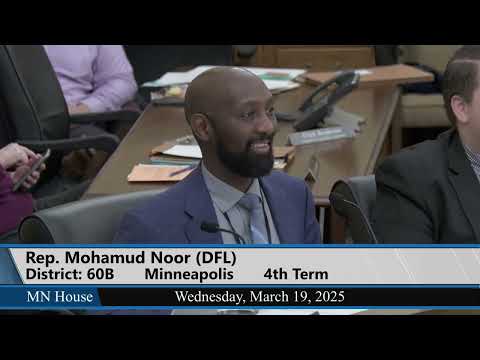
Representative Repinski introduced House File 1358 to the House Human Services Finance and Policy Committee on March 19, 2025. The bill would allow county agencies to negotiate a supplementary services rate for up to 53 beds across multiple settings operated by Hiawatha Valley Mental Health Center, a nonprofit regional provider based in Winona County.
The measure’s sponsor, Representative Repinski, said the bill is intended to provide “sustainable funding for critical services provided in Winona, Minnesota.” He described Hiawatha Valley as “the only provider in the area with this level of housing with support services.”
Eric Sievers, executive director of Hiawatha Valley Mental Health Center, testified that stable housing is critical to recovery and described the center’s regional role. “Having a stable home environment has been widely recognized as critical to recovery for both mental health and substance use disorders,” Sievers said. He told the committee Hiawatha Valley serves people from Winona and surrounding counties and that the program includes four houses and a 20-unit single-bedroom apartment facility.
Sievers said the supplemental rate funds would support staff recruitment and retention, including wage increases. He told members that in 2024 the supplemental service supported more than 21,000 services and that last year the program served “over 87 individuals” through the supplemental service; he also said some residents have stayed in program housing for decades.
Nicole Latham, a resident at Hiawatha Bluff Living Residential Program, testified by video about her experience living in the program for about two years. Latham said medication support and around-the-clock staff availability helped her regain stability: “The funding for this program has made a huge difference in my ability to heal and regain control of my life,” she said. She described having addressed substance use and mental health needs, regained employment and reconnected with family during her time in the program.
Committee members asked clarifying questions about existing county support letters and the scope of the provider’s regional service area. After testimony and questions, the committee laid House File 1358 over for possible inclusion in a future omnibus bill.
Ending: The committee did not take a final vote on policy or funding for HF 1358; the bill was laid over for possible inclusion in a future omnibus bill. Further fiscal and technical detail would be required before the committee votes on adoption or funding.