Get Full Government Meeting Transcripts, Videos, & Alerts Forever!
Get email alerts on the Paid Family Medical Leave topic
No spam. Unsubscribe anytime.
Minn. committee pores over changes to paid family and medical leave bill; debates union opt‑in, weeks and wage rate
Summary
Lawmakers spent 30 minutes questioning a bill that would reduce leave for small employers to six weeks, allow union opt‑in, expand seasonal exemptions, permit third‑party administration and set a flat 67% wage‑replacement rate. Labor representatives warned the changes could exclude workers and weaken the program’s universal floor.
Committee members on March 19 questioned proposed changes to Minnesota’s paid family and medical leave program after a bill sponsor presented House File 1976 as an attempt to modify the law passed in 2024. The sponsor said the bill would provide six weeks of paid leave for businesses with 50 or fewer employees while keeping 12 weeks for larger employers, expand seasonal‑worker exemptions from 150 to 180 days, allow third‑party administration as an option, and move to a flat 67% wage replacement rate.
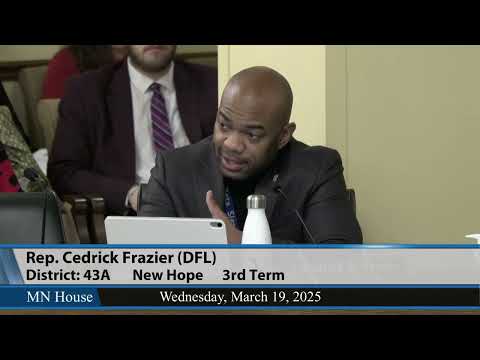
Representative Frank Frazier (committee member) told the committee he was concerned the draft would “exclude workers on the collective bargaining agreement, until they negotiate to be to opt in to the paid family leave program.” He said he feared that requiring a bilateral agreement to opt in could leave unionized workers excluded “for a long period of time, or ... in perpetuity.”
Frazier pressed that the intent of the original law was a universal floor, and noted several provisions in the sponsor’s draft that he believes may limit access for low‑income workers and seasonal employees. He said such exclusions, combined with a flat replacement rate, could make the program unaffordable in practice for those who need it most.
The bill sponsor said the changes were designed to balance benefits with program costs and small‑business realities. The sponsor told the committee that the 50‑employee threshold reflected the federal FMLA definition of a large employer and argued six weeks for smaller employers would be “a very solid program.” The sponsor also said the union opt‑in language was intended to let unions choose whether to include the state program in collective bargaining, not to exclude workers without giving them a choice, and that the sponsor planned to meet with unions and other stakeholders to refine language.
Committee members questioned the policy tradeoffs and implementation details. Representative Frazier asked whether labor groups had requested the opt‑in language; the sponsor replied it came from conversations with employers and some union members but not from collective bargaining leadership. Frazier also asked about third‑party administration; the sponsor said it was not requested by state agencies but was modeled on other states where private contractors run parts of the program under competitive bids. Frazier raised concerns that some states later increased administration costs and moved back to in‑house operation.
Members also debated the seasonal‑employee exemption. Frazier asked whether expanding the definition of “seasonal” to 180 days would exclude low‑wage seasonal workers who are likely to need the benefit. The sponsor said seasonal businesses often operate in concentrated months and that six months defines many seasonal employers in reality.
No amendment was offered on the floor during this hearing. The committee closed discussion on House File 1976 and laid the bill over for further consideration.
Why it matters: The state program, enacted in 2024, is scheduled to begin in 2026; changes now under discussion would affect who can access leave, how much wage replacement they receive and who administers claims. Committee members said they want more stakeholder conversations before moving the bill forward.