Get Full Government Meeting Transcripts, Videos, & Alerts Forever!
Get email alerts on the Public Health Updates topic
No spam. Unsubscribe anytime.
Public health officer Sarah Cody departs; county discusses H5N1 monitoring and measles travel-linked cases
Summary
Public Health Officer Dr. Sarah Cody offered closing remarks as she prepares to leave the county; the committee and staff discussed H5N1 monitoring, raw-milk testing and travel-linked measles cases and encouraged multilingual outreach.
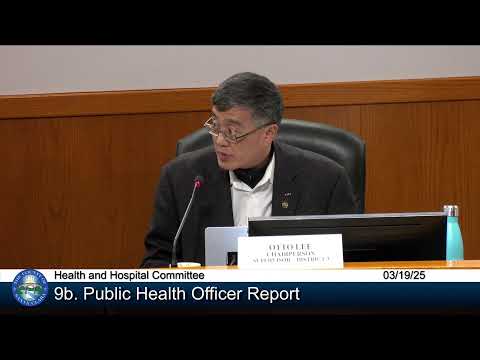
Dr. Sarah Cody, Santa Clara County Public Health Officer, addressed the Health & Hospital Committee on March 19 in remarks that included gratitude for colleagues and a summary of infectious-disease monitoring priorities as she prepares to leave the role.
Cody said county systems have tested raw milk and continue surveillance for H5N1 among animals; she said there is no documented reassortment between the emerging H5N1 strain and seasonal influenza in the county to date. She described county-level monitoring and emphasized dependence on federal and state testing to detect signals elsewhere that could affect local risk.
Committee members asked about measles. Cody noted that recent California measles cases reported this calendar year were linked to travel to Vietnam; she said county school immunization rates remain around 95 percent in most schools but warned there are small pockets with lower coverage that could permit spread if measles is introduced. She encouraged targeted multilingual public messaging for at-risk traveler and community groups and said infants traveling internationally can receive an earlier measles vaccine dose when appropriate.
Committee members thanked Cody for her leadership during the pandemic era and for 26 years of public health work in the county. Several members asked staff to use state multilingual materials and coordinate outreach to communities with travel connections to countries with active outbreaks.
Why it matters: Surveillance for emerging influenza strains and measles protection remain core public-health activities. County vaccination coverage and travel-linked importations determine local risk and outreach needs.
What’s next: The county will monitor H5N1 signals via state and federal partners, use state multilingual measles materials for targeted outreach and continue to update the committee on emerging infectious-disease threats.