Get Full Government Meeting Transcripts, Videos, & Alerts Forever!
Get email alerts on the Ems Transport System topic
No spam. Unsubscribe anytime.
Quarterly EMS report shows offload and staffing strain; committee orders system assessment ahead of transport contract renewal
Summary
The county EMS director reported persistent ambulance offload delays and staffing pressures; committee members asked for a comprehensive assessment to inform the next transport RFP and to capture local government costs now absorbed by cities and fire agencies.
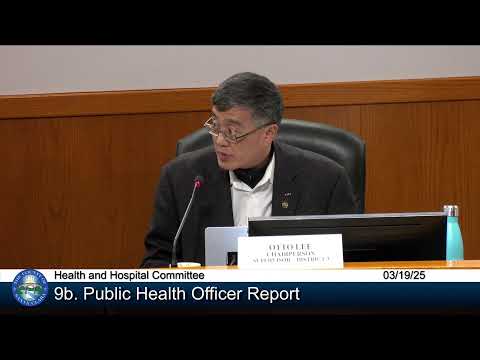
The Santa Clara County Emergency Medical Services (EMS) director presented the quarter 1, 2025 system report to the Health & Hospital Committee on March 19 and described ongoing operational strain: extended ambulance offload times, reliance on firefighters for patient transport when ambulances are unavailable, and a continuing personnel gap for paramedics.
Robert Sapien Jr., representing San Jose Fire Department, told the committee the department transported patients to hospitals 1,477 times when ambulances were unavailable and that firefighter-paramedics rode on ambulances for advanced care 1,113 times. Those additional duties, he said, strain fire department capacity.
EMS Director Nick Clay said the county has authorized a new paramedic training program with the private provider AMR and that yield from that program will take roughly nine to 10 months. He reported the county’s nurse navigation pilot is in a limited geographic footprint and will expand field referral capabilities in the coming weeks.
Committee members pressed for a comprehensive system assessment to inform the next ambulance transport procurement. Supervisors asked that the assessment enumerate costs now borne by local jurisdictions and fire agencies — for example, staff ride-alongs, rig out-of-service times, dispatch costs, and equipment provided by cities — to produce a total-cost picture for an upcoming RFP. The committee discussed timeline constraints: prior RFP experience and the need to avoid a repeat of prior failed or repeatedly amended procurement cycles.
The committee voted to receive the quarterly EMS report and to direct the assessment to include local contribution costs and other specified items; the motion passed on the record.
Why it matters: Ambulance offload delays, staffing shortages and the hidden local costs borne by cities and fire agencies shape response times and public safety. A comprehensive, transparent cost and operational assessment is intended to support a procurement that addresses those structural issues.
What’s next: EMS will continue the assessment and report quarterly; procurement staff will use the assessment to design the transport RFP ahead of the contract expiration window.