Get Full Government Meeting Transcripts, Videos, & Alerts Forever!
Get email alerts on the Religious Freedom Rfra topic
No spam. Unsubscribe anytime.
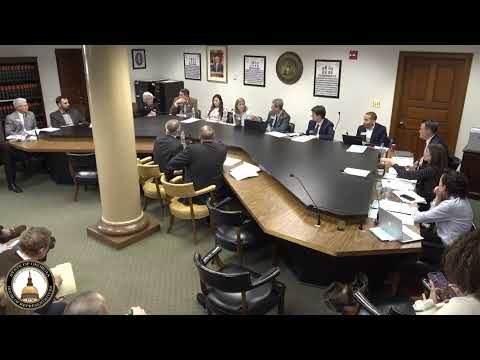
House Judiciary Committee hears SB 36, religious‑freedom bill; committee fails to advance measure after amendments
Summary
At a House Judiciary Committee hearing, legislators and more than two dozen witnesses debated Senate Bill 36, a proposed state Religious Freedom Restoration Act (RFRA) that would apply the federal RFRA’s strict‑scrutiny standard to state and local government actions.
At a House Judiciary Committee hearing, legislators and more than two dozen witnesses debated Senate Bill 36, a proposed state Religious Freedom Restoration Act (RFRA) that would apply the federal RFRA’s strict‑scrutiny standard to state and local government actions.
Senator Seltzler, sponsor of Senate Bill 36, told the committee SB 36 “protects ordinary people from unfair state and local government intrusion by exactly mirroring the bipartisan federal law,” and described the measure as a legal fix to what he called a gap left by a 1997 U.S. Supreme Court decision.
Why it matters: SB 36 would change the legal standard Georgia courts use when a person says a state or local government action substantially burdens their exercise of religion. Under current precedent cited to the committee, such claims are evaluated under a lower rational‑basis test at the state level. SB 36 would require government defendants to show a compelling interest and to use the least‑restrictive means when they impose a burden on religious exercise.
Committee testimony and positions
Supporters framed SB 36 as a narrow, legal remedy to equalize the standard of review. Lance Kinzer, an attorney with First Amendment Partnership, said the bill “matches the federal RFRA standard very carefully” and that experience in other states shows the law typically produces negotiated accommodations: “the best RFRA cases are the ones that never get brought because things do get worked out collaboratively,” he told the panel.
Religious leaders and faith organizations urged passage. Mike Griffin of the Georgia Baptist Mission Board said RIFRA “protects people of faith from government intrusion and not being forced to violate their First Amendment right of conscience.” Other supporters, including clergy from several denominations and leaders of faith coalitions, said the bill would prevent state or local officials from unintentionally or intentionally burdening religious practice.
Opponents warned the bill could be used to justify discrimination. Representative Panitch, who identified herself as the only Jewish member of the legislature, said the bill “will become a tool to those who want to discriminate against not just my faith, but other minority faiths and other people like the LGBTQ community.” Rabbi Michael Bernstein told the committee: “Faith in this very state justified slavery. Faith in this very state defended Jim Crow,” and said minority religions need protections from private and public discrimination but urged caution about a statute that could be used to permit exclusion.
Civil‑liberties groups and LGBT advocates also urged defeat or amendment. Sarah Hunt Blackwell of the ACLU of Georgia said SB 36 would “do far more harm than good” and criticized replacing the existing tiered constitutional framework with a single nationwide strict‑scrutiny test for state and local actions. Jeff Graham of Georgia Equality said the measure raised “real concerns” about the vulnerability of local nondiscrimination ordinances in jurisdictions that have adopted them.
Committee process and votes
Committee members debated several amendments. Representative Silcox offered an amendment that would have added explicit language stating the government’s compelling interests include child welfare and protections against discrimination; that amendment failed on a 6–6 tie. Legislators then considered an amendment proposed by the Georgia Municipal Association (GMA) that would require a short, mandatory notice to the local government and an opportunity to cure before a lawsuit proceeds (an “anti‑litem/notice and cure” provision). The committee accepted a version of an anti‑litem notice amendment during the hearing and proceeded to final consideration of the bill “as amended.”
Chairman Tyler Paul Smith moved a due‑pass recommendation after the hearing. On a recorded count the committee voted 5 in favor and 7 opposed; the committee therefore did not report SB 36 favorably out of the panel. Members then made and withdrew motions for reconsideration and to table; the committee left the bill in committee for further consideration.
What the bill would and would not do
- Scope: SB 36 applies to state and local government action; it does not create private‑party rights or directly change non‑governmental conduct. Supporters repeatedly emphasized the measure mirrors the federal RFRA language. Opponents warned of real‑world cases where RFRA‑style defenses have been invoked, and urged adding explicit nondiscrimination language or other safeguards. - Local ordinances: Committee testimony differed on the practical effect of the bill on local nondiscrimination ordinances. Sponsors said the bill would not preempt existing local ordinances and that those local rules would “run in parallel,” but opponents argued adding an explicit savings or non‑preemption clause would reduce uncertainty. - Legal effect: SB 36 would shift the legal test for free‑exercise claims against state or local governments from rational‑basis review to a compelling‑interest/least‑restrictive‑means standard that courts apply case‑by‑case. It does not automatically decide outcomes; the court still balances competing interests.
Next steps
Because the committee did not report SB 36 favorably, the bill remains in the House Judiciary Committee. Lawmakers and stakeholders signaled continued interest in amendments addressing nondiscrimination concerns and notice‑and‑cure procedures; supporters and opponents both said they intend to pursue further negotiations.
Ending
The hearing produced extensive testimony from faith leaders, civil‑liberties advocates and municipal officials, but the panel’s recorded vote left the bill without a committee recommendation. Lawmakers signaled the debate will continue if sponsors return the measure to the committee calendar.