Get Full Government Meeting Transcripts, Videos, & Alerts Forever!
Get email alerts on the School Budget 2026 topic
No spam. Unsubscribe anytime.
Cumberland panel weighs adding school leaders, coaches as fund balance and grant cuts constrain budget
Summary
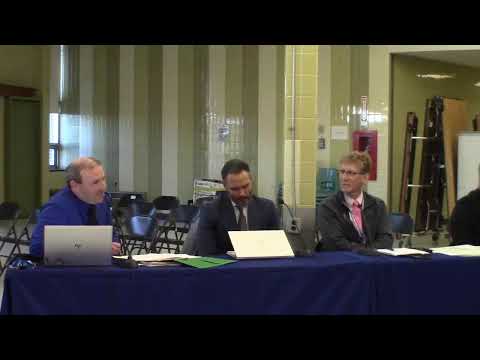
Cumberland School Committee members discussed a slate of priority staffing requests and budget pressures at a March 19 budget workshop but took no action on amending the fiscal 2026 budget.
Cumberland School Committee members discussed a slate of priority staffing requests and budget pressures at a March 19 budget workshop but took no action on amending the fiscal 2026 budget.
Superintendent Tony presented a list of positions that principals and central office leaders view as priorities if additional funding becomes available, including two additional elementary vice principals, two academic coaches (previously grant-funded), an elementary academic coach, a multilingual learner (MLL) teacher at North Cumberland Middle School, a middle‑school dean, and a district-level director of culture and student services.
The superintendent said two academic coach positions were originally added with a grant from the Rhode Island Department of Education (RIDE), but RIDE did not continue funding the positions beyond the current period. “When the grant was given, we felt as though there was a commitment on their part to help us continue and sustain the funding,” the superintendent said, and added that because RIDE pulled the funding, those coach positions did not make the proposed FY26 operating budget. Committee members were told retaining each coach would cost roughly $112,000 (top‑step teacher salary with fringes), plus health‑insurance costs depending on plan selection.
Committee members and staff discussed how each proposed position would be expected to affect operations and student outcomes. The superintendent and administrators framed the director of culture and student services as a role intended to improve student engagement, address chronic absenteeism among vulnerable subpopulations and build relationships with families; staff said the person would likely touch a large number of students districtwide. The superintendent described two additional elementary vice principals as a way to give principals more capacity to focus on academics and to help handle discipline and social‑emotional needs at the building level.
District staff said the MLL population is “approaching 300” students across the district and that the North Cumberland Middle School principal has requested an additional MLL teacher to respond to that growth. Administrators described the middle‑school dean for McCourt as intended to free building leaders to focus on academics after addressing day‑to‑day incidents, and said a high‑school curriculum coordinator position (cut in recent staffing changes) may be reimagined later as a broader role bridging middle and high school curriculum duties.
Budget constraints were a recurring theme. Finance staff reported the district’s planned use of fund balance for FY26 is approximately $1.13 million under the current plan; staff said that would bring the district’s savings down to roughly $2.0 million, which they estimated was near 3% of the operating budget and inside the district policy target range (2%–4%). The superintendent and finance director cautioned that adding recurring positions now could force deeper cuts if town or state revenue does not materialize in future years: “My one fear always would be to try to add, over add, and then in two years time when you’re out of fund balance, you have to cut everything,” the superintendent said.
Staff also reported smaller potential budget adjustments: a modest projected reduction in health‑insurance costs following favorable stop‑loss quotes (about a 3% reduction that staff estimated could free roughly $70,000), but little or no expected savings from electricity costs. The director of finance said electric costs were higher than earlier estimates because Rhode Island Energy had raised delivery charges; the most recent forecast put electricity costs at about $3.577 million instead of a hoped‑for lower figure.
Committee members and administrators discussed enrollment and tuition impacts tied to students attending an out‑of‑district program referred to in the meeting as “BVP.” Staff said the district currently budgets tuition payments for roughly 317 students at that program and was hedging forecasts at 300 students; each student returning from the program would reduce the district’s tuition payment (staff cited roughly $9,000 per student in savings) and also increase the district’s counted enrollment for state aid, producing a double benefit. Staff estimated that bringing students back from BVP could generate roughly $3 million in combined tuition savings and additional state aid if all slots returned. Lincoln School district staff (Mario Carreno) was cited as an example of another nearby district that has successfully reclaimed students by active outreach and marketing.
Other line items discussed included substitutes (a roughly $700,000 substitute budget), legal services (a historical high in a recent negotiation year that created exposure for last year’s spending), curriculum purchases that are subject to periodic state requirements and renewals (district staff said some large curriculum purchases can be amortized over multiple years), and technology and cybersecurity expenses.
Committee members did not vote on any of the staffing requests at the workshop. The committee approved the workshop agenda at the start of the meeting (motion by Mr. Bacon, second by Ms. Goldstein; vote 4–0) and later adjourned (motion by Mr. Bacon, second by Mr. Dean; vote 4–0). Staff said they expect to return with further modeling and options and noted the first Monday in April is the deadline to submit the budget to the mayor; they tentatively discussed scheduling follow‑up workshops in late March or early April so members who were not present could participate before final action.
The district asked committee members to identify any specific analyses they want modeled for the next workshop (for example, prioritizing which positions would most directly affect achievement metrics). Administrators also said some positions could be reconsidered later in the year if additional state aid or other revenue materializes.
Votes at a glance
• Motion to approve the workshop agenda — Mover: Mr. Bacon; Second: Ms. Goldstein; Outcome: approved 4–0.
• Motion to adjourn — Mover: Mr. Bacon; Second: Mr. Dean; Outcome: approved 4–0.
What’s next
Staff said they will provide more detailed modeling on which positions would touch the most students and on alternative funding scenarios, and they tentatively proposed another workshop in late March (the committee discussed March 24 and March 27 as possible dates) with a formal vote on the FY26 budget expected the first Monday in April when the budget is due to the mayor.