Get Full Government Meeting Transcripts, Videos, & Alerts Forever!
Get email alerts on the Community Enhancement Grants topic
No spam. Unsubscribe anytime.
Shelby County subcommittee considers stricter reporting, transparency for Reginald Milton Community Enhancement Grant
Summary
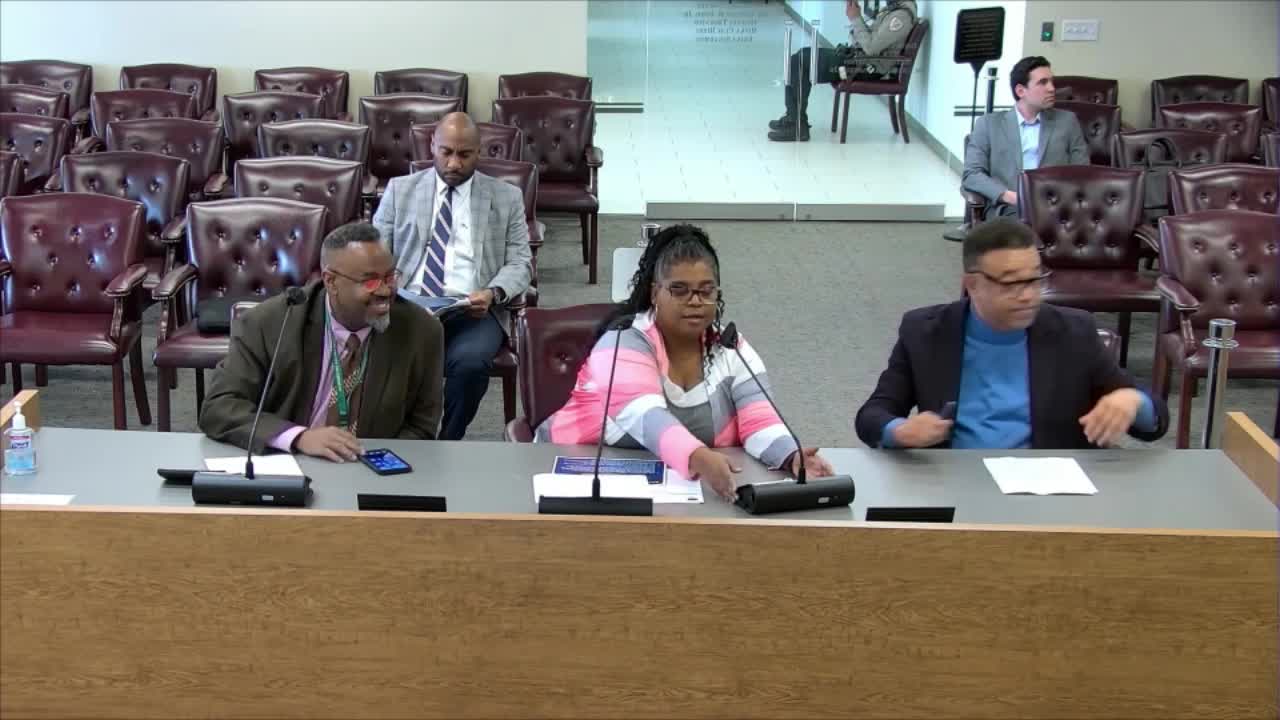
Members of the Reginald Milton Community Enhancement Grant subcommittee heard staff describe current eligibility and reporting rules and discussed requiring receipts, standardized final-report templates and clearer contract/signature workflows; the panel set a follow-up meeting for April 2.
Shelby County officials and commissioners on the Reginald Milton Community Enhancement Grant subcommittee met in March 2025 to review how the county administers roughly 280 annual awards from a program that typically draws about 439 applications, and to consider tighter reporting and transparency requirements after recent public concern about the program.
The meeting focused on program rules, oversight steps taken now and several proposed changes — including requiring receipts with final reports, publishing award lists, and clarifying which county offices sign grant paperwork. Committee members agreed to collect written recommendations by email and reconvene April 2 to draft potential changes to the program.
Tanya Blank, who identified herself as grants staff in the Shelby County administration, reviewed the program’s basic rules. She said the Reginald Milton Community Enhancement Grant was established in 2015 and renamed on Sept. 1, 2022, and that applications are submitted electronically through a platform called Flux. Eligible applicants include 501(c)(3), 501(c)(4), 501(c)(6) organizations and governmental entities, and Blank said four documents are mandatory to apply: an IRS determination letter (or charter for governmental entities), a current Tennessee solicitation letter, a one-year fiscal budget, and a budget for the funds requested. Blank said, “Invoices and receipts are requested, but they're not required.”
Blank told the panel the program’s award window runs July 1 through May 30 of the next fiscal year and that roughly 439 organizations apply annually, with about 280 receiving funding across Shelby County’s 13 commissioners. She also described the office’s vetting sequence: legal review, finance review, then return to her office before items come before the committee.
Mayor Shirley Harris told the subcommittee the administration had previously undertaken a comprehensive review of the county’s ethics chapter and prepared a slate of reforms that had not yet been brought before the full commission. Harris said changes under consideration included removing the requirement that many ethics-commission members be lawyers or retired judges and reducing the size of the ethics commission to improve functionality. She described ethics reforms as separate work the administration is willing to present to the commission.
Chief Administrative Officer Harold Collins clarified the flow of documents after commission action, saying, “After that resolution is signed, then the CAO's office is routed the packet,” indicating the resolution the commission passes is a key step in the funding process. Grants staff later clarified that the grant agreement itself is not the instrument that generates the check; the resolution that the commission votes on is the funding authorization and the grant agreement is attached to that packet.
Several commissioners pushed for changes to improve public transparency and program accountability. Suggestions included requiring grantees to attach receipts and invoices to final reports, adopting a simple standardized final-report template that captures outputs and outcomes, publishing a public list of awardees as the city does, and tightening allowable uses of funds to reduce the risk that awards are used primarily for staff bonuses rather than program services.
Commissioners also discussed whether additional branch involvement in the contract/signing workflow would strengthen checks and balances. Commissioners asked that the administration be included earlier in contract routing if it is not already, to ensure multiple offices review and sign where appropriate.
The subcommittee asked members to submit written suggestions by email in the next two weeks so the group can compile proposals and avoid “spinning wheels” at the next meeting. The subcommittee set a follow-up meeting for April 2 at 1:30 p.m. to review suggested language and consider drafting a resolution that would amend the program’s application, compliance and evaluation requirements.
No formal amendments to the grant program were adopted at the meeting; the committee directed staff and commissioners to prepare written recommendations and return to the subcommittee for further action.