Get Full Government Meeting Transcripts, Videos, & Alerts Forever!
Get email alerts on the Literacy topic
No spam. Unsubscribe anytime.
Senator presents bill to bar "3 queuing" in classrooms, add teacher-prep requirements
Summary
Senate Bill 93 would prohibit use of the '3 queuing' method as a primary tool for teaching reading and require teacher-preparation programs to align with the Early Literacy Act of 2023. The curriculum subcommittee voted to send the bill to the full committee.
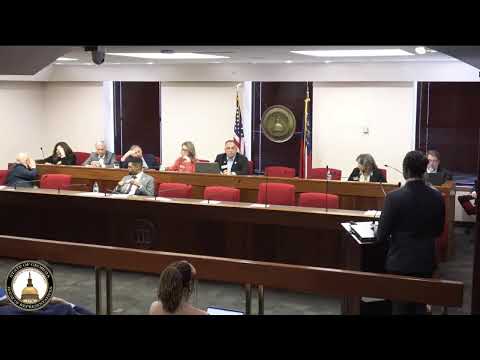
Sen. (author) introduced Senate Bill 93 to the curriculum subcommittee, saying the measure would remove the practice she called "3 queuing" from classroom use as a primary method of teaching reading and align teacher-preparation programs with the state's Early Literacy Act of 2023.
The senator told the panel "3 queuing is not aligned with the science of reading" and said sections of the bill would (1) define the practice, (2) prohibit its classroom deployment except for nonverbal students, and (3) require teacher-prep programs to teach evidence-based approaches. She said the change grew out of conversations with other legislators and the Professional Standards Commission.
Committee members asked whether the bill duplicates or conflicts with recently passed House measures on literacy. Counsel said if two bills with overlapping language become law, the provisions of the bill that becomes effective last would control. A committee member pressed whether the bill would entirely eliminate 3 queuing or allow it in limited circumstances; the author said the bill would permit use for building background knowledge and comprehension but not as a primary method for teaching decoding.
Members and witnesses also discussed special-education students. A committee member asked whether the bill would "enshrine in code" restrictions that could limit individualized plans. The author said she had worked with the Professional Standards Commission and was open to softening language to avoid negatively affecting accommodations for students with special needs.
After questions and brief discussion, the subcommittee made and approved a motion to send LC 492323S (Senate Bill 93) to the full committee by voice vote.
The bill now advances to the full committee for further consideration.