Get Full Government Meeting Transcripts, Videos, & Alerts Forever!
Get email alerts on the Traditional Foods Pemmican topic
No spam. Unsubscribe anytime.
Demonstrator shows how to make pemmican, discusses history and storage
Summary
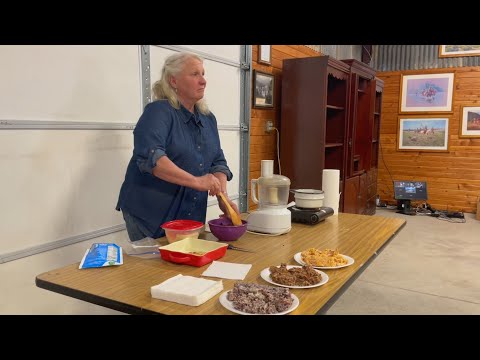
At a Weston County community gathering, a demonstrator led a hands-on session on making pemmican—three recipes were shown—and described its historical use, ingredients, preparation steps and storage qualities.
A community demonstrator (name not provided) led a session in Weston County showing how to make pemmican, a traditional high-calorie preserved food, demonstrating three recipes and offering samples to attendees.
The demonstrator said pemmican is ‘‘been called the ultimate survival food’’ and described its basic ingredients as dried meat, dried berries and fat, with optional seasonings.
The demonstrator said the food has long historical use and practical benefits. ‘‘A lot of people think that it probably came across the Bering Strait 14 Thousand Years ago,’’ the demonstrator said, adding that pemmican was one of the main foods used by Native Americans while traveling. The presenter noted Arctic explorers and fur-trade travelers used similar preserved mixes because they stored for long periods and provided high calories for people and dogs.
In the demonstration the presenter showed three variants—beef, a peanut-butter–based version and a chicken version using coconut oil—explaining that the fat (including rendered beef tallow or coconut oil) is what helps hold the mixed ingredients together once cooled. The demonstrator described preparation steps: finely chop or grind dried meat, chop dried berries (the presenter used cranberries as a substitute for more regionally common berries), mix in melted fat, press into a pan or form into patties, then let cool and set.
The presenter gave practical details: drying the meat is the longest step (‘‘half a day or a day’’), the mixture can be formed into loaves or patties, and once set it ‘‘will keep indefinitely’’ when kept dry; the demonstrator said she had samples stored for ‘‘probably 3 or 4 weeks’’ in her refrigerator and they remained usable. She also said honey, salt or other seasonings could be added for taste.
Attendees asked about fats and binding; the demonstrator advised using a fat that solidifies (beef tallow or coconut oil) rather than liquid vegetable oils. Several attendees sampled the recipes and gave informal reactions to flavors and texture.
The session closed with the demonstrator encouraging people to try smaller batches at home and take the printed recipes that were available.