Get Full Government Meeting Transcripts, Videos, & Alerts Forever!
Get email alerts on the Capes Dam topic
No spam. Unsubscribe anytime.
San Marcos Council approves $340,000 feasibility study on Capes Dam complex
Summary
The City Council voted to hire Friese & Nichols to study whether the Capes Dam complex can be rehabilitated, partially removed or fully removed. Council members emphasized public safety while asking staff to continue near‑term hazard mitigation.
SAN MARCOS, Texas — The San Marcos City Council on Tuesday approved a contract not to exceed $340,000 with Friese & Nichols Inc. to perform a preliminary feasibility study on the Capes Dam complex and related mill race.
Council members said the study will examine safety, environmental, historical and recreational aspects and return options including rehabilitation, partial removal and full removal. The vote followed hours of public comment and council discussion about safety, permitting and long‑term community benefits for the city’s East Side.
Why it matters: The Capes Dam complex is a longstanding point of contention in San Marcos. Supporters of rehabilitation say a restored site could provide a neighborhood recreational asset and preserve historical features; opponents point to environmental concerns and increasing federal scrutiny of in‑river structures. Council members repeatedly raised the immediate public‑safety risk posed by metal and debris in the river and urged staff to move quickly on interim hazard mitigation.
The study will include a conditions assessment, conceptual alternatives analysis, engineering opinions of probable cost and a permitting pathway review to identify regulatory hurdles and timing. Chance Parks, Friese & Nichols project lead, told the council the scope will assess permitting risk: “We will identify whether a given alternative is likely to get permitted, the timelines and the vulnerabilities that could result in added cost or delay.”
Councilmembers said they expect the study to yield opinions of probable cost for each alternative and to inform whether the city should pursue rehabilitation or removal. “If it turns out rehabilitation is unfeasible or unsafe, the study should tell us that,” Councilmember Scott said during debate.
Immediate safety work: Council asked staff to continue interim safety measures already underway, such as targeted debris removal and signage, while the study proceeds. Staff said about $500,000 is already allocated on the CIP for Capes Dam work; the $340,000 study would come from that allocation.
Public input and next steps: The project includes a stakeholder engagement element and at least one public workshop to present conceptual alternatives and collect feedback. Staff said permitting analyses likely will require technical modeling and could trigger further field surveys and additional cost; a field‑level hydraulic/topographic survey would carry its own budget and schedule implications.
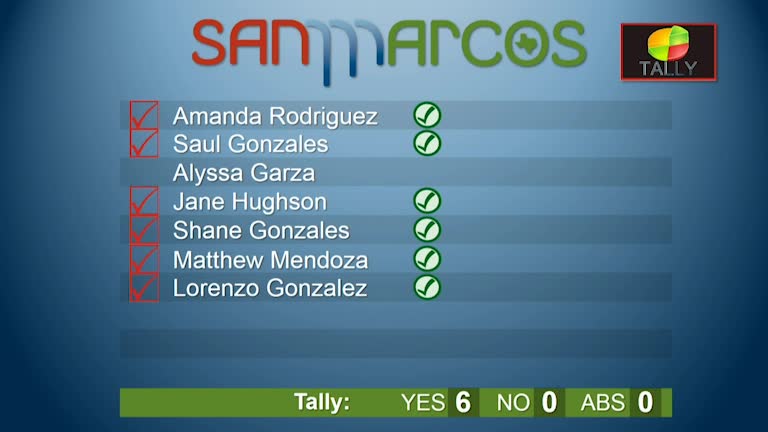
Council direction and timing: Councilmembers expressed varying preferences but a majority favored exploring rehabilitation as a primary alternative while still requiring the study to evaluate removal and other options. The contract anticipates about a 10‑month schedule for the preliminary feasibility phase, with conceptual alternatives and permitting pathways included. Councilmember Mendoza moved to approve the contract; Councilmember Scott seconded. The motion passed with six votes in favor and one absence.
What’s next: With the contract approved, staff and the consultant will begin technical assessments and public outreach. Council directed city staff to continue targeted safety work pending study results and to coordinate with Hays County and other stakeholders during the study and public engagement phases.