Get Full Government Meeting Transcripts, Videos, & Alerts Forever!
Get email alerts on the Substance Use Intervention topic
No spam. Unsubscribe anytime.
Lexington City panel hears progress and funding needs for substance abuse intervention, naloxone outreach
Summary
City program leaders told the Opioid Abatement Commission that a federal SAMHSA grant and local partnerships helped reduce fatal overdoses from 177 in 2023 to 120 in 2024, but the program needs new funding, transportation and staff to keep expanding naloxone distribution and outreach.
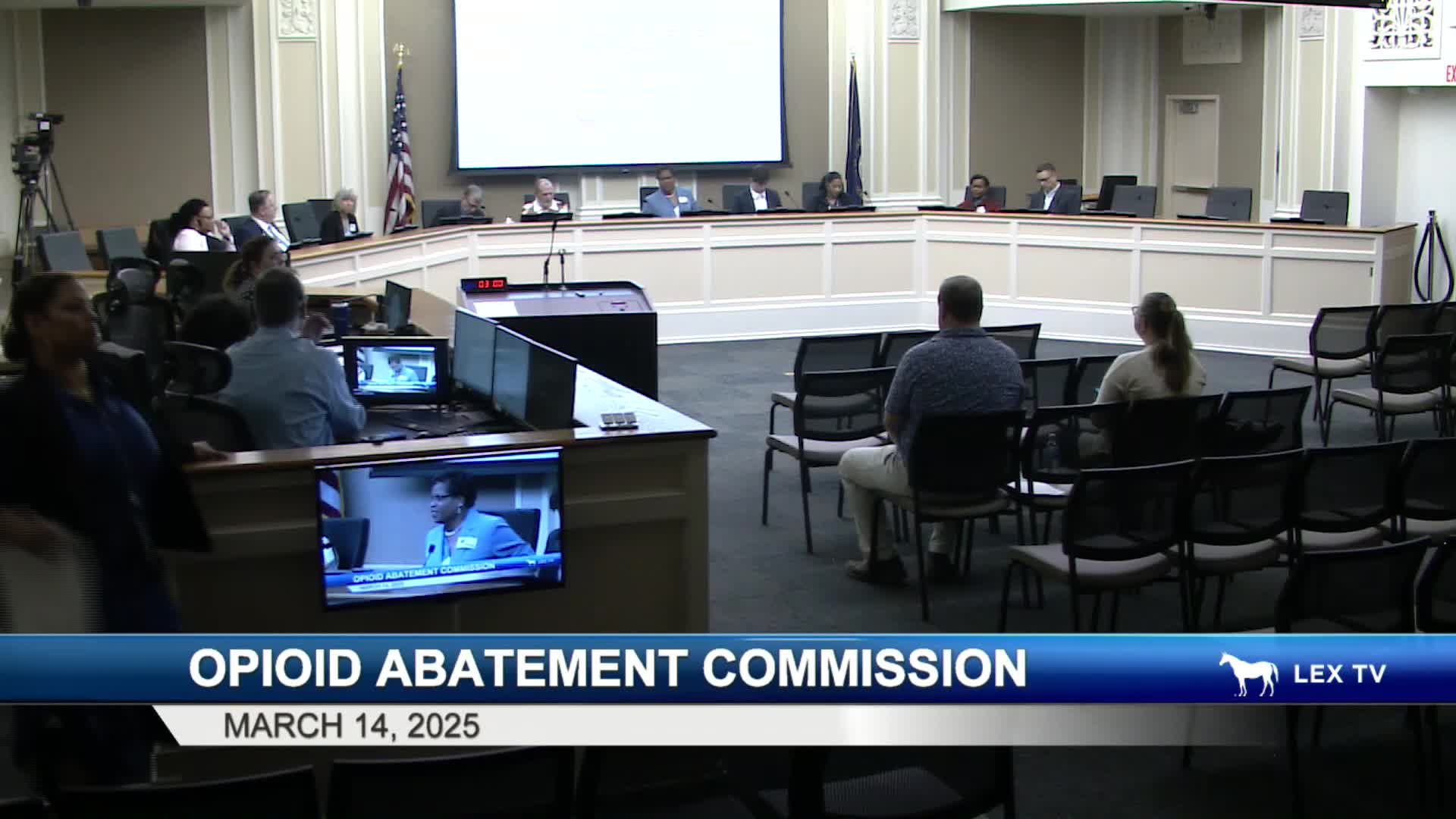
At a meeting of the Lexington City Opioid Abatement Commission, staff described the Substance Abuse Intervention Program’s outreach, distribution of naloxone and needs to sustain and expand services amid a waning federal grant.
The program presentation, delivered to the commission by program staff and outreach coordinators, said the city-run effort is funded in part by a four-year SAMHSA grant that provides naloxone, training and evaluation support; program presenters reported 177 fatal overdoses in 2023 and 120 in 2024. "We saw... about a 32 percent decrease," a presenter said while summarizing the most recent year-to-year figures.
The presentation outlined two primary goals: buy and distribute naloxone kits across the community and provide brief naloxone training to first responders and members of the public. Program staff described a "nontraditional" outreach strategy that takes naloxone and training directly to sober-living houses, recovery clubs, shelters and high-risk commercial corridors, and credited partnerships with the Fayette County Health Department, University of Kentucky partners and local paramedicine teams for expanding distribution and follow-up services.
Program staff said the current SAMHSA award totals $499,997 and is in its third year of four. They said much of the grant’s naloxone supply is parceled to community partners, and the program is exploring how to sustain efforts after the grant ends. "Our grant is $499,997," a presenter said, adding the program relies heavily on that federal funding (soft money) and is preparing to seek future funding opportunities.
Outreach coordinator Scott Lou Allen described widespread, repeated contact with sober-living homes, shelters and community organizations. "I've given out over a thousand business cards," he said, listing regular visits to the Ridge, the Schwartz Center, Recovery Café, Lexington Rescue Mission and other sites. Staff said outreach has resulted in thousands of naloxone kits distributed through a mix of health-department and program-led activity and that Scott’s direct referrals to services have increased as the outreach role expanded.
Program staff highlighted two operational gaps: transportation and staffing. They said the program does not provide transportation for individuals referred into care and that this has blocked or delayed placements; staff contrasted that with paramedicine partners who can provide transport. Presenters also said the program’s team of two cannot cover all outreach opportunities and recommended adding at least one staff member to maintain and expand activities, including an overdose review board.
The presentation also reviewed the Recovery Supportive Living Assistance (RSLA) stipend program, which program staff said now provides $500 per eligible client (up from $425 earlier) to help people entering certified recovery housing avoid predatory fees and secure placements.
Commissioners pressed for concrete recommendations and written requests. Commissioner Angela Evans urged staff to put specific ideas in writing so the commission can act on them; staff said they will continue coordinating with the mayor’s office and other work groups.
Procedural business: the commission adopted the meeting agenda, approved minutes from the prior meeting and later voted to adjourn. All motions carried by voice vote; no formal roll-call tallies were recorded in the discussion.
The commission scheduled its next meeting for April 11 and said it expects to conduct elections then. Staff said they will notify the mayor about vacancies and that at least one vacancy remains to be filled.
Program staff repeated a practical warning about fentanyl in the local drug supply and urged naloxone in the hands of community members. "We're seeing fentanyl in everything," an outreach speaker said, explaining that adulterated supplies make one use potentially fatal and that naloxone and follow-up care remain critical stopgap measures.
Commissioners and staff discussed next steps: document recommendations in writing, seek future grant opportunities with SAMHSA if available, pursue partnerships that can provide transport and consider adding staff to sustain outreach and an overdose review board. The presentation materials and commissioners’ questions captured program data, current grant status and immediate operational needs that will inform the commission’s written recommendations to the mayor.