Get Full Government Meeting Transcripts, Videos, & Alerts Forever!
Get email alerts on the Los Alamos National Laboratory topic
No spam. Unsubscribe anytime.
NNSA field office outlines LANL staffing, pit production goals, NEPA and power‑line projects
Summary
Ted Wieca, NNSA Los Alamos Field Office manager, told county council the lab expects steady FY25 funding, plans to hire roughly 1,000 staff, pursue pit production goals and advance a site‑wide EIS and electrical capacity upgrade project.
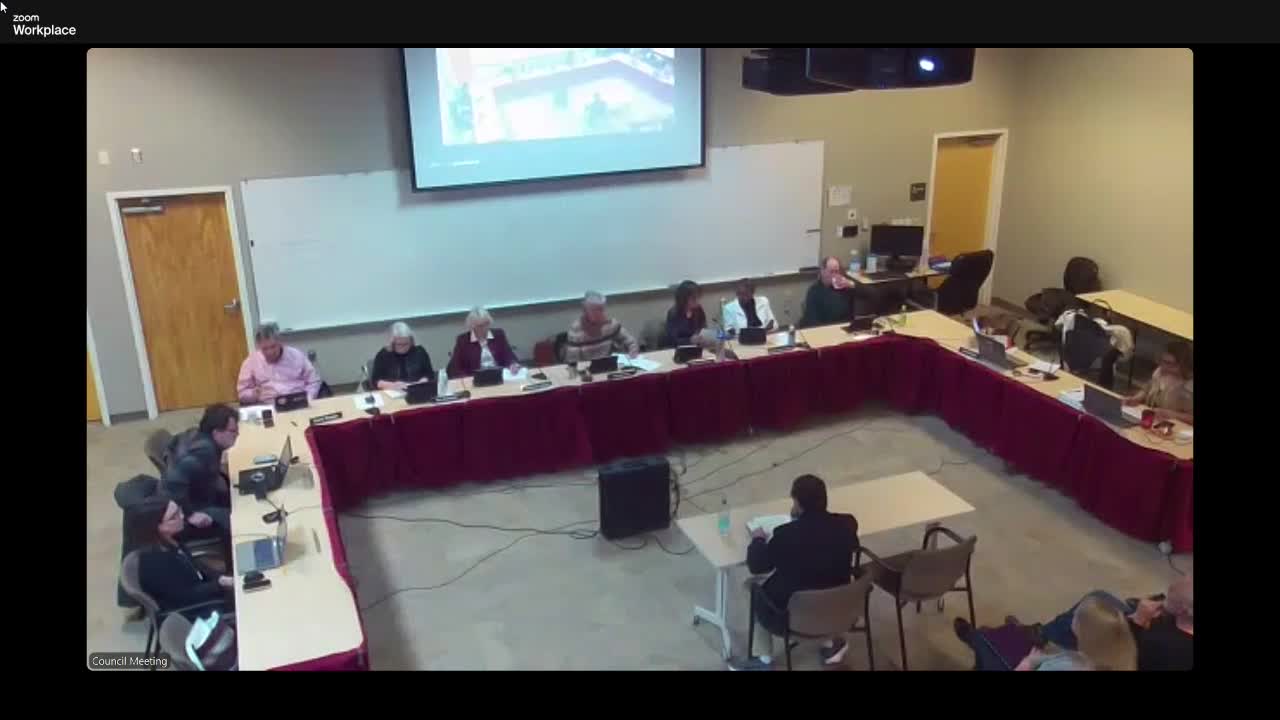
Ted Wieca, manager of the National Nuclear Security Administration(NNSA) Los Alamos Field Office, briefed the Los Alamos County Council on March 18 on staffing, mission priorities and several ongoing environmental and infrastructure projects at Los Alamos National Laboratory (LANL).
Wieca told council members that a yearlong continuing resolution for fiscal 2025 gives the laboratory budget certainty through September and that he did not see major reductions to key programs. He said LANL is shifting from workforce growth to "mission execution," and the lab projects hiring "over a thousand people" in 2025 to replace typical attrition and add roughly 100 net hires.
The field office manager reviewed national pit production goals: NNSA aims for a minimum of 80 pits per year across Savannah River and Los Alamos, with a target of at least 30 pits per year at Los Alamos by 2028. Wieca said Triad (the lab contractor) recently received a 91% performance score for delivering its first war‑reserve production unit.
On safety and operations, Wieca said the lab passed its most recent New Mexico Environment Department Resource Conservation and Recovery Act (RCRA) inspection with no violations and that operational safety improvements have supported resumption of pit production work. He also highlighted traffic‑safety efforts, including fleet monitoring and mobile speed cameras, and praised local law enforcement coordination.
Wieca described several major projects and studies. LANL is preparing a site‑wide environmental impact statement (EIS) under the National Environmental Policy Act (NEPA) to analyze potential new or expanded operations; the draft was posted in January 2025, hearings were held in February, and the public comment period was extended through April 10, 2025. He said technical briefings have been offered to Pueblos and tribes and to local governments if requested.
The laboratory is also advancing an electrical power capacity upgrade (EPCU) to add another transmission line and internal distribution upgrades. Wieca said existing Reeves and Norton lines will reach capacity by about 2027 and additional capacity is needed to support supercomputers, artificial intelligence work and accelerator facilities. He described ongoing tribal consultation and memoranda required by the National Historic Preservation Act and said some new corridor segments require additional environmental and cultural review.
On land transfer and cleanup, Wieca said NNSA is working with the U.S. Army Corps of Engineers to scope an interagency agreement and a cost estimate for additional unexploded ordnance clearance in the Rendija (redeferred transcript variants) Canyon area. The scope includes survey work to several feet depth across roughly 28 acres tied to a proposed recreational‑vehicle park and utility/road rights of way; he said contract scoping was underway.
Wieca said waste‑shipping remains a priority: the lab projects 37 transuranic shipments in the current fiscal year and continues partnership with the Department of Energy(EM) environmental management office on Area G cleanup milestones. He also summarized ongoing wildland fire mitigation work, hazard‑tree removal, equipment readiness and the TA‑49 Joint Fire Operations Center schedule.
Council members asked about federal staffing levels (Wieca said the Los Alamos field office had an FTE target of 77, was at about 75 and had 14 vacancies) and about the flanged tritium waste container processing plan (Wieca said EPA Region 6 approved an approach and coordination with New Mexico Environment Department was under way for late spring/early summer processing, subject to temperature constraints). Several councilors asked follow‑ups about the Rendija Canyon scope and the electrical project routing; Wieca said Corps contracting and tribal monitors are part of the ongoing work.
Why it matters: LANL is a major local employer and the federal field officemanages oversight for programs that affect county services, infrastructure and environmental risk. The EIS and the EPCU project carry long‑term implications for land use, cultural resources consultation and utilities planning.
Sources: Remarks by Ted Wieca at the Los Alamos County Council work session, March 18, 2025; council Q&A.