Get Full Government Meeting Transcripts, Videos, & Alerts Forever!
Get email alerts on the Education Payroll topic
No spam. Unsubscribe anytime.
Committee advances bill requiring pay‑stub details for classified school employees
Summary
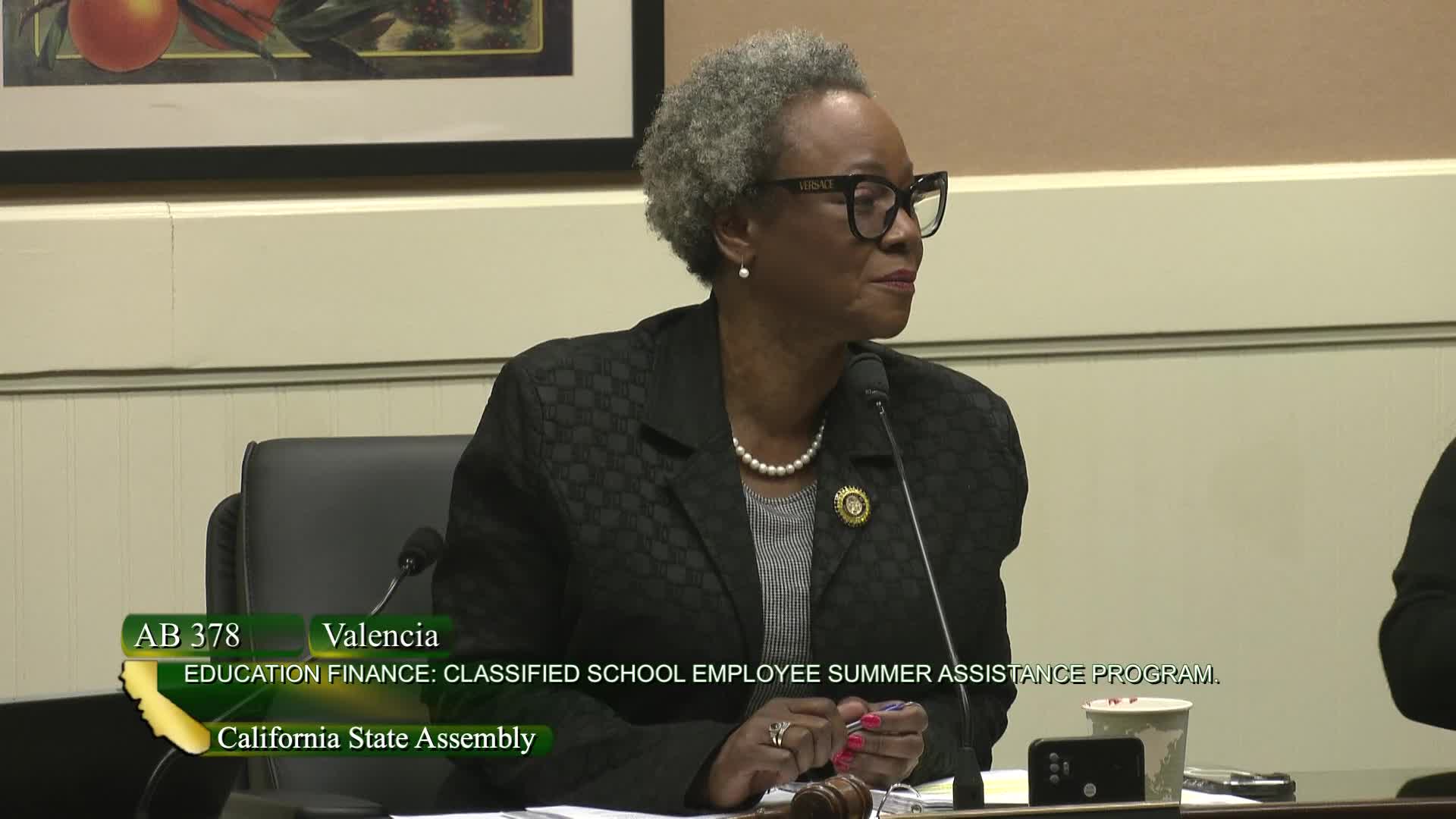
AB 374 would require districts to provide classified school employees with detailed pay‑stub information each pay period to improve transparency of wages, hours and leave balances; the committee sent the bill to Higher Education/ relevant committee with stakeholders noting implementation and technical concerns.
AB 374 would require school employers to provide classified school employees with pay‑stub details at each pay period, including hours, deductions and leave balances. The author said the requirement would provide parity with the private sector and help employees who rely on pay‑stub transparency to detect errors and plan time off.
Witnesses included classified employees and chapter leaders who described repeated payroll confusion and the administrative burden of resolving pay‑period questions. “This bill… would ensure parity for classified public school employees with their private sector counterparts by providing them with critical details necessary to decipher their paychecks,” said Zadara Clark Gunn, a San Juan Unified employee and CSEA chapter president.
Opponents, including the Association of California School Administrators, supported the bill’s intent but described unintended consequences and implementation costs. They raised questions about producing detachable pay‑stubs for employees with direct deposit, reconciling two separate time‑tracking systems, and accurate calculation across pay‑cutoff dates. The author said she would work with stakeholders to refine technical language and that districts already offering more robust online pay dashboards should not be adversely affected.
The committee voted to refer AB 374 to the Committee on Higher Education (per the clerk's announcement and scheduling practice). The hearing summary recorded the bill as passed with a six‑zero tally in the committee's final roll close.
Supporters urged passage to improve pay transparency and trust between employees and employers; administrators asked for language changes to avoid creating payroll processing errors or undue costs for smaller districts. The author committed to continue stakeholder conversations.