Get Full Government Meeting Transcripts, Videos, & Alerts Forever!
Get email alerts on the Alcohol Regulation topic
No spam. Unsubscribe anytime.
Cherokee County adopts broad amendments to alcohol and zoning ordinances
Summary
The Cherokee County Board of Commissioners unanimously adopted amendments to Chapters 6, 4 and 7 of the county code to add and align definitions for alcohol-related businesses and to update brewery and caterer provisions to match state law.
The Cherokee County Board of Commissioners on a unanimous vote adopted amendments to Chapters 6, 4 and 7 of the county code to add new definitions and to update rules governing breweries, farm and non‑farm wineries, convenience and general merchandise stores, and alcohol beverage caterers.
County staff presented the package of changes and said the edits were intended to align definitions across the county's zoning and alcohol ordinances and to incorporate existing state law provisions for breweries and caterers. "This is to make sure we have consistency between the two ordinances until we complete our Unified Development Code," the presenter said.
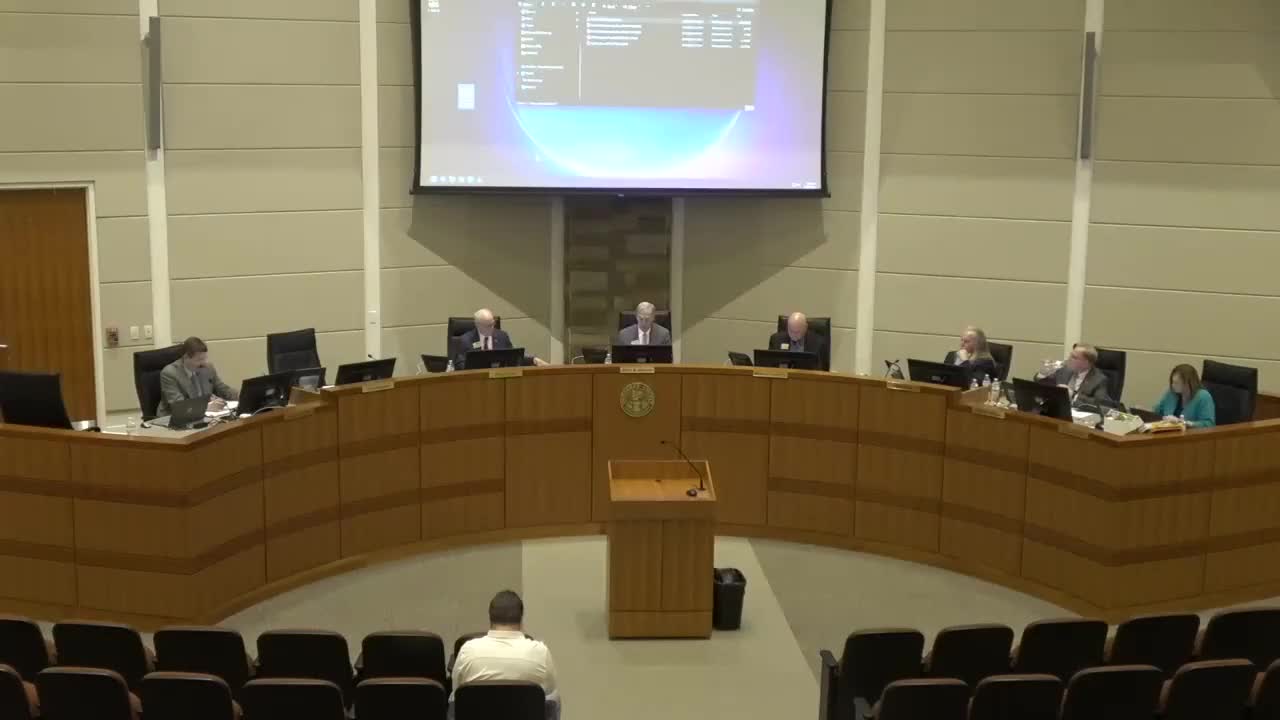
The vote followed a public hearing at which no members of the public signed up to speak. Commissioner Carter moved to adopt the amendments as presented; Commissioner West seconded. The motion carried unanimously.
The adopted changes add an "alcohol beverage caterer" provision that allows a licensed retail dealer or restaurant to obtain an add-on license to transport and sell alcohol off-premises at authorized events; require written notice to the Georgia Department of Revenue before each catered event; and require that caterers only sell the types of alcoholic beverages their primary license authorizes. The amendments also add or revise definitions for "convenience store" (retail establishment under 10,000 square feet with alcohol sales not to exceed 15% of gross floor area), "general merchandise store," "non‑farm winery" and related terms so the county's zoning tables and alcohol code use the same language.
The board also incorporated state-law limits for breweries: breweries may sell malt beverages for on-premises consumption only to persons physically present at the licensed premises and may sell only brands of which the brewery is the sole owner; off-premises sales are limited per person to 288 ounces per day and annual brewery production sales are capped at 6,000 barrels, figures taken from state statute and noted in the county's summary.
County staff indicated several wording cleanups would be made to the final published ordinance (for example, removing an accidental duplicate "to" in one sentence) before codification. The amendments will take effect as provided by county ordinance procedures.
The board recorded the action as an ordinance adoption and directed staff to finalize editorial corrections and publish the amended code chapters.