Get Full Government Meeting Transcripts, Videos, & Alerts Forever!
Get email alerts on the Long Term Care topic
No spam. Unsubscribe anytime.
Committee advances bill to move IHSS bargaining from counties to state level
Summary
AB 283 would shift collective bargaining for In‑Home Supportive Services (IHSS) providers from county to state level; supporters said the change is needed to raise wages and stabilize the caregiver workforce. The committee referred the bill to Appropriations with a recorded vote in committee.
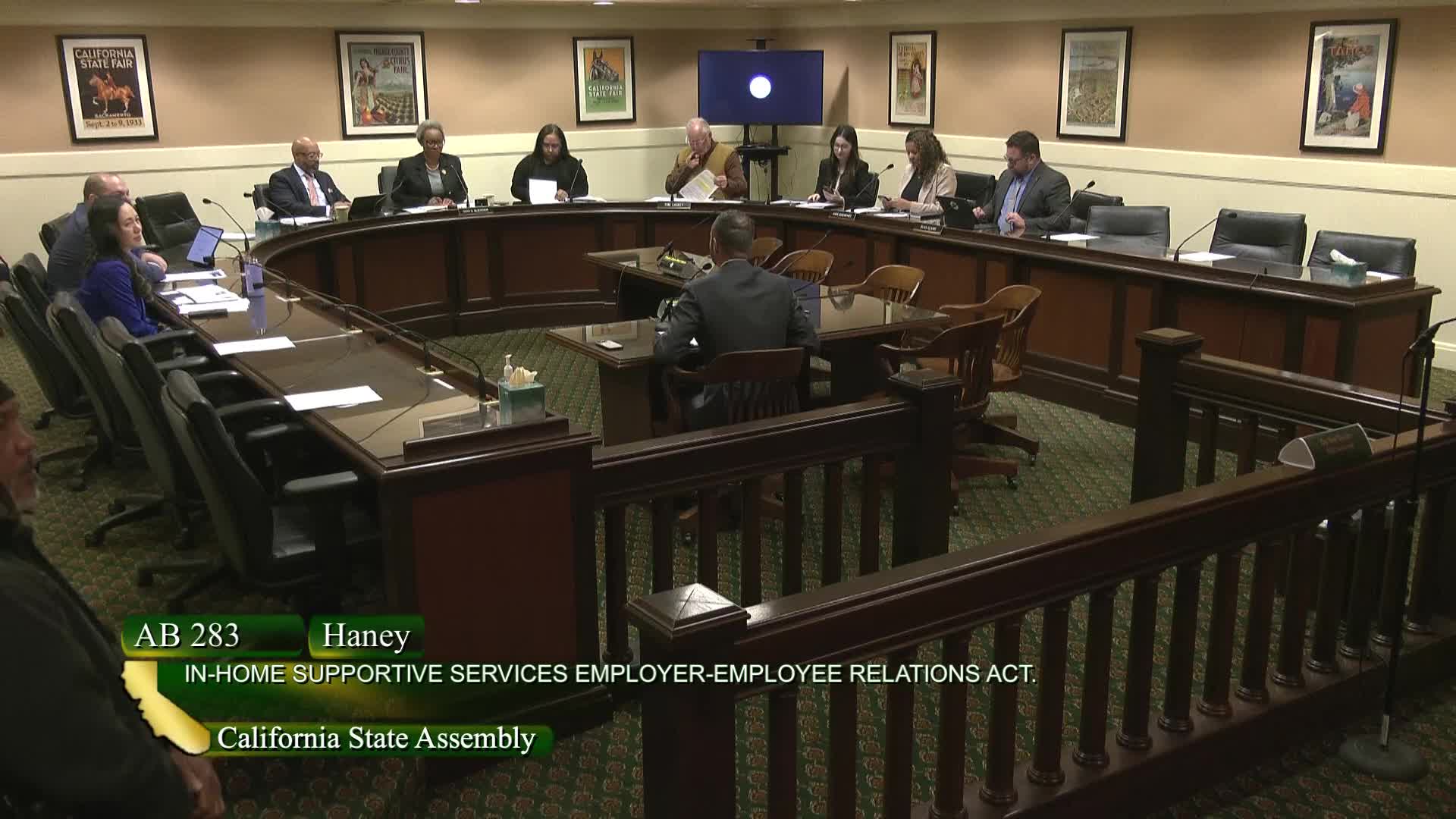
AB 283, presented by Assemblymember Haney, would transition collective bargaining for In‑Home Supportive Services providers from county bargaining to a state‑level process. Supporters said the change would allow the state to set living wages and benefits for more than 700,000 IHSS providers who serve over 800,000 recipients.
The author described a fragmented county‑by‑county bargaining system that leaves many IHSS providers with wages at or near minimum wage and said the state should step in to ensure equitable pay. “The bargaining process for in home support service providers is broken. It's cumbersome, it's outdated, and it leaves providers like me stuck in a cycle of poverty,” said Sabrina Bishop, an IHSS provider from San Diego and member of UDW, who testified in support. IHSS recipient Ronald Penn described how his provider enables him to remain at home and urged passage.
Union sponsors and multiple provider witnesses testified in support; county and public authority representatives submitted written input and one county association asked for amendments to ensure state cost‑sharing and to protect county administrative responsibilities. Justin Garrett of the California State Association of Counties described ongoing discussions and said counties recently provided suggested amendments addressing cost‑sharing and scope of representation.
During questions, members asked whether family care workers were included. The author said stakeholders were newly engaged on that issue and committed to continuing discussions with AFSCME and other parties. The committee passed a motion to refer AB 283 to the Committee on Appropriations; the committee clerk recorded the final vote as 7‑0 on the hearing summary.
Supporters said statewide bargaining could raise wages, improve retention and create a more equitable distribution of long‑term care funds; county representatives urged careful treatment of cost and scope to avoid shifting unfunded mandates to counties. The bill will be considered next by the Appropriations Committee.