Get Full Government Meeting Transcripts, Videos, & Alerts Forever!
Get email alerts on the Tourism topic
No spam. Unsubscribe anytime.
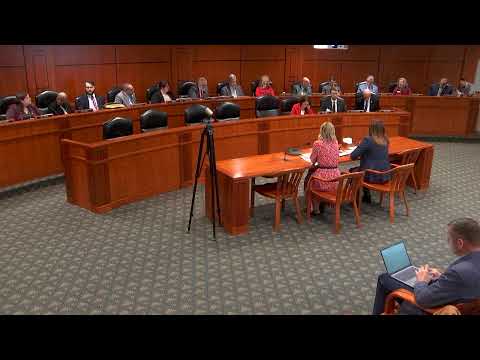
Pure Michigan officials tell House committee campaign spurs billions in visitor spending, outline 2025 plans
Summary
Representatives from the Michigan Economic Development Corporation’s Pure Michigan campaign told the House Committee on Natural Resources and Tourism that the campaign contributed to roughly $53 billion in total economic impact in 2023, outlined a partner program and 2025 media plans, and described research vendors and budget breakdowns.
Hillary Doe, chief growth and marketing officer at the Michigan Economic Development Corporation (MEDC), told the House Committee on Natural Resources and Tourism that Pure Michigan’s marketing work corresponded with roughly 28 million visitors and about $53 billion in total economic impact in 2023, according to third‑party economic analysis used by the program.
Doe said the 2023 totals break down to about $29 billion in direct visitor spending and that the campaign supports roughly 300,000 jobs across Michigan. “One of every 17 Michigan jobs is directly or indirectly related to tourism,” Doe said, citing the economic analysis the campaign uses to measure impact.
The presentation to the committee focused on Pure Michigan’s role within the MEDC’s broader Make It Michigan strategy and previewed the campaign’s creative and 2025 flight dates. Kelly, vice president of Pure Michigan, described a “video‑first” approach for the year and said the summer flight began Feb. 1 and will run through July across in‑state, out‑of‑state and national channels including connected TV, broadcast, linear TV, print, out‑of‑home, search and social.
Why it matters: the presenters tied advertising to measurable economic outcomes — visitor spending, jobs and tax revenue — and described how the campaign coordinates with local destinations and state agencies to steer promotion where communities request support.
Key data and methods
Doe and Kelly told the committee that the campaign relies on outside research firms to produce the economic estimates and campaign attribution. The presenters named Oxford Economics (Tourism Economics) as a source for the statewide impact figures and cited another firm they referred to as “Somari” for campaign attribution and traveler surveys; the presenters said that firm is based in Indianapolis and that a fuller release of the 2024/2023 analysis was expected at an upcoming tourism conference in April.
Kelly said Pure Michigan also tracks brand lift through Halo Research (described by presenters as halo research), and cited a study finding that people exposed to the campaign were more likely to view Michigan as a place they might live. The presenters described those measures as part of how the campaign evaluates return on investment.
Budget, production and partner program
Committee members asked about budgets and where campaign money is spent. Kelly said roughly 80% of the campaign budget goes to media placement and about 20% goes to production and creative costs. The presenters said budget levels can vary year to year and noted the campaign previously received some one‑time ARPA funds in recent years.
Kelly said the 2025 industry partner/co‑op program has 28 partners and a combined investment of $2.5 million for summer, fall and winter placements; the program offers a dollar‑for‑dollar match to enable both large and small destinations to participate.
Local coordination and topics raised by lawmakers
Presenters said Pure Michigan coordinates regularly with local destinations and state agencies, including monthly calls with the Department of Natural Resources (DNR). Committee members asked how the campaign supports regions hit by weather‑related downturns (for example, low snowfall in the Upper Peninsula). Kelly said the campaign can shift emphasis — increasing summer promotion, for instance — in response to local needs and that the team had stepped up summer promotion for the Upper Peninsula after a low‑snow winter.
Lawmakers also pressed the presenters on specific program elements: collaboration with the DNR (presenters said collaboration is ongoing and that the DNR has used the Pure Michigan brand for initiatives such as the Pure Michigan hunt), promotion of small “Hallmark” towns (Kelly described lower‑cost partner options aimed at smaller communities), and inclusion of fishing and hunting imagery (presenters said fishing and hunting content are part of the travel guide and online pages).
Research procurement questions
Representative Wirtz asked whether the research vendors are Michigan‑based; presenters said they issue competitive bids (an RFP every three years) but that they have not received bids from Michigan firms for the research work and that the identified firm is based outside Michigan. The presenters said they would follow up with contract details.
Formal committee action
At the start of the meeting, Representative Preston made a motion to approve the minutes from a previous meeting; the minutes were approved by unanimous consent, the committee chair announced.
Ending
Presenters said Pure Michigan will mark its 20th anniversary next year, and reiterated plans to continue working with local partners, promote both urban and outdoor destinations, and emphasize a video‑first creative strategy in 2025. Committee members thanked the presenters and raised follow‑up questions they said they would pursue with staff.
(See “Votes at a glance” and provenance below for transcript references and the committee’s formal action.)