Get Full Government Meeting Transcripts, Videos, & Alerts Forever!
Get email alerts on the Dual Enrollment topic
No spam. Unsubscribe anytime.
Colleges urge dedicated K–12 funding to expand dual enrollment and early middle college programs
Summary
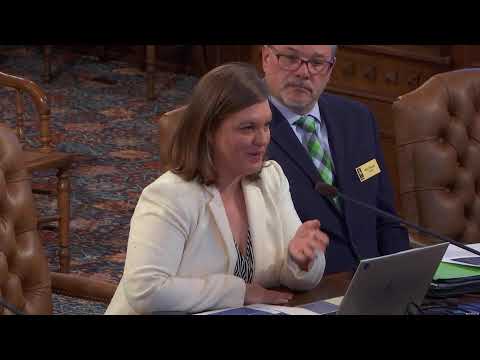
Chris Petrino, president of Gogebic Community College, and Brandy Johnson, president of the Michigan Community College Association, told the House Appropriations Subcommittee that dual enrollment and early middle college programs improve college readiness and reduce time and cost to a credential but that current funding mechanisms disincentivize K–12 participation.
Chris Petrino, president of Gogebic Community College, and Brandy Johnson, president of the Michigan Community College Association, told the House Appropriations Subcommittee that dual enrollment and early middle college programs improve college readiness and reduce time and cost to a credential but that current funding mechanisms disincentivize K–12 participation.
Petrino, who previously worked as a K–12 superintendent, said dual enrollment "gives students that option" to pursue college-level work and career exploration in high school and stressed the benefit to rural districts with limited resources. He supported proposals to provide additional funding to K–12 districts outside the foundation allowance so districts have the capacity to partner with colleges on dual enrollment and early middle college programs.
Johnson explained how dual enrollment is financed and described program variants — concurrent enrollment, CTE dual enrollment and early middle college. She said the law currently allows up to 10 dual-enrollment courses (roughly 30 credits) absent an early middle college arrangement, and that 95 percent of students who attempt a dual-enrollment course complete it. "The maximum that the state allows is, is 30 ish credits, which is a year of college credit toward a 2 or 4 year degree," she said.
Speakers and committee members identified two primary challenges: (1) funding incentives for K–12 districts when dual-enrollment costs effectively come out of a district's foundation allowance, and (2) limited statewide data on how many students reach the 10-course cap. MCCA said it convened a cross-sector work group that produced about 10 policy recommendations and recommended better data collection to determine whether the 10-course limit should be raised.
Representative Rogers asked for numbers on early middle college participation; Johnson said CEPI (Center for Educational Performance Information) holds district-level dual-enrollment participation data and that the MCCA will provide requested figures. Committee members and presenters discussed the potential for a K–14 approach that funds dual enrollment explicitly to remove disincentives for local districts, especially in rural areas where local revenues are constrained.
Why it matters: Dual enrollment and early middle college can reduce the time and cost to degrees, increase credential attainment and expand the workforce pipeline; committee consideration of funding and data collection may affect how many high school students can access college credits before graduation.