Get Full Government Meeting Transcripts, Videos, & Alerts Forever!
Get email alerts on the Healthcare Costs topic
No spam. Unsubscribe anytime.
Association of health plans outlines drivers of rising premiums, warns against new state mandates
Summary
The Michigan Association of Health Plans (MAHP) presented an overview of major medical coverage, market composition and cost drivers to the House Insurance Committee, highlighting prescription drugs (especially specialty and GLP-1 weight-loss drugs) as major upward pressures and urging caution on new state mandates that could raise premiums.
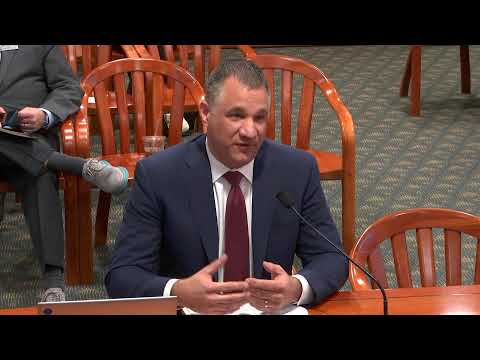
The Michigan Association of Health Plans briefed the House Insurance Committee on March 5 about the state’s major medical insurance markets, cost drivers and policy trade-offs. Dominic Malone, identified by the chair as Executive Director of the Michigan Association of Health Plans, delivered the presentation and took questions from committee members.
Malone said the association represents 11 carriers in Michigan and that industry members together cover millions of residents. He walked committee members through enrollment breakdowns — employer-sponsored coverage (just over half of Michigan residents with coverage), Medicaid managed care (about 1.9 million in managed care), Medicare enrollment growth and an expanding individual market of roughly 400,000 lives — and explained coordination-of-benefits complexity when people have multiple plans.
Malone highlighted prescription drug spending as a major driver of premium growth, saying roughly a quarter of the premium dollar goes to drugs and that specialty drugs now represent 55% of total drug expenditures. He singled out GLP-1 weight-loss medications as a fast-growing Medicaid expense and noted those drugs were becoming a top drug-category cost within Medicaid managed care. “We are seeing cost growth everywhere, but prescription drugs are now driving almost a quarter of premium costs,” Malone said.
On policymaking, Malone urged caution about passing new state mandates that add benefits, noting state mandates can increase premiums and shift costs to other payers or members. He proposed evaluating existing mandates through review processes and said his members support exploring market-based approaches to expand consumer choice and mitigate costs. Malone also advised Congress-level action to renew enhanced premium tax credits for the individual market, warning that expiration could drive up costs for individual-market purchasers.
Committee members asked about state-based exchanges, funding choices for reinsurance or subsidies, who bears the cost of mandates (insurers, employers or consumers), the relationship between mandates and uninsured populations, and the federal 340B/340B-like programs’ interactions with drug pricing and uncompensated care. Malone repeatedly stressed that costs do not disappear if a program is altered and said uncompensated care shifts expenses to commercial payers if federal or state subsidy mechanisms are changed.
The committee did not take action following the presentation. Members indicated interest in follow-up briefings on drug pricing, mandate review processes and options to increase competition in employer markets.