Get Full Government Meeting Transcripts, Videos, & Alerts Forever!
Get email alerts on the Higher Education Funding topic
No spam. Unsubscribe anytime.
Michigan community colleges urge lawmakers to sustain scholarships, boost operations and fund capital projects
Summary
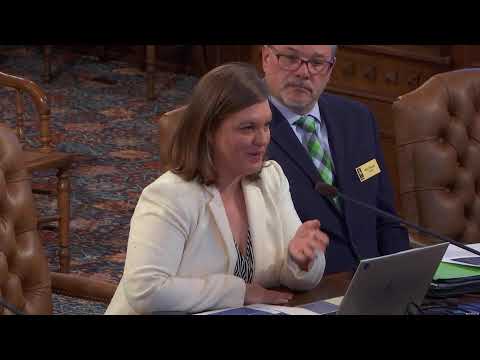
Brandy Johnson, president of the Michigan Community College Association, told the House Appropriations Subcommittee on Higher Education and Community Colleges that community colleges across Michigan rely on a mix of state, local and tuition funding and urged the legislature to sustain recent scholarship programs and increase operations and capital investment.
Brandy Johnson, president of the Michigan Community College Association, told the House Appropriations Subcommittee on Higher Education and Community Colleges that community colleges across Michigan rely on a mix of state, local and tuition funding and urged the legislature to sustain recent scholarship programs and increase operations and capital investment.
Johnson said community colleges serve more than 283,000 students statewide and that only about 23% of college revenue currently comes from state appropriations. She described the community college guarantee — a component of the Michigan Achievement Scholarship launched in fall 2024 — as a "last dollar" program that covers tuition and fees for eligible recent high school graduates who enroll full time and complete the FAFSA. "The community college guarantee, on average is saving students 2,134 dollars per year in tuition and fees and we serve over 18,000 students this year," Johnson said.
The association requested that the committee keep the Michigan Achievement Scholarship — including the community college guarantee — permanent; maintain community college operations funding with a 4% increase in the governor's FY 2026 recommendation; and continue funding Michigan Reconnect for adults. Johnson also asked the committee to support $15 million for MyLEAP student success grants and a $45 million investment for an items program for infrastructure, technology, equipment, maintenance, safety and housing.
Northwestern Michigan College President Nick Nisley described specific capital and housing projects at his campus in Traverse City and asked for authorization to pursue capital outlay planning for a centralized student services hub. Nisley said the college is converting a more-than-50-year-old power plant to greener energy, expanding an aviation hangar to increase aircraft capacity and has used last year’s legislative items appropriation to add 50 student housing beds. On the aviation program, Nisley said the state allocated $3,750,000 toward hangar expansion and that increased aircraft and hangar capacity will reduce a two-year waiting list and increase regional economic activity.
Al Poshulka, vice president for enrollment marketing and government relations at Lake Michigan College, asked the committee for an additional $50,000,000 for the post-secondary scholarship fund and urged the legislature to sustain $52,000,000 in Michigan Reconnect funding. Poshulka said Lake Michigan College has doubled first-time, full-time student enrollment over two years, and that related gains included a 14% increase in credit hours and an 11% enrollment increase.
Committee members asked presenters for more detail on capital outlay matching requirements and dual-enrollment funding. Johnson said community colleges currently face a 50% matching requirement for state capital outlay authorizations while universities face a 25% match, and she asked for parity. She also said the MCCA will provide the committee with more detailed reports and district-level data as requested.
Votes at a glance: Representative Doug Roth moved to approve the minutes of March 5; the motion met no objections and the minutes were approved by unanimous consent.
Why it matters: Committee members are considering the FY 2026 higher education budget, and presenters linked sustained scholarship funding, operations support and capital investments to workforce development, increased credential completion and regional economic activity.