Get Full Government Meeting Transcripts, Videos, & Alerts Forever!
Get email alerts on the Fentanyl Epidemic topic
No spam. Unsubscribe anytime.
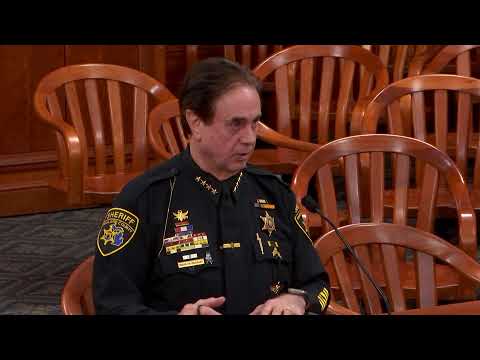
Oakland County sheriff urges Michigan lawmakers to tighten controls on fentanyl, pill presses and xylazine
Summary
Oakland County Sheriff Michael Bouchard told a House Oversight Subcommittee the fentanyl crisis in Michigan demands a coordinated response including scheduling xylazine, tighter rules on pill presses, more reentry funding and better border and counter‑drone measures.
At a meeting of the House Oversight Subcommittee on Homeland Security and Foreign Influence, Oakland County Sheriff Michael Bouchard urged state lawmakers to adopt a coordinated approach to curb fentanyl deaths and to tighten controls on related threats such as pill presses, xylazine and transnational trafficking networks.
Bouchard told the committee that the fentanyl epidemic is the leading driver of overdose deaths nationwide and outlined local trends and programs Oakland County has used to respond, including crisis response teams, co‑responder mental‑health partnerships, naloxone in patrol cars and medically assisted treatment in the county jail.
"We're not gonna arrest our way out of the drug tragedy that's happening in America," Bouchard said, adding that enforcement must be combined with prevention, education, treatment and diversion programs.
Why it matters: Lawmakers on the subcommittee heard that synthetic opioids and rapidly shifting chemical analogs are increasing overdose risk statewide. Bouchard urged the Legislature to pass bills and allocate resources to improve enforcement against traffickers and to expand treatment and reentry supports so people who survive overdoses can access sustained help.
Bouchard summarized local trends and programs. He said Oakland County crime lab testing shows growing presence of xylazine (a veterinary tranquilizer) and new synthetic fentanyl analogs such as para‑fluorofentanyl mixed into other street drugs, including some samples of marijuana. He described a county crisis response unit that follows up with people who have overdosed, a co‑responder program pairing law enforcement with mental‑health professionals, and a county initiative that equips patrol cars with naloxone and an FDA‑approved nasal opioid reversal spray. He also said the county jail offers medically assisted treatment and coordinated aftercare on release.
The sheriff provided deployment figures from his agency: since 2015 through February of this year, he said his office recorded 833 deployments of opioid‑reversal treatments in the field — which he described as lives saved — and listed the local initiatives Operation Medicine Cabinet and "rides for recovery," programs that collect unused prescription drugs year‑round and transport people to treatment beds when available.
Policy requests and law enforcement priorities. Bouchard urged legislators to: - Schedule xylazine as a controlled substance (he cited a draft measure identified in the hearing as House Bill 4913). - Reschedule fentanyl at the state level to align with federal scheduling proposals. - Tighten regulations and penalties around pill presses that manufacture counterfeit pills laced with fentanyl. - Increase funding for multiagency drug enforcement teams and reentry programs that help people leaving custody access treatment and supports.
"One pill can kill," he said, describing counterfeit pills pressed to resemble prescription medicines and sold on the street.
Transnational trafficking and the Visa Waiver Program. Bouchard told the committee that organized transnational groups operate in Michigan and the Midwest and described arrests linked to Chilean, Colombian and Venezuelan criminal groups. He said some Chilean suspects were admitted under the Visa Waiver Program (VWP) and that his office and others have urged federal authorities to reconsider VWP status for Chile to require traditional visas. Bouchard also described how organized teams allegedly use sophisticated tactics, including alarm jamming, surveillance and prepositioned fences in U.S. cities to quickly move stolen goods.
Border security and international cooperation. Bouchard called for stronger border security and improved international cooperation, saying traffickers exploit multiple routes — including mail and maritime smuggling — and adapt quickly when authorities close specific channels. He recommended continued federal pressure on foreign suppliers of precursors and synthetic opioids.
Drones and public‑safety risks. The sheriff warned committee members about weaponized or surveillance drone threats and said local agencies lack clear state authority to interdict or disable drones that violate federal safety rules. He recommended mirroring applicable Federal Aviation Administration restrictions in state criminal code to give local law enforcement explicit authority to act, and urged investment in counter‑drone capability and detection systems.
Funding and laboratory capacity. Bouchard told legislators the county's crime lab and aviation units support statewide responses but need additional funding to replace aging helicopters and to expand lab capacity. He said federal, state and local coordination is important for deconfliction of investigations and cited High Intensity Drug Trafficking Area (HIDTA) programs as useful federal frameworks that could benefit from state support.
Committee response and next steps. Committee members pressed Bouchard on details ranging from how the crime lab traces substance origins to enforcement partnerships with ICE and the DEA. No state legislation was voted on at the hearing; a procedural motion to adopt the committee minutes from March 5 was approved by unanimous consent earlier in the meeting. The committee chair said he would circulate a letter on an unrelated campus‑partnership topic, but that action was to be taken by the chair rather than by committee vote.
The subcommittee hearing record reflects the sheriff's recommendations for statutory scheduling, tighter controls on pill presses, enhanced border and counter‑drone strategies, and increased funding for enforcement, laboratories and treatment linkages.