Get Full Government Meeting Transcripts, Videos, & Alerts Forever!
Get email alerts on the Libraries topic
No spam. Unsubscribe anytime.
Committee hears hours of testimony on bill to remove library exemption in Georgia obscenity law
Summary
At a Judiciary committee hearing, lawmakers considered Senate Bill 74, which would remove a statutory exception allowing public libraries to be treated differently under Georgia's obscenity statute (OCGA 16-12-103).
At a Judiciary committee hearing, lawmakers considered Senate Bill 74, which would remove an exception in Georgia's obscenity statute that currently exempts public libraries from certain provisions of OCGA 16-12-103.
Supporters, led on the floor by Senator Burns, said the bill "does not change the current Georgia obscenity law" and "does not ban any book or any library material," but instead would require libraries to follow the same statute as other Georgians and to take reasonable steps to restrict minors' access to material the code defines as harmful. "This is not punitive," Burns said; "it's designed to protect children."
Proponents told the committee that the statute at issue dates back to the late 1960s and that the library exception was inserted in 1984; Burns said the proposal would align Georgia with a majority of other states and would add an affirmative defense for library workers who make "a good faith attempt to identify and remove from access to minors all physical or electronically harmful material." He described several procedural elements the bill would require, including posting the boards' processes online and offering clear predetermination opportunities so prospective licensees (in a separate bill discussed the same day) could learn whether past records would bar them from a profession.
Opponents warned of unintended consequences and potential constitutional challenges. Sarah Hunt Blackwell of the ACLU of Georgia said the bill's insertion of the word "knowingly" creates a lower mental-state threshold than "intentional" and could make criminal charges easier to bring against librarians. "SB 74 not only threatens the constitutional right of free speech, but also imposes undue criminal liability on librarians, creating a chilling effect," Blackwell said, citing a 2024 federal district court ruling that struck down similar provisions in Arkansas.
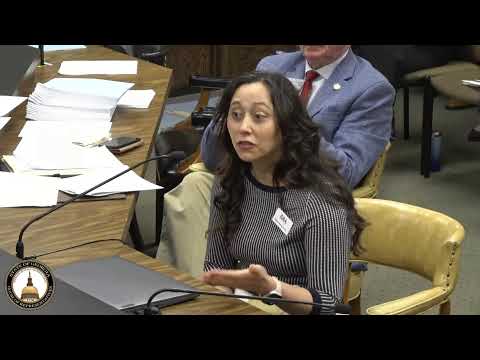
Dozens of citizens, parents, educators and library professionals testified in two-minute statements. Former and current library workers and media specialists said libraries already use established, multi-person selection and reconsideration processes and that criminal liability would chill professional judgment. A retired school library media specialist said those local selection committees and school criteria are "a very high standard" and warned the bill would push media specialists to pre-censor. By contrast, parents and advocacy groups argued that some materials currently shelved in children's sections include explicit images or descriptions and that the law should not leave libraries exempted from enforcement.
Committee members asked multiple process and clarity questions: how the mental-state element "knowingly" would be proved in practice, who would bring charges, whether books widely available in bookstores but contested in libraries would be treated differently and whether the felony/misdemeanor classifications in the existing code are appropriate for employees who are following local policy. Several members suggested drafting changes or a narrower penalty scheme; the sponsor said he would consider cleanup edits but repeatedly stated the intent was to make libraries comply with the existing statute rather than to target librarians.
After roughly 30 public witnesses and extended questioning, the chair suspended further testimony and directed parties to meet off the record and attempt to merge competing substitute language before the committee resumes consideration. The hearing was recessed with plans to reconvene later in the week.
Votes and formal committee action: no final committee vote was taken on SB 74 at this hearing; the committee paused debate to allow stakeholders and sponsors to negotiate substitute language and to return with revised text.
What happens next: committee staff will schedule follow-up consideration after parties submit merged substitute language; opponents signaled they are prepared to litigate if the bill becomes law and were explicit that parts of the measure may face First Amendment challenges.