Get Full Government Meeting Transcripts, Videos, & Alerts Forever!
Get email alerts on the Facility Bond topic
No spam. Unsubscribe anytime.
Midland board details $285 million facility bond plan as residents raise questions about cost, capacity and priorities
Summary
Board members outlined community outreach and upcoming informational sessions for a proposed $285 million facilities bond; several residents urged changes to the proposal, questioned long-term costs and raised concerns about program trade-offs such as preschool and building utilization.
Midland Public Schools officials provided an update on a proposed facilities improvement bond, announced additional community meetings and asked residents to review detailed project materials online, while multiple residents used the public-comment period to oppose or question portions of the plan.
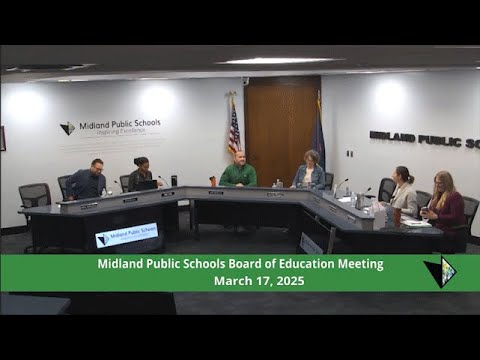
At the March 17 board meeting, Board President Phil Rausch said the district and administration had given “more than 30 presentations for community groups, parents, and staff” and described planned sessions on March 25 (in-person at Northeast Middle School Little Theater), March 27 (virtual) and April 15 (hybrid at the MPS administration center). He urged voters to “go to the source and get the facts.”
The proposal, discussed repeatedly during the public-comment period, was described in meeting materials as a $285 million bond. Several speakers questioned the total long-term cost when interest is included and the district’s assumptions about enrollment and building capacity.
“Central Park Elementary STEM School was the $201,525,000,000 dollar bond issue,” said resident Dave Romanesco, who said he will vote against the 2025 bond “for three reasons,” including concerns about academic proficiency at some schools and the size of the request. Joe Brandedes and other residents cited the district’s bond application materials filed with the state treasury and urged the board to clarify assumptions about interest rates, amortization and projected millage growth.
Resident Renita Banadis reviewed the district’s enrollment-and-capacity projections and said the plan’s estimated utilization rates would rise districtwide rather than fall. “We will be at a 94% utilization rate,” she said of the projected post-construction figure and asked why a new north-side elementary showing a 98% utilization rate was part of a proposal described as relieving crowding.
Other commenters raised related fiscal concerns and program priorities. Bill Domina and Melissa Bucek said the bond’s spending on non‑mandatory programming — including expanded universal prekindergarten under the bond proposal — needed clearer cost and enrollment analysis; Domina urged a “more streamlined bond.” Rose Roberts and other residents raised maintenance and cleanliness issues in specific schools and asked for greater transparency on operating costs and contracts.
School officials acknowledged the criticisms and emphasized outreach and transparency. In his update, Rausch directed residents to the bond website for project descriptions, financial breakdowns and FAQs, and said printed copies of materials were available at meetings. Board and administrative members said they would continue public sessions and one‑on‑one conversations to answer questions.
The board did not take a final vote on the bond at the March 17 meeting. Rausch and other board members said the update was intended to ensure community members could review work orders, rates and projected tax impacts before a future vote.
The board’s update and the public comments spanned several parts of the meeting, including the formal update (item 3.4) and the public-comment period. The district scheduled additional informational sessions and posted materials online for voters to review ahead of any ballot action.