Get Full Government Meeting Transcripts, Videos, & Alerts Forever!
Get email alerts on the Central Subway Speed Cameras topic
No spam. Unsubscribe anytime.
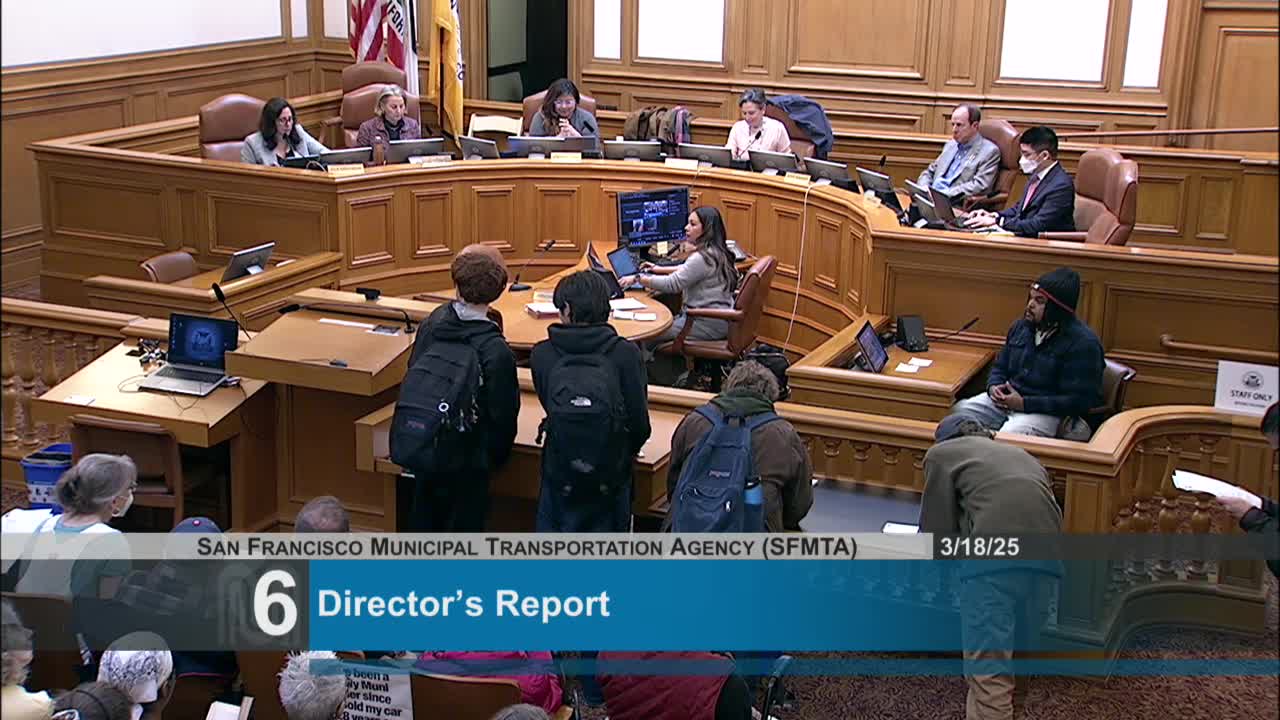
SFMTA reports central‑subway water mitigation progress and launches speed safety camera program
Summary
SFMTA officials reported that central‑subway water mitigation work was completed safely and that the city will begin a speed safety camera pilot March 20 with a 60‑day warning period before citations start; staff emphasized the program is focused on safety and not revenue.
SFMTA staff reported to the board on March 20 that contractors successfully completed water mitigation work at the Central Subway platforms and back‑of‑house areas and are monitoring the work with planned additional checks in 4–6 weeks.
During the director’s report, officials said the contractor injected roughly 7,000 gallons of grout to stabilize the platform cavern and that limited additional work will occur during non‑revenue hours as SFMTA monitors settlement and continued waterproofing needs. Board members and several public commenters urged continued funding for long‑term waterproofing at the deep Chinatown station, where commenters said groundwater pressure can be intense.
SFMTA also updated the board on a Powell Street safety and accessibility project, noting the effort is funded in part by Proposition B and is intended to improve signals, lighting and curb ramps in the corridor between Ellis and Post Streets as part of a larger Union Square recovery effort.
Separately, staff announced a major milestone on the Agency’s Vision Zero enforcement toolkit: a statewide speed safety camera pilot will begin in San Francisco with initial cameras going live March 20. Director Kirschbaum told the board that cameras will start by issuing warnings during an initial 60‑day education period before citations are issued for typical violations. Staff said very high speeds (more than 15 mph over the limit) may receive immediate citations even during the warning period.
“This week is a major milestone starting on March 20. The first cameras are gonna go live,” Director Kirschbaum said, adding that the cameras will issue warnings at first and that the agency’s outreach will include multilingual advertisements and billboards to encourage speed reduction.
Kirschbaum and other staff emphasized the program’s stated safety goals. SFMTA said any revenue collected by the program will be used to cover camera costs and for traffic‑calming investments, not as a general revenue source for the agency. Staff cited research from other U.S. cities showing large drops in measured speeding at camera sites and reductions in serious injuries; they framed the cameras as a prevention tool.
Board members thanked staff for the updates and noted that further monitoring and outreach will accompany both the construction work and the camera rollout.