Get Full Government Meeting Transcripts, Videos, & Alerts Forever!
Get email alerts on the Parking Optimization topic
No spam. Unsubscribe anytime.
SFMTA board approves parking optimizations — meters, contractor permits and enforcement changes to boost revenue
Summary
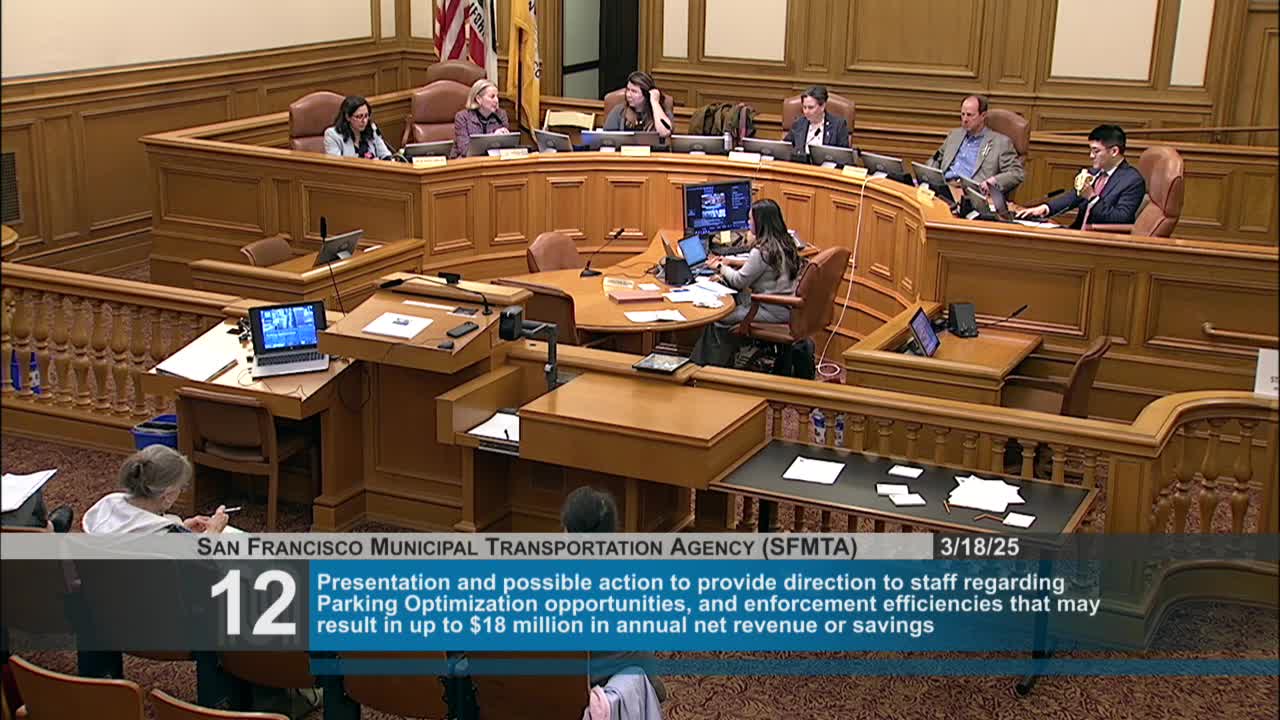
SFMTA directors unanimously directed staff to pursue a parking optimization package intended to bring as much as $18 million per year to the agency by raising certain meter rates, revising contractor permit pricing, extending meter time limits and targeting enforcement changes.
The San Francisco Municipal Transportation Agency board voted unanimously on March 20 to move forward with a set of parking optimization proposals the agency said could yield up to $18 million a year in net revenue or savings.
The package, presented by Victoria Wise, SFMTA’s director of parking and streets, combines multiple changes: an increase in the minimum meter price (the “floor”) from $0.50 to $1.00 per hour; a modest across‑the‑board hourly increase (proposed +$0.25 per hour on current rates); a proposal to pass through the transaction convenience fee for phone‑based meter payments; an increase in annual contractor parking permit fees; and a plan to extend on‑street meter time limits from two hours to four in commercial corridors. Wise also asked the board for direction on increasing weekend and evening enforcement and on better use of license‑plate recognition technology to boost enforcement efficiency.
The board’s motion authorized staff to develop implementation steps for the package and return items for specific board approvals as required; the motion passed 5–0.
“We’re right‑sizing the rates to the current market,” Wise said, noting SFMTA’s recent meter and garage upgrades and saying some downtown garages and on‑street demand have not fully recovered from the pandemic. She told the board that recent changes to garage management and new automated systems helped reduce operating costs but that downtown garage revenue remained roughly 20% below pre‑pandemic levels.
Wise presented estimated revenue impacts tied to each element: the floor increase (roughly $1.2 million), a one‑time rate adjustment (about $3 million), extending local meter time limits (about $1 million), and additional enforcement and operational optimizations that together were included in agency estimates approaching $18 million annually if implemented together. The agency also proposed adjusting the contractor permit rate methodology to reflect current meter equivalents; staff said the proposed permit increase would move the annual permit from about $2,400 to roughly $3,000, with implementation details to be finalized after additional outreach.
Several contractors and representatives of contractor associations voiced concern in public comment about the proposed contractor permit increase; SFMTA staff said they would continue stakeholder outreach and flagged the implementation complexity and legal distinctions between a fee and a tax when discussing alternative formulas.
Advocates for transit and for neighborhood merchants also addressed the board. Dylan Fabris of San Francisco Transit Riders and other advocates urged the agency to implement a previously authorized expansion of parking meter hours to evenings and Sundays — a measure they said would both produce revenue and increase curb turnover for merchants — and asked why that revenue had not been used earlier in the agency’s budget discussions.
“We generally support these parking policy changes,” Fabris said, but added that extended meter hours (previously authorized by the board) have not yet been implemented and represent a larger revenue opportunity the advocacy community believes should be part of a long‑term revenue plan.
The board vote cleared agency staff to develop the ordinance language and administrative steps required to implement the package; multiple line items will return as discrete agenda items for board approval before they take effect. Staff indicated that changes to ordinance or to meter rules would follow standard public notice and outreach and that operational changes to enforcement staffing would be implemented through SFMTA management under board direction.
SFMTA also fielded written requests in advance of the meeting from local contractor associations seeking adjustments to the proposed contractor permit increases; the agency said it would continue working with those stakeholders to refine the final proposal before any fee is adopted.
The board’s approval of direction on the parking package comes as one element of the broader SFMTA plan to close a near‑term fiscal gap: SFMTA staff told the board parking optimizations are expected to contribute materially to the near‑term budget picture while other program adjustments and potential service changes are considered separately.