Get Full Government Meeting Transcripts, Videos, & Alerts Forever!
Get email alerts on the Infrastructure And Development topic
No spam. Unsubscribe anytime.
Public works and development leaders outline infrastructure requests; water and stormwater needs highlighted
Summary
Department directors described a long list of capital and maintenance needs, including hazardous concrete repairs, fleet and facility shortfalls, stormwater and water main replacement programs, and multiple private development projects in the pipeline. Staff proposed a water rate increase and noted large stormwater needs.
Public works and development staff used the budget preview to list capital priorities, deferred maintenance, and constraints on available funding.
Public works priorities and projects
Ryan, the public works director, told the council the department manages multiple revenue streams (general fund, enterprise funds, transportation sales tax, internal services) and presented requests that included restoring an in‑house surveyor position (now contracted), increasing the hazardous concrete program to reduce a backlog of sidewalk and ADA repairs, and paying for annual line striping at higher paint costs. He said a new Public Works fleet building is near completion but has a small funding gap that staff may ask the council to fill.
Ryan and assistant director Britney said the department submitted a longer list of capital projects for consideration and highlighted public safety issues tied to maintenance backlogs. Staff described a roughly $100,000 increase request to help catch up on hazardous concrete work and explained that a larger hawk (HAWK) pedestrian signal on Wasatch Boulevard would cost in the low six figures (staff estimated $135,000 to $200,000 depending on scope), while interim rectangular flashing beacons are a lower‑cost near‑term remedy.
Fleet and transfer station
Fleet replacement requests totaled more than $10 million in aggregated need; staff said they do not expect full funding but will seek as much as possible through internal service and bonding. Waste transfer station changes were discussed: a higher tipping fee at a new transfer facility will be largely offset by lower hauling costs, and staff proposed keeping weekly pickup fees stable while monitoring the net effect.
Water and stormwater
Staff described water system needs based on the city's water master plan: materially higher long‑term investment is required to maintain infrastructure. The water program recommended a rate increase: staff described a proposed water rate increase on the order of 5.5 percent for the coming year to maintain operations and invest in main and well maintenance. Officials said the city faces roughly $75 million in water infrastructure needs over the next 10 years and identified several one‑time well and booster station projects and a multi‑year program to replace small, low‑flow hydrants (staff cited roughly $9 million over 5–10 years to replace about 600 undersized hydrants citywide).
Stormwater staff said the stormwater master plan identified about $40 million of needs and noted there has not been a rate increase for stormwater in more than a decade. Staff emphasized neighborhood flood mitigation, corrugated metal pipe replacement, and flood‑plain projects as priorities.
Economic development pipeline
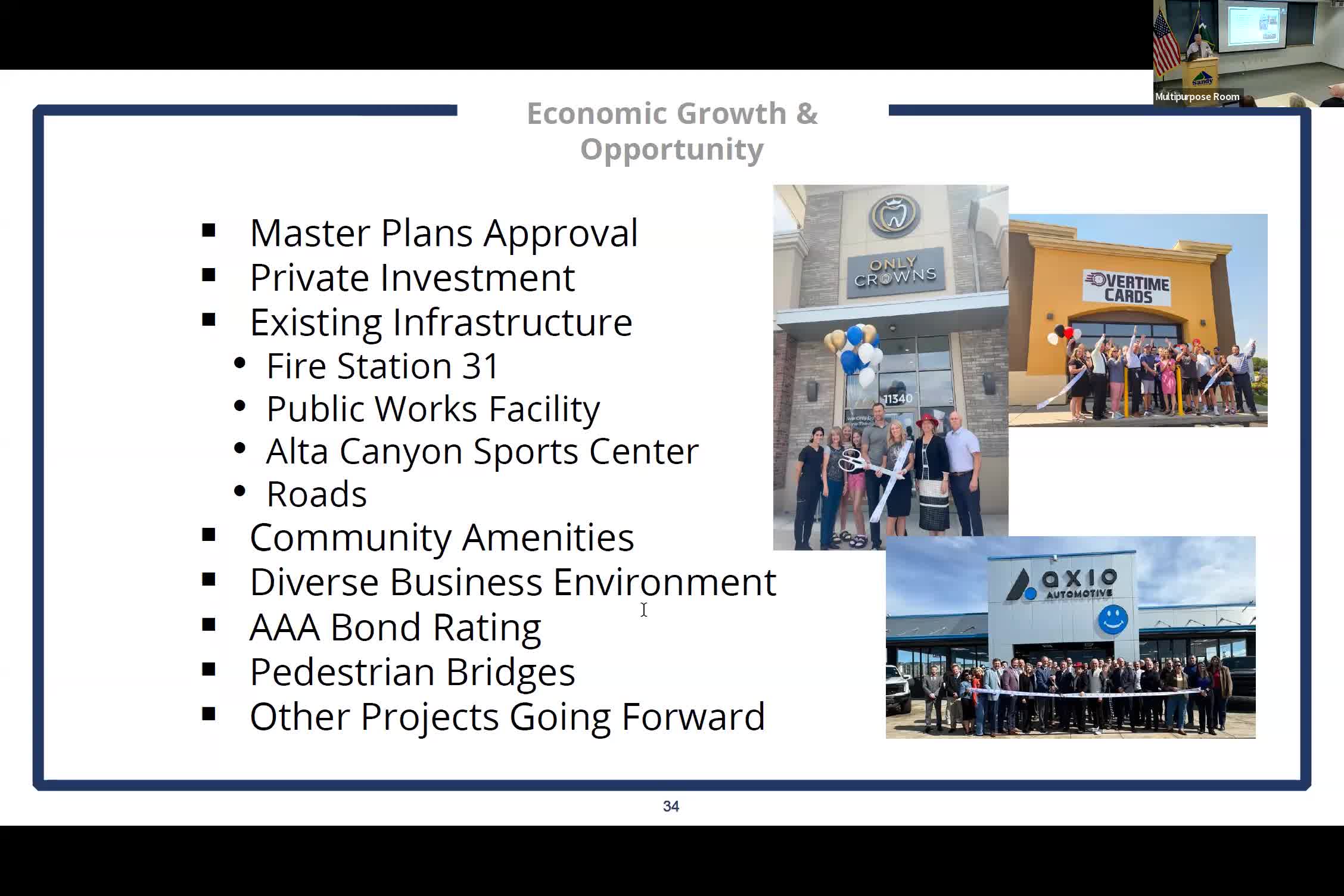
Planning and economic development staff (James and Casey) reviewed a pipeline of roughly 60 residential and multiple commercial projects across the city, from small single‑family subdivisions to larger mixed‑use projects in the downtown/transit area. Staff said several projects are advancing in the central development area, including a site behind the Hilton Garden Inn (referred to as the Gardner Wasatch project), Centennial Village behind the post office (memorandum of understanding signed and concept to be presented soon), and other mixed‑use and multifamily projects that staff said generally include some affordable units.
Budget implications and next steps
Directors emphasized that revenue is moderating and that the city must prioritize among many valid needs. They asked the council to review project lists and indicated staff will return with formal tentative budget material in May. Council members asked for additional details about specific projects (including the Wasatch Boulevard HAWK signal alternatives) and received responses about cost estimates, sight‑distance studies, and coordination with Salt Lake County and other agencies.