Get Full Government Meeting Transcripts, Videos, & Alerts Forever!
Get email alerts on the Environmental Waste Management topic
No spam. Unsubscribe anytime.
Haulers stop bringing septic material after county road-tax enforcement, composting operator warns
Summary
Operators told Grimes County commissioners that new truck-level road-tax enforcement has stopped deliveries to a local composting facility, reducing business and diverting material toward landfills.
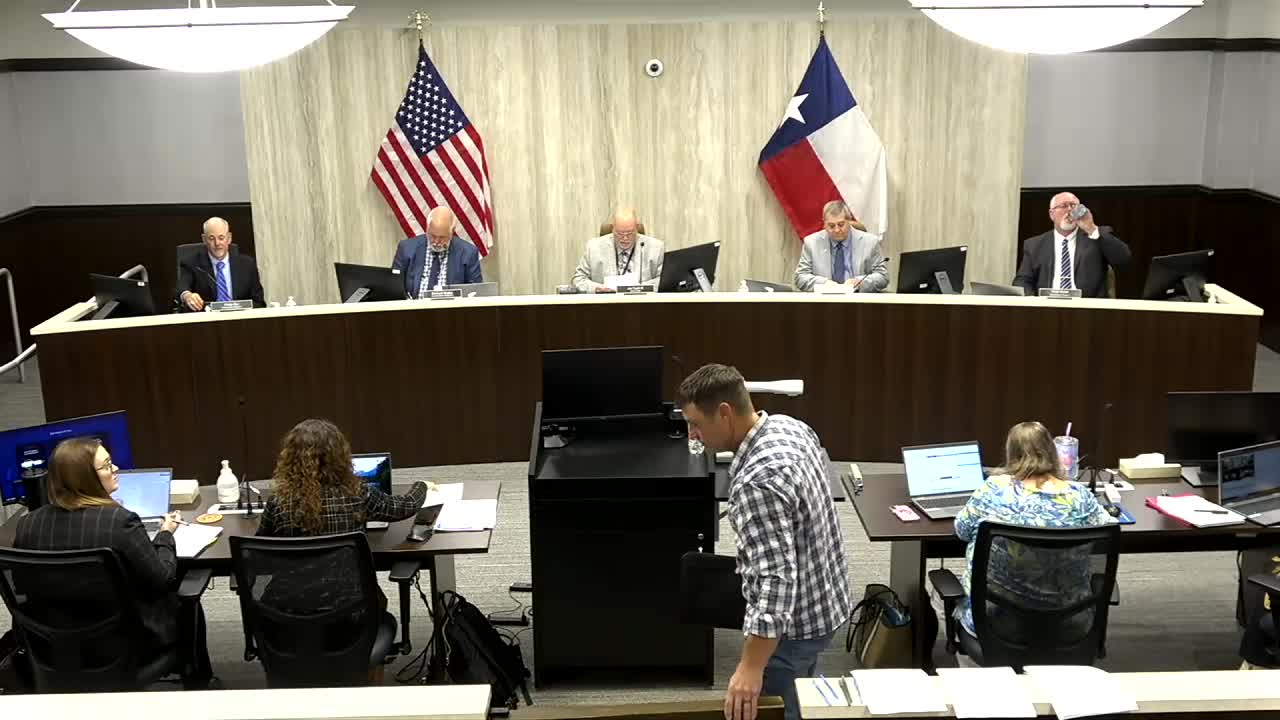
Luke Sonsell, who identified himself as representing Grounds County Water Reclamation, told the Grimes County Commissioners Court on March 19 that truck-level enforcement of a newly discussed road tax has stopped haulers from bringing wood chips and septic waste to his composting facility.
"Once they started pulling trucks over, requiring that they were they were saying they needed a bond. They needed to add a Grimes County as an additional insured. The trucks quit coming," Sonsell said during the public-comment portion of the meeting. He said the facility is one of about 13 permitted composting operations in Texas that accept wastewater- and sewer-derived waste and that the lost trucks have left him with material piling up and a drop in business.
Jimmy Thornton, who said he represents Hydro Clear Services, and Stephen Griffin of PB Ready Mix joined Sonsell at the podium to describe operational and economic impacts. Thornton said drivers who previously stopped in Grimes County for fuel and food have rerouted and that his company and its drivers support the composting operation. Griffin said independent truck operators are already paying registration and taxes and that another tax would hurt local businesses supplying construction materials.
Commissioners did not take action on the comments. No county policy change was announced at the meeting. The speakers urged the court to consider the economic and environmental effects of how truck-level requirements are enforced, saying material is now being diverted to landfills and local service demand has fallen.
Ending
County officials did not provide immediate details about enforcement discretion, signage, or next-step outreach during the meeting. Commissioners later continued with the regular agenda; public comments were entered into the record.