Get Full Government Meeting Transcripts, Videos, & Alerts Forever!
Senate committee examines California vote-by-mail signature "cure" process amid disparities and county variation
Summary
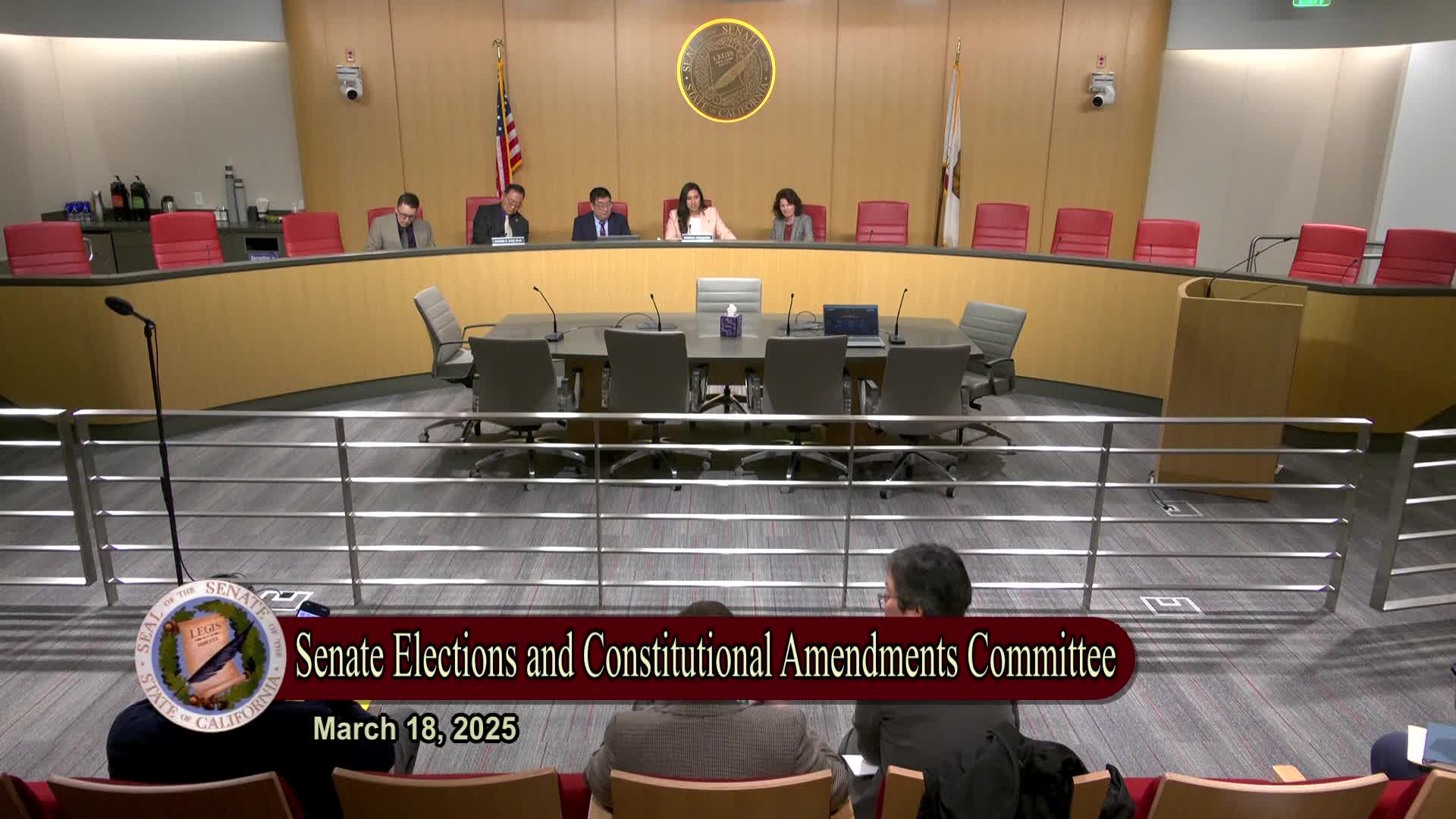
At a January 2025 informational hearing, the California State Senate Committee on Elections and Constitutional Amendments reviewed how counties identify, notify and accept corrected signatures for vote-by-mail ballots, hearing data on low overall rejection rates but significant subgroup disparities and inconsistent county practices.
The California State Senate Committee on Elections and Constitutional Amendments held an informational hearing in early 2025 to review the state's process for notifying voters and "curing" vote-by-mail envelopes when signatures do not match records.
The hearing, led by Chair Cervantes, drew testimony from the Secretary of State's elections division, registrars from Contra Costa and Orange counties, academic researchers, voting-rights and disability advocates and political party attorneys. Witnesses described widely shared goals'preserving access while guarding election integrity'and highlighted differences in county practice, data on who is most affected and proposals to reduce needless rejections and speed final counts.
"The secretary of state is the chief election officer of the state of California," Janaline Lien, chief of the elections division for Secretary of State Shirley Weber, told the committee, summarizing the office's role in issuing model cure forms, translations and guidance. Lien explained the statutory deadlines that require county officials to notify voters by mail and that voters may have until 5 p.m. two days before certification to verify a signature. She added that "if the signatures does not compare, the vote by mail ballot envelope shall not be opened, and the ballot shall not be counted."
Why it matters: California's heavy use of vote-by-mail makes the signature review process consequential. Witnesses agreed the statewide share of ballots ultimately rejected is small relative to turnout, but the raw counts are substantial and concentrated in particular demographic groups and counties. Mindy Romero of the USC Center for Inclusive Democracy told the committee that an estimated 0.9% of vote-by-mail ballots were rejected in November 2024, a rate that translated into roughly 117,000 rejected ballots statewide in that election. Romero and others stressed that rejection rates are higher for younger voters, Latino and Asian-American voters and…
Already have an account? Log in
Subscribe to keep reading
Unlock the rest of this article — and every article on Citizen Portal.
- Unlimited articles
- AI-powered breakdowns of topics, speakers, decisions, and budgets
- Instant alerts when your location has a new meeting
- Follow topics and more locations
- 1,000 AI Insights / month, plus AI Chat