Get Full Government Meeting Transcripts, Videos, & Alerts Forever!
Get email alerts on the Equity And Access topic
No spam. Unsubscribe anytime.
Community Organizer: Wildfires Expose Language, Insurance and Relief Gaps for Indigenous and Undocumented Farmworkers
Summary
Genevieve Flores Haro of the Mixteco Indigena Community Organizing Project told the Assembly that undocumented and indigenous farmworkers bear disproportionate health and economic burdens during wildfires and urged expanded language access, permanent state disaster funds and stronger workplace protections and inspections.
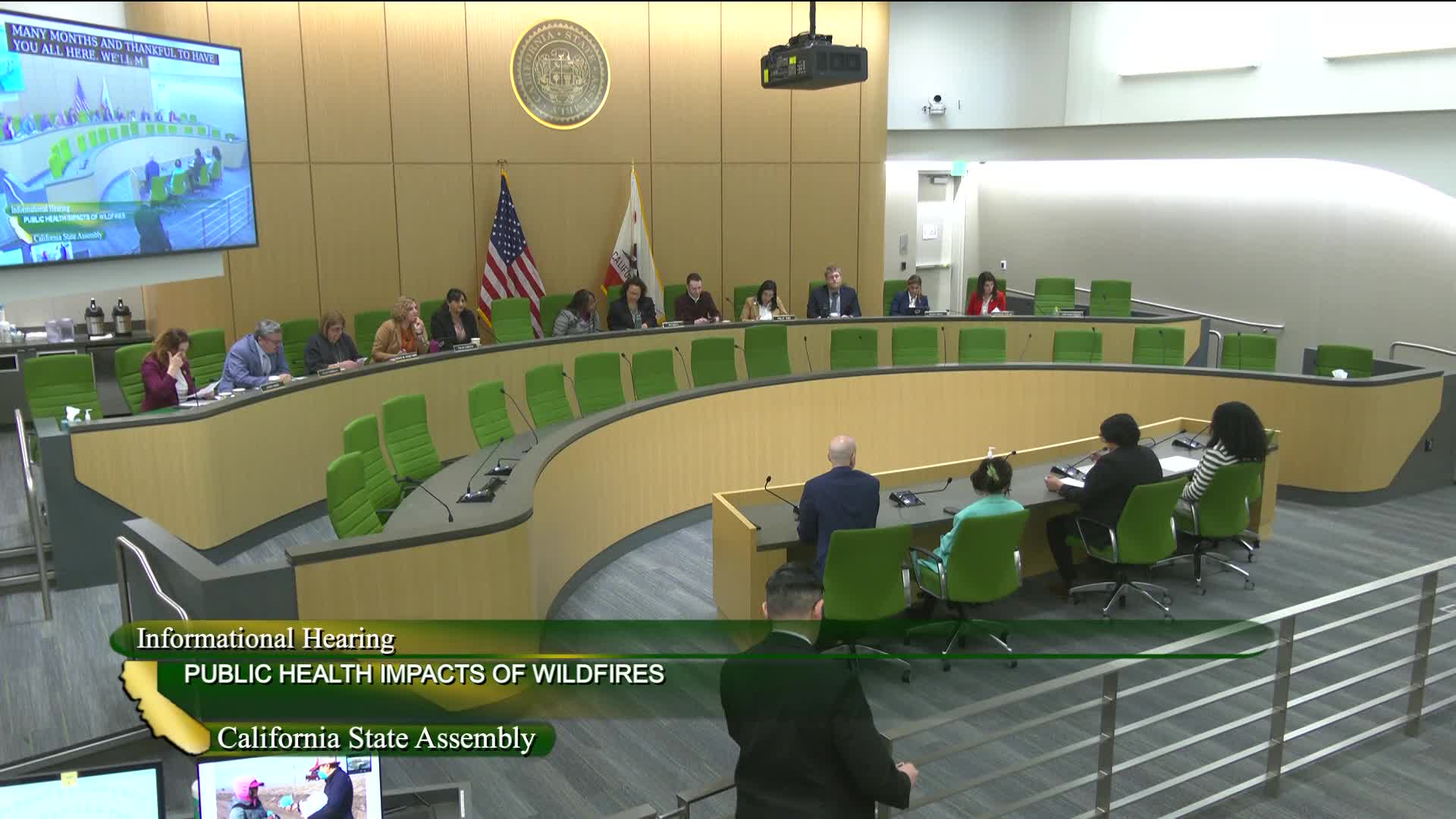
Genevieve Flores Haro, associate director for the Mixteco Indigena Community Organizing Project (MICOP), told the Assembly Health Committee that Latine, indigenous and undocumented farmworkers suffered disproportionately during recent Southern California wildfires because of systemic language, income and legal barriers.
"Undocumented immigrants and indigenous farm workers are among the most marginalized in our society," Flores Haro told the committee. She said many indigenous workers "do not speak English or Spanish, only their native language like Mixteco or Zapoteco, making it nearly impossible to access emergency information."
Why it matters: Flores Haro said these workers often continued to work in the fields during smoke events, lacked employer-provided protective equipment, and were excluded from federal disaster relief because of immigration status. She urged the state to make temporary programs permanent and to extend language access to indigenous languages.
Policy and enforcement requests Flores Haro named existing legislation she said helped but needed expansion: she cited "AB1877 (Limon)" for language access in emergency communications, "SB160 (Jackson)" for cultural competency in disaster planning, and earlier Medi-Cal expansions she summarized as "SB56 and AB4 health for all." She also said MyCOP is supporting a $1,250,000 budget request to fund "AB694" to boost Cal/OSHA inspections and enforcement capacity. She referenced a 2019 Cal/OSHA regulation that requires employers to provide N95 masks to outdoor workers when AQI exceeds 150, and said employers repeatedly failed to comply during recent fires.
Community needs Flores Haro and other panelists argued for a permanent state disaster-relief fund for undocumented residents, culturally competent real‑time interpretation that includes indigenous languages, hazard pay and legal protections for workers to report unsafe conditions. She described distributing N95 masks and goggles when employers did not provide them and said, "Disaster relief must not be a privilege to only those who can afford it. It must be a right for all Californians."
Ending: Flores Haro urged lawmakers to build on existing laws and to codify ongoing programs so the most vulnerable workers are included in planning, response and recovery.