Get Full Government Meeting Transcripts, Videos, & Alerts Forever!
Get email alerts on the Mental Health topic
No spam. Unsubscribe anytime.
UC Psychiatry Experts Tell Assembly Fires Trigger Lasting 'Fire Brain' Symptoms; Recommend Community Psychological First Aid
Summary
Dr. Elisa Appel of UCSF and UC climate-health colleagues told the Assembly that climate disasters spur both immediate behavioral health crises and persistent disorders in roughly 20 percent of exposed people; they urged scaled community training in psychological first aid and resilience education, with special attention to youth and students.
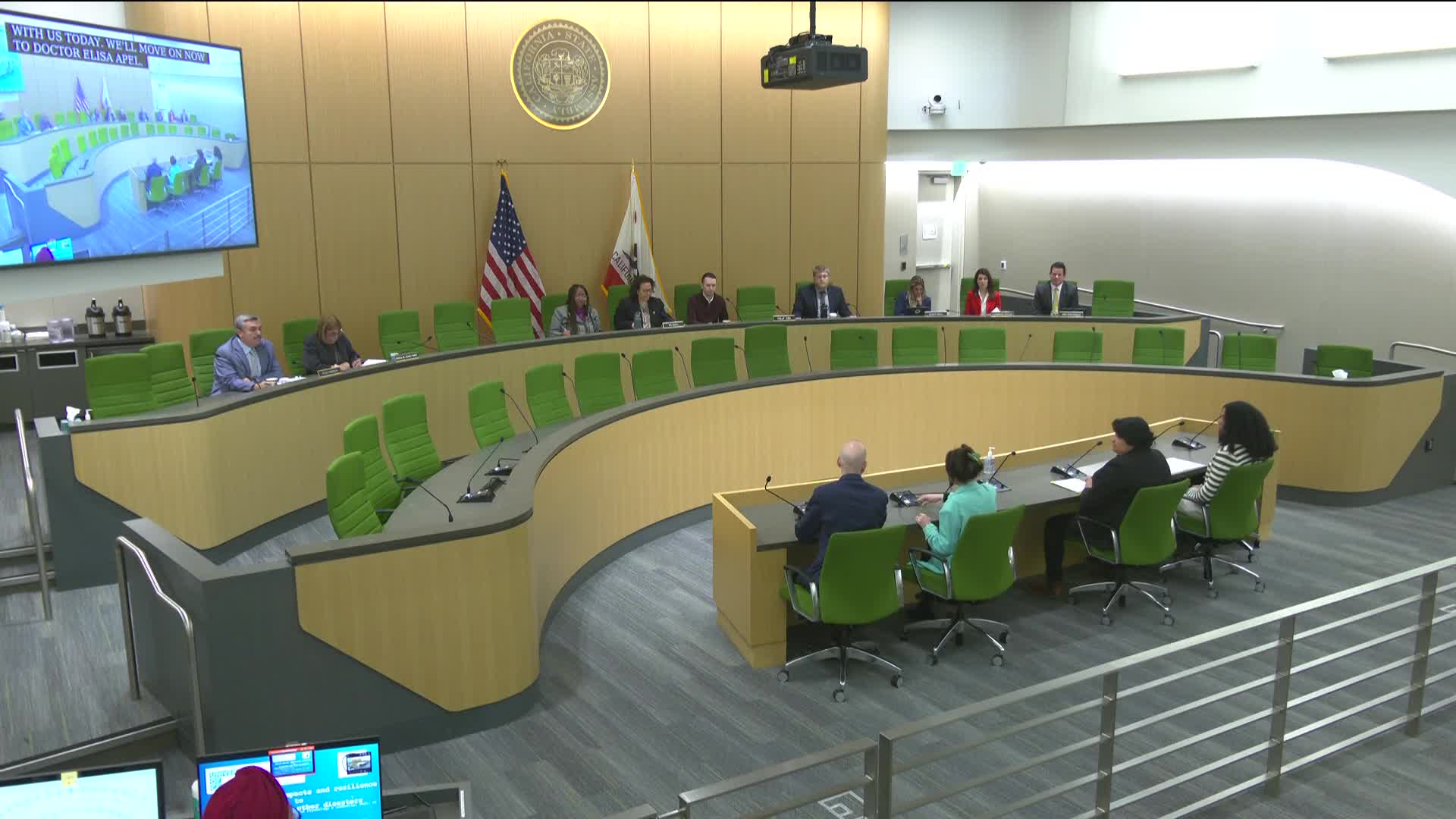
Dr. Elisa Appel, a psychiatry professor and vice chair at the University of California, San Francisco, told the Assembly Health Committee that wildfires are producing both short-term psychological distress and longer-lasting mental health conditions in a substantial minority of exposed Californians.
"We already know there's a tremendous mental health epidemic here as well as globally and we cannot meet the need," Appel said, summarizing multi-campus UC work on climate and mental health. She described a syndrome researchers have called "fire brain," citing a UCSD study of Camp Fire survivors in which "35 percent of participants had climate trauma, symptoms of depression, anxiety, or PTSD" six months after the event.
Why it matters: Appel told lawmakers that most people recover within days or weeks, but about 20 percent develop chronic conditions persisting six months or longer — and that rate may be higher after wildfires. She emphasized that youth and young adults are especially vulnerable and that climate-related distress is already visible in UC classrooms.
Preventive steps and programs Appel said human and community support is the strongest protective factor: "Human support is the biggest protector of stress related mental health disorders." She advocated for scaled training of community members in psychological first aid — a brief, manualized intervention deliverable by trained nonclinicians — and for the UC Climate Resilience Initiative's classroom curriculum that teaches emotion regulation and coping skills.
Appel described early indicators of increased help-seeking: a fivefold rise in calls to suicide and mental health crisis lines after the LA fires, she said. She urged state-level support for programs that train community helpers and sustain mental health services beyond the initial crisis phase.
Ending: Appel said the UC network is working to disseminate resilience training and psychological first aid across campuses and communities and recommended lawmakers consider policies that support community-based, trauma-informed responses to climate disasters.