Get Full Government Meeting Transcripts, Videos, & Alerts Forever!
Get email alerts on the Recreation Trails topic
No spam. Unsubscribe anytime.
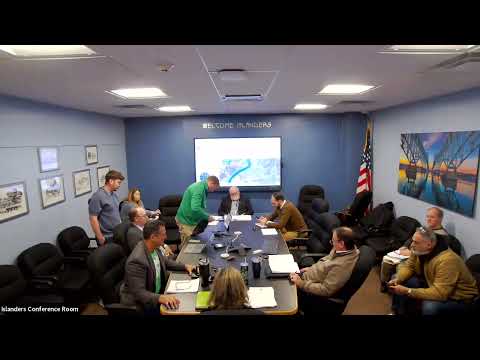
Grand Island resident presses board for clearer trail rules; officials say costs, process limit near-term action
Summary
A resident asked the Grand Island Town Board how and when neighbors would be notified about town-owned trails; board members said building a permanent, paved neighborhood trail would require engineering, drainage and budget authorization, and is unlikely without formal budget approval.
A Grand Island resident, identified in the meeting as Eli, urged the Town Board for clearer notification and an approval pathway after neighbors raised questions about a proposed trail connecting East River-area neighborhoods.
Eli said residents wanted to know “when I get noticed next time,” and asked whether the town would notify neighbors before any trail work started. Board members and staff said there is no separate, fast-track approval process for town-owned trails that would allow construction without appearing repeatedly on public agendas. Town staff described a multi-step process that typically includes engineering, public hearings, grant applications and, when money is required, a budget appropriation.
Town staff said a permanent concrete trail through established neighborhoods would require added features such as drainage and living buffers (planting for privacy), which substantially raise costs compared with a simple chip-path on undeveloped land. A staff presenter estimated the example project discussed would cost about $5,600 to engineer at a minimum and said the town did not have that discretionary money available outside other priorities.
Officials described how a trail built on undeveloped town land (Virgin land) could sometimes be installed quickly and cheaply—using chipped surfacing and town crews—but when adjacent to houses the town would likely need to construct concrete pavement, drainage, and privacy plantings. Those items, staff said, typically trigger engineering work, a public bidding process and a budget-line item approved during the town’s budget season, which begins in July with official budget adoption in October.
Board members suggested residents watch the town’s agendas and comprehensive planning processes to track proposals. Several members offered to notify or contact nearby residents directly if a project reached the stage of formal consideration.
The discussion closed without formal direction to place a specific trail project on a future agenda; board members encouraged the resident to submit questions in writing and to follow the town’s planning and budget calendar.
Board members and staff emphasized that any trail work that would put a shovel in the ground would appear on one or more public agendas and would require an awarded contract and engineered plans before construction could proceed.