Get Full Government Meeting Transcripts, Videos, & Alerts Forever!
Get email alerts on the Status Of Women topic
No spam. Unsubscribe anytime.
Glendale council restores, expands Commission on the Status of Women, directs staff to find funding and full‑time support
Summary
The City Council voted unanimously to expand the Commission on the Status of Women’s duties to include programming, fundraising and more frequent meetings, and directed city staff to pursue a staffing and funding plan to implement the expansion.
The Glendale City Council unanimously approved a motion Tuesday to expand the powers and responsibilities of the Commission on the Status of Women and to direct city staff to plan for dedicated staffing and program funding.
The council voted to amend the Glendale Municipal Code to explicitly authorize the commission to develop ongoing programming, pursue fundraising and grants, and increase its meeting frequency from four times a year to monthly beginning July 2025. The motion, as approved, also directed the city manager and city clerk to develop a funding path and staffing plan that would provide a full‑time staff person dedicated to the commission’s work.
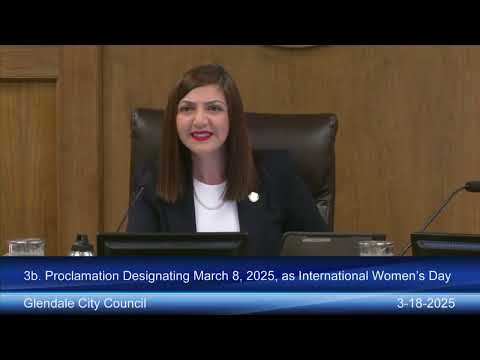
The move follows presentations from commission members and community partners who argued the panel’s capacities were pared back in 2015 amid staffing and budget cuts. Diane Lambelott, chair of the Commission on the Status of Women, said the monthlong observance “is more than a celebration, it's a call to action,” and other speakers emphasized the commission’s prior work on programming such as financial literacy and violence‑prevention efforts.
City staff presented the commission’s recent report, noting persistent gaps for subpopulations — including higher poverty and unemployment rates for some Latina and Armenian women — and described a proposed staffing/funding pathway. Staff estimated a reclassification of an existing half‑time admin analyst into a full‑time executive analyst would increase annual personnel costs by roughly $36,900; recommended an initial programming allocation of $75,000 for FY2025–26 and a proposed ongoing programming budget of $150,000 in later years. The city attorney and staff clarified that an executive‑level analyst would have broader grant and program administration authority than the current admin analyst classification.
Council members who supported the motion said the commission needs both regular meeting cadence and a dedicated staff member to execute programming and to coordinate grants and partnerships. Opponents and some council members urged that specific budget allocations be vetted in the normal budget process; the council’s adopted motion directs the city manager and city clerk to develop a funding plan and return with options.
The council’s action also included direction that staff return an ordinance amending the municipal code language to reflect the expanded duties; staff said it could return draft code language within roughly six weeks. The council also adopted additional ministerial instructions directing that programming priorities be informed by the commission’s most recent Status of Women report and the city’s internal HR equity analyses.
The vote was recorded as unanimous (Councilmembers Brautman, Garpetian, Kasakian, Najarian and Mayor Asatrian voting yes). The council’s direction authorizes staff to begin implementing the staffing and programming steps but does not itself appropriate the full program budget; the administration will present funding options as part of the upcoming budget discussions.