Get Full Government Meeting Transcripts, Videos, & Alerts Forever!
Get email alerts on the Pharmacy Benefit Managers topic
No spam. Unsubscribe anytime.
Hearing on bill to curb vertical integration of PBMs and pharmacies draws wide debate over costs and independent pharmacies
Summary
Senate Bill 91 received a hearing in the House Health Committee; the bill would bar entities from serving as both pharmacy benefit manager and retail pharmacy in contracts for the State Health Benefit Plan.
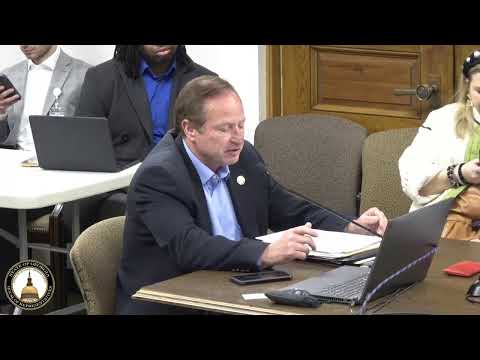
Senate Bill 91 received an extended hearing in the House Health Committee as members debated whether restricting vertical integration between pharmacy benefit managers (PBMs) and retail pharmacies would protect independent pharmacies or raise costs for the State Health Benefit Plan (SHBP).
Senator Tillery presented the bill as a way to prevent unfair business practices when a single corporation acts as PBM and retail pharmacy owner. “When the manufacturer owns the middleman and then owns the sales distribution point, they can set costs in a way that’s prejudicial to those who aren't involved in their vertical monopoly,” Tillery said, describing the measure as a way to “break apart that monopoly.” The bill would apply only to contracts involving state health benefit plan procurement.
Supporters, including Representatives Kelly and Douglas, said PBM practices have disadvantaged independent community pharmacies and threatened their viability. Representative Newton cited examples of specialty drug pricing and mail‑order requirements that leave independent pharmacies unable to compete on price for certain expensive medications.
Department of Community Health Chief Medical Officer Dr. Dean Burke testified that the agency is neutral on the policy but warned of potential cost implications. Dr. Burke said the difference in bids during a recent procurement cycle between the first and second bidder approached $100 million, and removing the top PBM bidders without an alternative could significantly increase state costs. He said the SHBP is large and complex, and many smaller PBMs lack the infrastructure to manage it.
Committee members discussed possible transitional provisions: the bill as presented contains a carve‑out for contracts entered into before a specified date to avoid immediate disruption of existing agreements. Dr. Burke and agency staff said the state uses an independent actuarial firm to evaluate bids and normalize proposals.
Chairman Tillery said the bill was a hearing only and invited continued discussion, emphasizing the committee’s interest in protecting independent pharmacies and patients from higher out‑of‑pocket costs. The agency reiterated that any change could be implemented if the General Assembly decides the policy is worth the cost.
The committee did not take a vote at the hearing.