Get Full Government Meeting Transcripts, Videos, & Alerts Forever!
Get email alerts on the Land Use topic
No spam. Unsubscribe anytime.
Mat-Su Assembly hears water-body setback report; committee recommends narrower setbacks with permitting, public divided
Summary
The Water Body Setback Advisory Board presented a year‑plus review to the Matanuska‑Susitna Borough Assembly on March 18 recommending changes to waterfront setback rules, including a pathway for permits to build closer than 75 feet with mitigation. The report prompted broad public comment and follow-up requests for additional presentations.
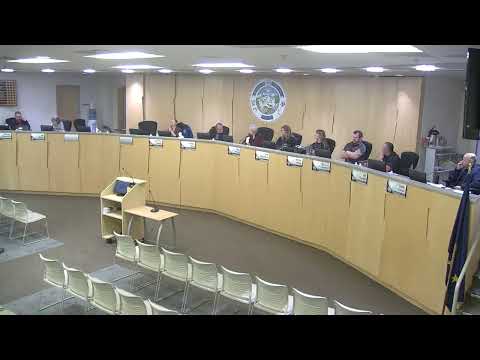
At its March 18 meeting the Matanuska-Susitna Borough Assembly received the Water Body Setback Advisory Board’s report on recommended changes to borough code governing development near lakes and streams.
The advisory board recommended several changes to borough code, including a regulated path that could allow development closer than the current 75-foot setback — in some cases down to 45 feet — but only if a permit and mitigation measures are met. The board’s final vote on the draft ordinance was unanimous, recorded as 7–0, according to planning staff.
Planning Director Alex Strong told the assembly that the draft would require a land-use permit for “ground-disturbing activity” within water-body buffers and that engineering documentation would be required for structures proposed closer than 75 feet. “If you did what’s called ground-disturbing activity, which is really defined as bringing heavy mechanized machinery, which is defined as bringing heavy mechanized machinery along a waterfront, then yes, you’d have to get a land use permit,” Strong said.
The board’s proposal also reflects guidance from borough legal staff. Strong said legal review raised equal-protection concerns with an approach that would treat existing nonconforming structures differently from new development; the board changed the draft so the same standards would apply prospectively, allowing a uniform permitting path rather than a special exception for some past-built properties.
Bill Kendrick, identified in the meeting as the chairman of the Water Body Setback Advisory Board, described the development of the draft as long and iterative and told the assembly he had serious concerns about some of the recommended changes, urging the assembly to consider postponing action. “My suggestion would be to just put this on a back burner for now and take it up at a later date,” Kendrick said in his presentation.
CJ Kone, chair of the Planning Commission who also served on the advisory board, urged the assembly to accept the committee’s work and move it forward for public review and deliberation. “One of the other things…this board was empowered to review and recommend any changes to borough code relating to water body setbacks and related issues. These related issues should include variances, nonconformities… and any other issues the board believes pertinent,” Kone said in a short presentation.
Public comment was extensive and sharply divided. Supporters of stronger regulation and the board’s approach — including speakers who said they were concerned about water quality and enforcement — urged the assembly not to dismiss the board’s work. Opponents, including some waterfront property owners and developers, said the draft would impose hardship and uncertain enforcement on longstanding property owners and questioned notice and representation during the drafting process.
Assemblymembers asked for additional detail about enforcement and implementation. Planning staff and board members said the draft contains compliance measures including early detection of unpermitted ground disturbance and enhanced compliance staffing, and that the permit path would include standards intended to preserve water quality.
Mayor and several assemblymembers asked the clerk to schedule a fuller presentation from the advisory board and its authors at a future meeting so the full committee could explain technical details and respond to questions. The assembly asked the clerk to place the item on a future agenda for an extended presentation by the advisory board and agreed to invite members of the board back for a fuller briefing.
What happens next: the assembly directed staff to put the advisory board’s final report on a future assembly agenda for a more detailed presentation and discussion. Any code change would later require planning commission consideration, public hearings and additional assembly action.
Key technical clarifications from the meeting: the advisory draft would require a land-use permit for ground-disturbing activity within the buffer; engineering plans would be required for houses proposed inside the 75-foot line; committee members said the 45-foot pathway would be allowed only with measures that mitigate water-quality impacts.
Committee vote: planning staff reported the advisory board’s final vote on the draft as unanimous (7–0).