Get Full Government Meeting Transcripts, Videos, & Alerts Forever!
Get email alerts on the Alcohol Policy topic
No spam. Unsubscribe anytime.
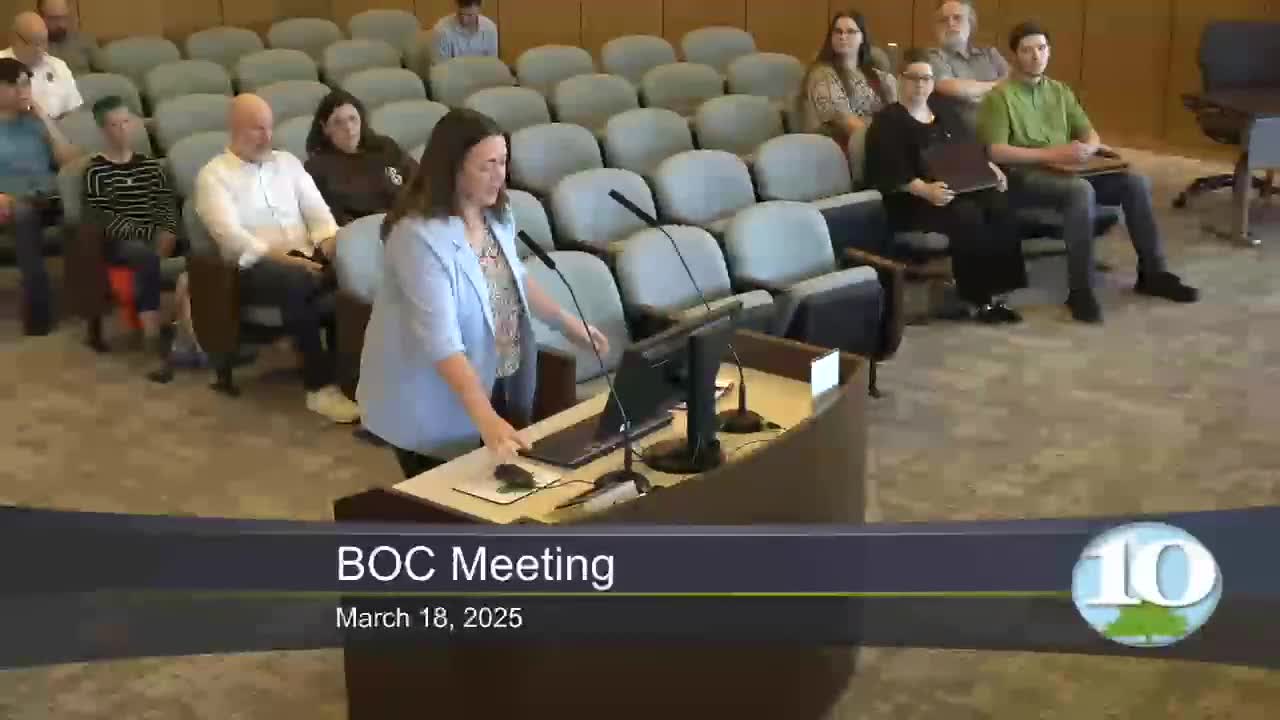
Wake Forest adopts social district for downtown alcohol carryout; board votes 4–1
Summary
The Board of Commissioners approved an ordinance creating a downtown social district effective June 5, allowing ABC-permitted businesses to opt in to sell alcohol in town-approved clear plastic cups (no glass) up to 16 fluid ounces during specified hours. The board set a six-month review; Commissioner Cross voted no.
The Town of Wake Forest Board of Commissioners voted to adopt an ordinance establishing a downtown social district that will permit carryout alcoholic beverages from participating businesses in designated containers beginning June 5.
Jennifer Herbert, the town’s Downtown Development Director, presented the ordinance and described key rules: participating businesses that already hold valid ABC (Alcoholic Beverage Control) permits would choose to opt in and complete an electronic form with the town; beverages sold for carryout in the social district must be in clear, non-glass containers bearing a district mark or logo, include markings identifying the permittee and the purchase time and date, and be limited to 16 fluid ounces. Herbert said staff intend to allow cups that already contain a business logo if the cup itself is clear and displays the social district marking. She also said the town would not initially require a single cup size to accommodate establishments that sell wine.
The proposed district boundary covers the downtown commercial area, broadly including South White Street to Elm, Brook Street (including the section in front of Town Hall), Owen Avenue, Jones Avenue, Waite Avenue and areas adjacent to the Renaissance Center Plaza and Powerhouse Row, Herbert said. She added that private outdoor seating areas and public seating were noted on a map provided to commissioners.
Enforcement and review Herbert said the ordinance includes authority for the town manager, at the chief of police’s recommendation, to cease the social district temporarily if problems arise; the board also scheduled a six-month review for Nov. 18 to assess days, hours and any needed adjustments. The ordinance proposes operation Thursday, Friday and Saturday from noon to 9 p.m., with a suggested delayed implementation date of June 5 to allow time for marketing materials, ABC filings and business opt-ins.
Why it matters: supporters say a social district can increase downtown foot traffic and economic activity; opponents say it risks public-safety problems and that outreach has been insufficient.
Public testimony and concerns Several residents testified against the proposal or urged more outreach. Abby Black, who said she canvassed 46 homes on South Main Street and received 22 responses, reported that only 10 respondents supported a social district and that many were unaware of the proposal. “If my neighborhood’s responses are a reflection of the town as a whole then 55% or more of Wake Forest residents do not want or are unsure about a social district,” Black said, and she asked the board to delay a final vote and hold an open house and townwide survey.
Speakers from the same household presented data and safety concerns. Tripp Black told commissioners he and others reviewed municipal DUI and crash figures and health-department cost estimates; he cautioned that the statistics alone do not establish causation but said the county-level data show an increase in alcohol-related costs. Max Black, a high-school-age speaker who said he had recently completed driver’s education, urged commissioners to consider impaired pedestrians’ “tunnel vision” and whether boundary signage would be effective. Nikki Black said the term “social district” masks that the measure “only speaks to the subject of alcohol” and urged more public seating and other nonalcohol amenities to make downtown genuinely social.
Board discussion and vote Commissioners debated the district’s potential to draw more people downtown and discussed bench placement, public restrooms and how the district would intersect with special events. One commissioner said the ordinance should spur additional programming so the district is not “just a place where now I can have a beer on the sidewalk.” After a motion to approve and a second, the board voted 4–1 to adopt the ordinance; Commissioner Cross voted no. The ordinance’s effective date in the text is June 5, and a six-month review is scheduled for the Nov. 18 board meeting.
What was not decided The ordinance does not set a final, single cup size requirement, and staff said some operational details — such as final marketing materials, an outreach schedule and the specifics of event coordination — will be developed before implementation.
Ending note Staff will work with downtown businesses on opt-ins and with police on enforcement procedures; the board will revisit the policy at the six-month review.