Get Full Government Meeting Transcripts, Videos, & Alerts Forever!
Get email alerts on the Municipal Budgeting topic
No spam. Unsubscribe anytime.
Fort Smith board rejects proposed reallocations intended to shore up utilities fund
Summary
After extensive debate and public comment, the Fort Smith Board of Directors voted down two ordinances that would have reallocated costs from enterprise funds to the general fund for 2024 and 2025.
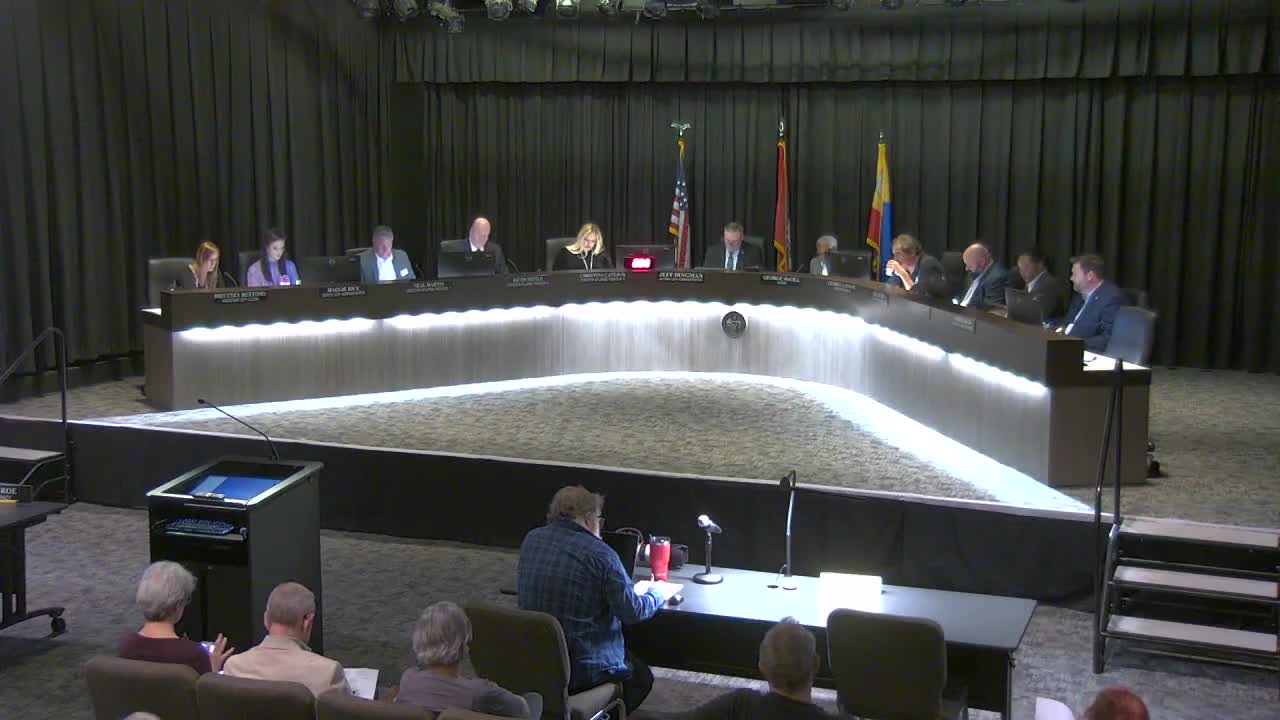
The Fort Smith Board of Directors on March 18 rejected two proposed budget reallocations that would have shifted administrative costs into the general fund to improve the city’s water and sewer debt-service coverage.
Chief Financial Officer Andy Richards told the board the reallocations would add about $2,247,000 to the general fund for 2024 and about $2,499,000 for 2025, and he recommended against the change because it would impose a permanent burden on the general fund. “The general fund is not in a position to take on an additional $2,500,000 a year in these allocations in its current state,” Richards said.
Why this matters: Richards and several board members said the reallocations would improve the utilities’ debt-service coverage ratio — an important metric for bondholders and credit analysts — but at the cost of weakening the general fund’s contingency reserves. Richards estimated the water and sewer coverage would rise from roughly 107% to about 113% if both years were reallocated; he noted those are estimates subject to year-end adjustments.
The board heard four citizens who urged both caution and alternatives. Levon Morton, a certified public accountant who identified himself as a Fort Smith resident, told the board “consistency of accounting is one of the bedrocks of accounting” and urged members to vote no on the reallocations. Other public speakers suggested moving funds from parks spending (including a $4.2 million water-slide project) or reallocating 2024 credit-card-fee revenue instead of shifting ongoing allocations into the general fund.
Board debate focused on trade-offs between securing utility bond covenants and preserving the general fund. Director Settle, who offered the motion, said the change would help multiple enterprise funds and reduce pressure for future rate hikes. Director Rigo and others argued the proposal amounted to moving the burden between funds rather than reducing overall spending; several directors said they preferred targeted cuts, phased approaches or one-time fixes such as reclassifying credit-card fees for 2024.
Votes at a glance: The two ordinances were considered separately. The item to amend the 2025 operating budget (Item 2a) failed. The separate ordinance amending 2024 operating budget (Item 2b) also failed. Both votes were recorded by roll call and the clerk announced the motions defeated.
Next steps and context: Richards recommended no immediate reallocations; several board members asked staff to bring alternative approaches back for further study, including a phased-in allocation, a review of the citizen services/facilities unit, and examination of reserve balances and bad-debt reserves within utilities. Director Goode also asked for a study session on meter coding and billing, which other directors supported.