Get Full Government Meeting Transcripts, Videos, & Alerts Forever!
Get email alerts on the Industrial Zoning topic
No spam. Unsubscribe anytime.
Planning commission upholds director on Engle truck yard; rejects rezoning request to heavy manufacturing
Summary
The Planning Commission upheld the Community Development Director’s decision that metal processing and recycling at 8530 Alameda Street ceased in 2020 and that subsequent truck‑and‑container storage does not hold a separate legal nonconforming right, and the commission also recommended denying the owner’s proposed rezoning to Heavy Manufacturing (M‑3).
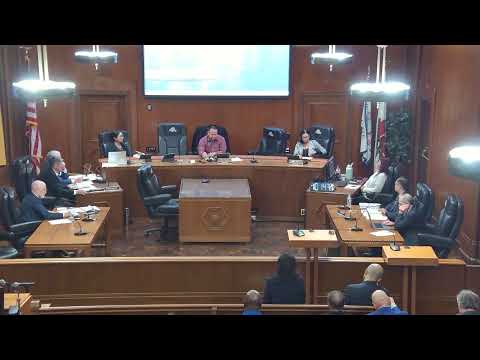
The South Gate Planning Commission on a 3‑0 vote upheld the Community Development Director’s determination that the historic metal processing and recycling use at 8530 Alameda Street ceased in 2020 and therefore that legal nonconforming rights tied to that operation have ended. The commission also unanimously recommended denial of the owner’s separate request to change the parcel’s zoning from Industrial Flex (IF) to Heavy Manufacturing (M‑3) and to remove the site from the South Gate College District in the general plan.
The director’s determination (issued earlier in 2025) concluded that metal processing and recycling operations ceased in March 2020, the structures used for recycling were demolished, and that a subsequent use—truck and trailer storage by a different operator—does not qualify as a legal nonconforming use independent of the prior recycling activity. The determination further advised that truck‑and‑container storage operating as a principal use unconnected to recycling must be terminated because it did not have a prior legal nonconforming status under the municipal code.
At tonight’s hearing staff summarized property history: the site was developed and used for metal recycling beginning circa 1973, the city’s zoning changed in 2015 to Industrial Flex (IF) with new designations in the general plan, and Fleet Yards Inc. began using the site for truck trailer storage in 2020 under a Temporary Use Permit (TUP) that later expired. Staff told commissioners the TUP had exceeded durations allowed by the municipal code and that no renewal was in effect; staff said subsequent review of permits, business licenses and demolition activity supported the director’s finding that the recycling use was abandoned and that the current truck‑storage activity lacks an established legal nonconforming right.
Property owner counsel and the owner urged the commission to accept decades‑long on‑site truck and container storage as an integral, continuing part of the historic use. Counsel presented a series of records, invoices and photographs the owner said demonstrate continuous truck/trailer and container storage since the 1970s and argued the city previously issued business licenses and treated parts of the site as an ongoing use. The owner asked for time and a development agreement approach to phase the site’s transition and proposed a limited rezoning combined with a conditional use permit to allow operations while mitigation and a staged transition are worked out.
Dozens of residents, school students and community groups opposed the rezoning request and urged the commission to uphold the director. Speakers described traffic, noise, dust and health concerns and cited testing and regulatory activity in the area. Representatives from Communities for a Better Environment, Stella for a Better Tomorrow and local students urged denial of the zoning change and called for thorough environmental review because of suspected past contamination, volatile organic compounds (VOCs) and lead/arsenic detections in nearby houses cited in public comment. Several residents said the property has operated without a valid permit or business license since the temporary permit lapsed and argued the city should enforce existing code.
Staff responded that the abandonment analysis rests on multiple factors in South Gate Municipal Code §11.55.04 (abandonment of industrial uses), including whether the nonconforming structure or use has been discontinued for at least two consecutive years, whether related permits and business licenses are active, whether equipment and property remain on site, and on owner intent. Staff said the recycling building was demolished in 2020, permits for recycling activity ceased, and the evidence supported a finding of abandonment for the metal processing/recycling use. Staff also explained that if the commission were to recommend a zone change, the council would need to consider CEQA and the city would face “no net loss” housing obligations because Industrial Flex allows certain future housing‑compatible uses that Heavy Manufacturing would disallow.
After hearing public comment, the commission deliberated. One commissioner noted the property’s remediation history and the need for ongoing coordination with state and county agencies (including DTSC and LA County Fire) for any future plans. Commissioners emphasized that the director’s determination applies to the legal nonconforming status of a former recycling use and that enforcement of any unpermitted current uses falls to code enforcement if the director’s decision is upheld.
The commission voted to uphold the director’s determination that the metal processing/recycling legal nonconforming use was abandoned and therefore cannot be resumed. The commission then voted to recommend no change be made to the property’s zoning (no change from IF to M‑3) and no change to the general plan designation removing the property from the South Gate College District. Staff noted that denial of the requested zone change means the owner may pursue administrative or conditional‑use pathways consistent with the current zoning, but any new or expanded industrial operations would require permitting and environmental review as applicable.
The record from the hearing includes substantial public comment urging additional environmental testing, code enforcement actions for unpermitted operations and continued coordination with county and state remediation agencies. The commission’s actions uphold the director’s legal analysis and preserve the city’s current land‑use framework pending any future applications or appeals to city council.