Get Full Government Meeting Transcripts, Videos, & Alerts Forever!
Get email alerts on the Infrastructure It topic
No spam. Unsubscribe anytime.
District presents Schneider Electric energy service agreement to build data center; $2M proposed from limited tax note
Summary
District staff recommended approving an energy service agreement with Schneider Electric to build an on-site data center and backup power, citing an RFQ process, an audit by the ESCO and use of $2 million from a $40 million limited tax note as the funding source.
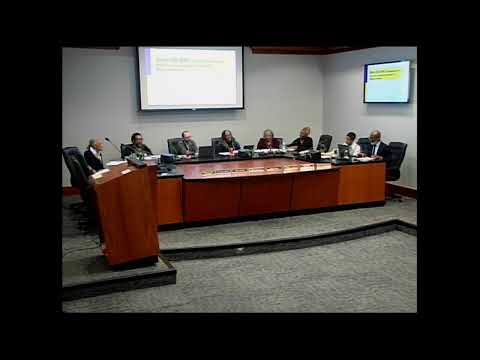
District staff presented a proposal to the Jackson Public School District Board of Trustees recommending approval of an energy service agreement with Schneider Electric to construct a district data center with backup power and associated infrastructure.
The presenter said Schneider Electric responded to RFQ 2303 issued Nov. 7, 2024, and conducted an audit whose findings form the scope of proposed work. District staff said the ESCO model allows energy service companies to evaluate, design and implement projects that bring specialists in electrical, HVAC, construction and technology to define a scope without upfront cost to the district, and that an ESCO is then held accountable to project savings and implementation.
Funding: the presenter said the district issued a limited tax note for $40,000,000 and that $2,000,000 of that issuance would be used to fund this project. The presenter also said Schneider would oversee construction management, procurement and coordination with energy providers, and that JPS IT and facilities staff would continue to work with Schneider throughout the project.
History and examples: staff noted a prior energy savings agreement with Siemens (entered in 2021, according to the presentation) that the presenter said produced estimated savings of about $950,000 per year during its term.
Questions from trustees addressed whether an audit had been done (yes), why the district is locating capacity on-site rather than off-site (the proposal includes infrastructure such as servers, storage, cooling, physical security, cabling and fire suppression, plus backup generators to preserve network services during protracted power failures), and how ESCOs deliver long-term value. The presentation concluded with the administration recommending board approval; the transcript records the recommendation but does not record a subsequent vote on this specific agreement.