Get Full Government Meeting Transcripts, Videos, & Alerts Forever!
Get email alerts on the Housing Policy topic
No spam. Unsubscribe anytime.
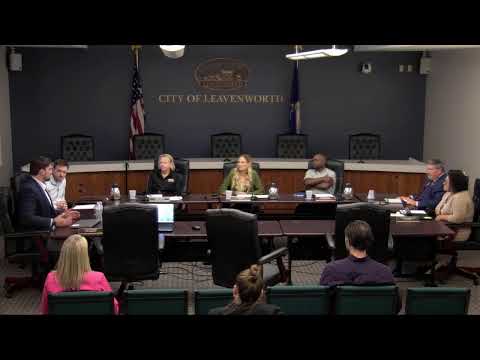
City staff outline Reinvestment Housing Initiative District; commission asks staff to commission housing needs study
Summary
City staff described the Reinvestment Housing Initiative District (RHID) program and its mechanics to Leavenworth commissioners, and the commission directed staff to procure a targeted housing-needs assessment to evaluate district use and locations.
City staff presented the Reinvestment Housing Initiative District, or RHID, as a tool to incentivize housing development and asked the commission whether it wanted staff to pursue further study.
Staff explained that an RHID redirects tax-growth revenue from a defined set of properties to reimburse eligible development costs — such as infrastructure for subdivisions or certain upper-story renovation costs in a central business district — rather than immediately adding the incremental tax gains to city coffers. The program requires a city designation and state approval from the Kansas Department of Commerce and also typically requires buy-in from the county and affected school districts. Staff said recent legislative updates expanded eligibility and uses for larger cities and for upper-story redevelopment in central business districts.
City staff described two RHID types: (1) subdivision-infrastructure RHIDs for single-family or multifamily development (typically reimbursing infrastructure, utilities and land costs) and (2) upper-story RHIDs that apply inside a central business district and can cover rehabilitation costs such as heating, ventilation and (where required) fire-suppression upgrades. Staff said the city must define the legal boundary for any RHID and may set the length of the rebate program (state guidance allows terms up to 25 years; neighboring cities commonly use shorter terms such as 20 years).
Commissioners asked practical questions about which areas would benefit and how RHID differs from tools the city already uses, such as the Neighborhood Revitalization Area (NRA) and tax-increment financing (TIF). Staff said the RHID is intended for locations where development is unlikely without incentives, and recommended a targeted approach rather than a citywide designation. Commissioners and staff discussed which neighborhoods have underused incentives: staff noted the NRA covers much of north Leavenworth but also said the city needs to investigate why the NRA is not attracting more development.
Several commissioners expressed interest in downtown upper-story housing and North Leavenworth redevelopment; others raised the need to understand county and school-district concerns because those jurisdictions must approve or could veto an RHID designation. Staff said a developer had provided a housing-needs assessment for the city at no charge but recommended the city commission authorize or direct staff to seek a comprehensive housing-needs study the city controls. The commission directed staff to proceed with procurement steps for a housing-needs assessment (RFP/quote process), subject to purchasing rules and available budget. No RHID designation or approvals were made at the meeting.