Get Full Government Meeting Transcripts, Videos, & Alerts Forever!
Get email alerts on the Mental Health topic
No spam. Unsubscribe anytime.
Guidance Center reports sharp growth after CCBHC certification; crisis beds, rides and school clinicians expand
Summary
The Guidance Center told the Leavenworth City Commission it has expanded services after becoming a certified community behavioral health clinic, reporting large increases in billable visits, transportation rides and school-based clinicians and saying it needs more staff and space to continue growth.
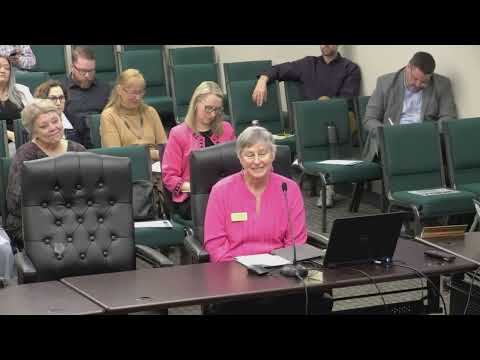
The Guidance Center reported substantial growth in services to Leavenworth and neighboring counties after transitioning to the certified community behavioral health clinic (CCBHC) model, CEO Stevie Durkin told the Leavenworth City Commission during a March study session.
Durkin said billable community services rose from just over 41,000 visits in 2023 to more than 61,000 visits in 2024, and that the Guidance Center’s total visits including non-billable care exceed 77,000. “At the end of 2024, we were over 61,000 visits,” Durkin said, citing claims-driven data.
The center reported growth across several targeted programs: transportation rides increased (from about 41,352 rides in February 2023 to 45,782 rides in 2024), assertive community treatment has an active caseload that staff estimate at about 50 individuals, and the Individual Placement and Support employment program grew from seven to 64 participants. Crisis services and the crisis stabilization center reported major increases — emergency services rose about 81 percent and crisis stabilization 71 percent — in part because the agency recently hired additional clinical staff.
Durkin described the Guidance Center’s community and school-based work. The agency now places licensed clinicians inside schools and said youth services grew by more than 50 percent. She said the clinic is working with local partners on co-responder and jail-liaison programs to divert people from emergency rooms and jails into treatment.
The center also flagged operational constraints: it currently has a 12-bed crisis stabilization facility and said it needs roughly 70 additional staff across its three-county service area to meet demand. Durkin said space is a limiting factor and that the agency is exploring expansion at its current campus and off-site options.
Durkin asked the commission for continued engagement on strategic planning, data collection and potential local support. She said the center has recently hired a chief information officer to improve data capture and plans community engagement for a forthcoming strategic plan.
The commission asked about staff safety during field work, placements for practicum students and whether the Guidance Center can host internships. Durkin said staff do not go into situations where they feel unsafe, co-responder pairings are common, and the Guidance Center partners with multiple universities for internships.
Clarifying details: the Guidance Center serves Leavenworth, Jefferson and Atchison counties; assertive community treatment caseload ~50; IPS program expanded from 7 to 64 participants; crisis stabilization capacity is 12 beds; reported billable community visits rose from ~41,000 (2023) to >61,000 (2024), total visits including non-billable ~77,000; transportation rides rose to 45,782 in 2024.
The center asked the city for help identifying space and said it will return with data points the commission may request.