Get Full Government Meeting Transcripts, Videos, & Alerts Forever!
Get email alerts on the Student Wellness Sel topic
No spam. Unsubscribe anytime.
District highlights counseling, SEL programs and survey results; leaders note mental‑health and workload concerns at high school
Summary
District staff and the superintendent presented progress on strategic goal 2 (wellness, inclusion and supports), detailing K–12 counseling programs, the student wellness survey, school‑by‑school SEL programming and next steps including broader adoption of Character Strong and additional tiered supports.
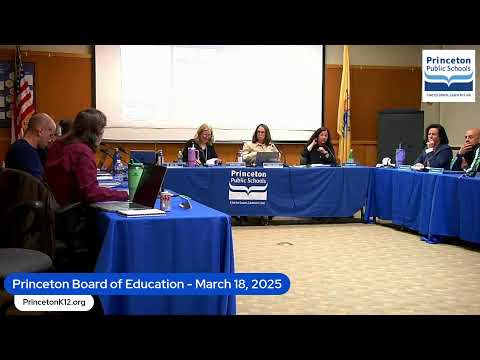
District staff and the board highlighted social‑emotional learning (SEL) programs and counseling services across the Princeton Public School District, reporting survey results the administration said show modest gains while noting persistent concerns about high‑school workload and middle‑school stress.
John McMichael, the district counselor who led the presentation, described K–12 counseling programs and preventive initiatives. He told the board that elementary counselors are using CASEL‑aligned curricula such as the Random Acts of Kindness program and that Little Brook piloted Character Strong; the administration plans to expand Character Strong to all four elementary schools next year.
McMichael summarized counseling activities at each level: morning meetings and Kindness Ambassadors at Community Park, a Coffee with the Counselor program at Johnson Park, mentorship and math emphasis at Riverside, wingman and streak‑of‑kindness initiatives at Princeton Middle School, and a range of school‑wide cultural and wellness programs at Princeton High School, including junior college workshops and small‑group supports.
Dr. Kathy Foster, who framed the report under the district’s strategic priorities, presented student wellness‑survey findings the district administers periodically. She said four core statements — including “my school is a welcoming and safe place” and “there is at least one adult I can go to when something is bothering me” — showed increases in some grades between administrations, and the district has added open‑ended questions to better understand student responses.
Foster and McMichael emphasized programmatic next steps: expand elementary Character Strong, continue counselor training (including Anti‑Bullying Specialist training cited in the presentation), embed SEL into classroom instruction, and use school‑level data to inform targeted supports. McMichael also identified school‑specific priorities such as mentoring, explicit SEL instruction, and anti‑vaping awareness campaigns at the high school.
Concerns raised at the meeting included student workload and mental‑health stress at the high school. Multiple speakers from the high school student body noted that the breadth of course offerings and AP options create pressure; the administration said the district views challenge as valuable but wants to support students who take rigorous schedules. Board members and staff discussed counselor staffing levels; McMichael said the district had sought additional counseling capacity and noted a recently hired staff member who launched a girls’ empowerment program called ROCS.
Why it matters: The presentation ties to the board’s strategic plan and the district’s allocation of counselor and support resources. The initiatives described are largely tier‑1 (universal) SEL work with targeted tier‑2 groups in several schools; however, stakeholders at the meeting suggested continued investment in counselor staffing and youth mental‑health supports.
Provenance: The material appears in the meeting during a scheduled presentation on social‑emotional learning and a subsequent strategic‑plan update.