Get Full Government Meeting Transcripts, Videos, & Alerts Forever!
Get email alerts on the School Start Times topic
No spam. Unsubscribe anytime.
Parents, teachers and students urge rollback of early-grade iPad use and warn proposed start-time change will hurt extracurriculars
Summary
Several parents, teachers and students used the public-comment period at the Fairport Central School District Board of Education meeting on March 18 to press the board on two related issues: reducing screen time for young children in classrooms and reconsidering a proposed 2026 shift in school start times that would move Fairport High School to a 9:00 a.m. start and a 3:45 p.m. dismissal.
Several parents, teachers and students used the public-comment period at the Fairport Central School District Board of Education meeting on March 18 to press the board on two related issues: reducing screen time for young children in classrooms and reconsidering a proposed 2026 shift in school start times that would move Fairport High School to a 9:00 a.m. start and a 3:45 p.m. dismissal.
Carrie Brewer, a Fairport parent and assistant professor at Finger Lakes Community College, told the board that research and classroom experience have led her to restrict screens for her incoming kindergartner. “Young children can and should learn the skills they need to thrive in the digital age without the potentially harmful effects of screens on their young brains,” Brewer said, urging the board to consider rolling back routine iPad use in lower grades.
The meeting drew multiple speakers who raised closely related concerns about proposed start-time changes that the district is studying for implementation in 2026. Carrie Klein, a longtime district teacher and Fairport graduate, said later school dismissal times will force students to choose between a tenth-period block of academic help and the dozens of clubs and activities that meet after school now. “In 2026, when the time switches to FHS releasing at 03:45, students will have to choose,” Klein said, warning that limiting participation would disadvantage students on college applications and reduce leadership opportunities.
A student leader echoed that concern. “As a leader in these clubs, we work hard ... to foster healthy and inclusive and welcoming communities,” said Tegan Bai, a senior and co‑president of the drama club. Bai said many extracurriculars begin at 2:25 p.m. and that later dismissal would have prevented the friendships and opportunities she described.
Amy Bruckel, an elementary parent and district educator, argued that shifting elementary start times earlier to accommodate a later high school start would create “a whole lot more time away from their homes and families,” and could force many families into costly aftercare. Bruckel said some families would have to place young children on buses in darkness and might need to put children “in bed and asleep by 6PM” to meet new wake-time schedules.
Several speakers also questioned the assumption that later high school start times automatically increase sleep. Lauren Broganola, a parent and district employee, said students’ packed schedules—sports, jobs, clubs, SAT prep and family responsibilities—mean simply moving school hours does not eliminate sleep deficits. “Until we remove things from their to-do list that’s not going to change their sleep,” she said.
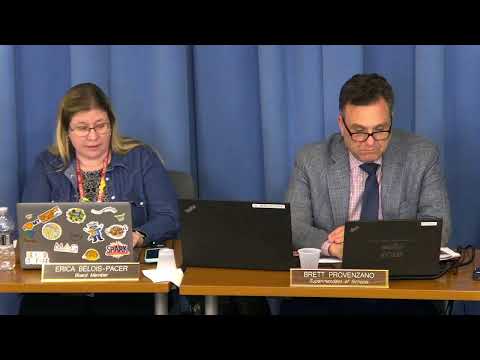
Superintendent Brett Provenzano addressed those concerns later in the meeting. He said the district has been studying start-time scenarios for about two years, that transport routing and the district’s three-tier busing system limit scheduling flexibility, and that proposals were developed with outside consultants. Provenzano also said the district has been negotiating a wraparound-services partnership with the YMCA to expand before‑ and after‑school options for families if start times change. “The YMCA came through with a proposal that will meet the student and community’s needs,” Provenzano said; he and staff said the YMCA would publish details after it completes its current enrollment cycle.
Board members and administrators repeatedly told speakers they appreciated the feedback and noted the district will continue community outreach and a transition-team process on start times during the coming year. The board scheduled additional public budget and planning sessions in April that officials said will include further discussion of start times and wraparound services.
The public comment period and subsequent discussion left clear trade-offs: district officials and consultants cited busing constraints and research on adolescent sleep as reasons for the proposed high-school schedule, while parents, a teacher and students stressed the potential loss of academic-help time, equity issues for families without childcare options, and harms to extracurricular participation that they said are central to students’ social and emotional development.
The board did not take a vote on start times at the March 18 meeting and said it will revisit the subject as planning continues and as state budget and transportation details become clearer.