Get Full Government Meeting Transcripts, Videos, & Alerts Forever!
Get email alerts on the Homelessness topic
No spam. Unsubscribe anytime.
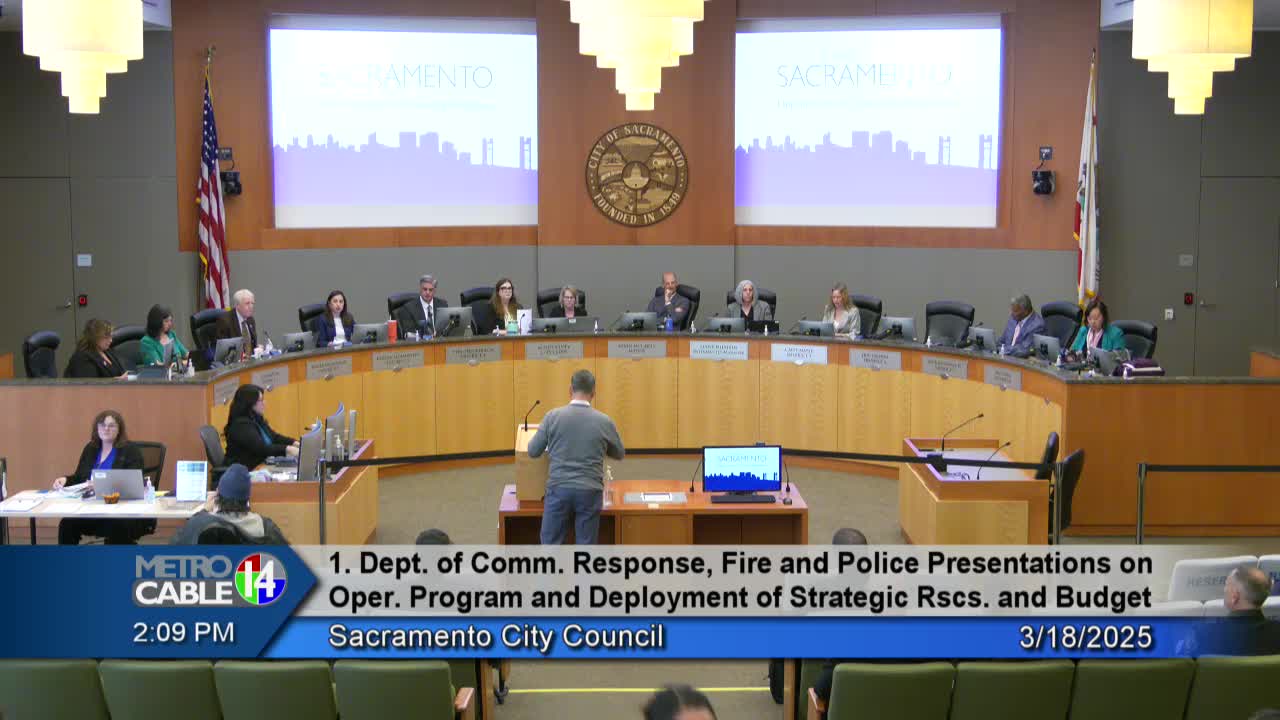
Sacramento outlines homelessness response as budget cuts loom; department warns most funding is short‑term
Summary
City Department of Community Response officials told the City Council they reduced response times and sheltered thousands in 2024 but said 75% of the department's funding is one‑time or short‑term, leaving programs vulnerable as state grant levels shift.
The Sacramento Department of Community Response on Tuesday told the City Council it has reduced outreach response times, increased placements into shelter and housing, and integrated alternative responses into public safety — but officials warned most of the department's budget depends on short‑term grants.
The mission, as Director Brian Pedro told the council, is "to provide compassionate individualized support to people experiencing homelessness with the goal of aiding them on their path toward recovery, wellness, and self sufficiency." He said the department now operates with 37 full‑time equivalent staff, manages about 30 contracts and has an overall budget the department presented as roughly $51.9 million, of which about $5.9 million was operating and the remainder was other or one‑time funds.
Pedro said the department's incident management team now takes many calls routed through 311, reducing calls that previously went to 911. He said the office received roughly 39,000 311 calls that resulted in IMT activity and closed about 39,000 incident management calls during 2024, performed more than 14,000 outreach contacts and removed large quantities of debris during responses. He also described a string of program outcomes including 56 unsheltered veterans contacted during a VA surge, 17 veterans obtaining same‑day housing and 15 offered VASH vouchers, and 1,100 rapid placements over the year.
Why it matters: Pedro told council members that about 75% of DCR funding is "one‑time or short term," meaning reductions in state or grant programs can have immediate operational effects. He said Sacramento's lower homelessness counts in the city's point‑in‑time count reduced state funding that had been tied to the higher count, creating a new shortfall. Council members pressed staff on which contracts are funded by which sources and on the department's plan to find sustainable models.
Supporting details and context
Pedro described several tools and partnerships the department uses, including a homeless management information system (HMIS) to track contacts and services by name and location, referrals to the Roseville Road Center, the Outreach and Engagement Center (OEC), and WellSpace's scribe receiving center. The department operates congregate and non‑congregate shelters, motel programs and transitional‑age youth facilities; Pedro said in 2024 the city listed 18 shelter sites with approximately 1,375 beds and that the department sheltered about 4,769 people with roughly 47% of exits recorded as "to improved circumstances." He said the IMT responds to roughly 120 calls per day at current levels and that outreach response times for priority calls have dropped from 16–20 days down to 24–48 hours.
Pedro and several council members noted specific grant streams and timelines: the department applied to bill under CalAIM and expects the earliest billing and reimbursement window in the summer (June–July), and the city received an encampment resolution grant of about $18 million for the current year. Pedro said the department has trimmed contracts and achieved roughly $5 million in savings during recent renegotiations but that roughly $11 million in prior HAP funding was lost, creating a gap.
Public comments during the meeting included both support for core public safety services and criticism of DCR. Some speakers urged protecting police and fire budgets and questioned whether DCR contracts deliver results; others described harms from encampment sweeps and urged more humane notice and property protections for people living outdoors.
Next steps and council direction
Staff published lists of proposed reductions and impact tiers on the city's finance website, and city managers told the council those lists will be discussed with the Budget and Audit Committee on March 25. The administration will deliver a proposed balanced budget the week of April 28 and return with more detailed, department‑level impact descriptions in late April; Council also scheduled a DCR‑focused follow‑up on April 29 to discuss models and outcomes in more depth.
Attribution
"The mission of the Department Community Response is to provide compassionate individualized support to people experiencing homelessness," Director Brian Pedro said during his presentation. Public commenters included residents and advocates who raised concerns about the effect of sweeps on possessions and about program accountability.
Ending
Council members and department staff agreed that DCR's alternate‑response work has reduced some 911 demand, but they also said the city needs more clarity on long‑term funding to decide how to protect core services in the face of a structural budget deficit.