Get Full Government Meeting Transcripts, Videos, & Alerts Forever!
Get email alerts on the Land Use topic
No spam. Unsubscribe anytime.
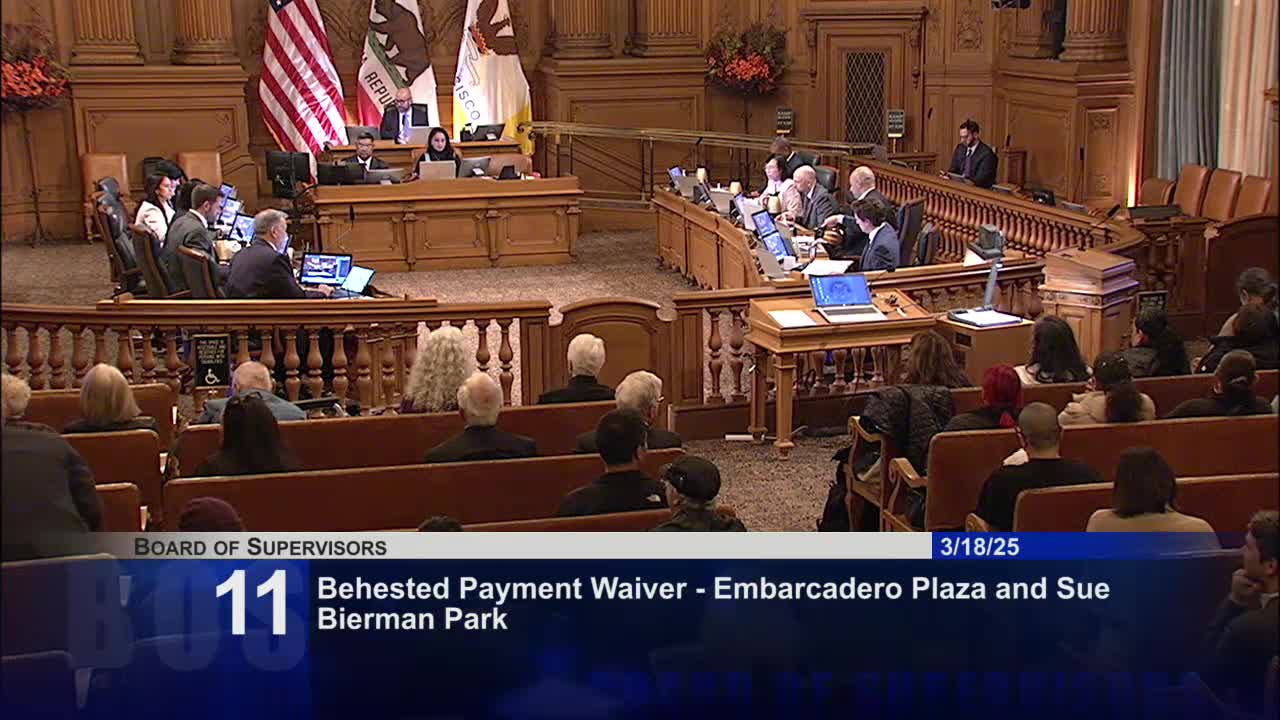
Supervisors approve Central SoMa package to reduce commercial requirements, open area to more housing
Summary
The board passed on first reading a planning package that reduces commercial development requirements in Central SoMa and the Transit Center district and modifies related land-dedication and zoning rules to allow more residential development while retaining negotiated community benefits.
The San Francisco Board of Supervisors on March 18 passed on first reading a legislative package of planning-code amendments designed to reduce mandatory commercial development requirements in the Central SoMa special planning area and the Transit Center district, and to allow certain residential projects to meet modified land-dedication rules.
Supervisor Shamann Dorsey, speaking in support of the package, framed the changes as a way to ‘‘open up Central SoMa and the transit district to more residential development while retaining key community benefits negotiated under the Central SoMa plan.’’ He thanked the Planning Commission and Planning Director Alex Hillis (referred to in the record as Director Hillis) and city agencies for their work and said the measures will help meet housing targets and stimulate downtown economic activity.
The package includes two ordinances: an amendment to the General Plan to reduce commercial development requirements in the Central SoMa plan and the Transit Center district subarea, and an amendment to the Planning Code and Zoning Map to reduce commercial development requirements for certain residential projects and modify land-dedication requirements in the Central SoMa Special Use District (as described by the clerk’s summary). The clerk recorded these ordinances as passed on first reading without objection.
Why it matters: The Central SoMa changes loosen commercial mandates to facilitate additional housing in parts of downtown where office and commercial requirements previously restricted residential projects; the board emphasized that negotiated community benefits such as parks, complete streets, and recreation commitments will remain part of project obligations.
What happens next: Both ordinances passed on first reading; implementation will proceed through the regular legislative process and development review consistent with the Planning Department’s processes.