Get Full Government Meeting Transcripts, Videos, & Alerts Forever!
Get email alerts on the Municipal Finance topic
No spam. Unsubscribe anytime.
Board approves ordinance to suspend empty homes tax pending lawsuit; 9-2 vote
Summary
The San Francisco Board of Supervisors voted to suspend collection of the voter-approved "empty homes" tax while litigation proceeds, after hearing revenue estimates and administration concerns about collection costs and administrative burden.
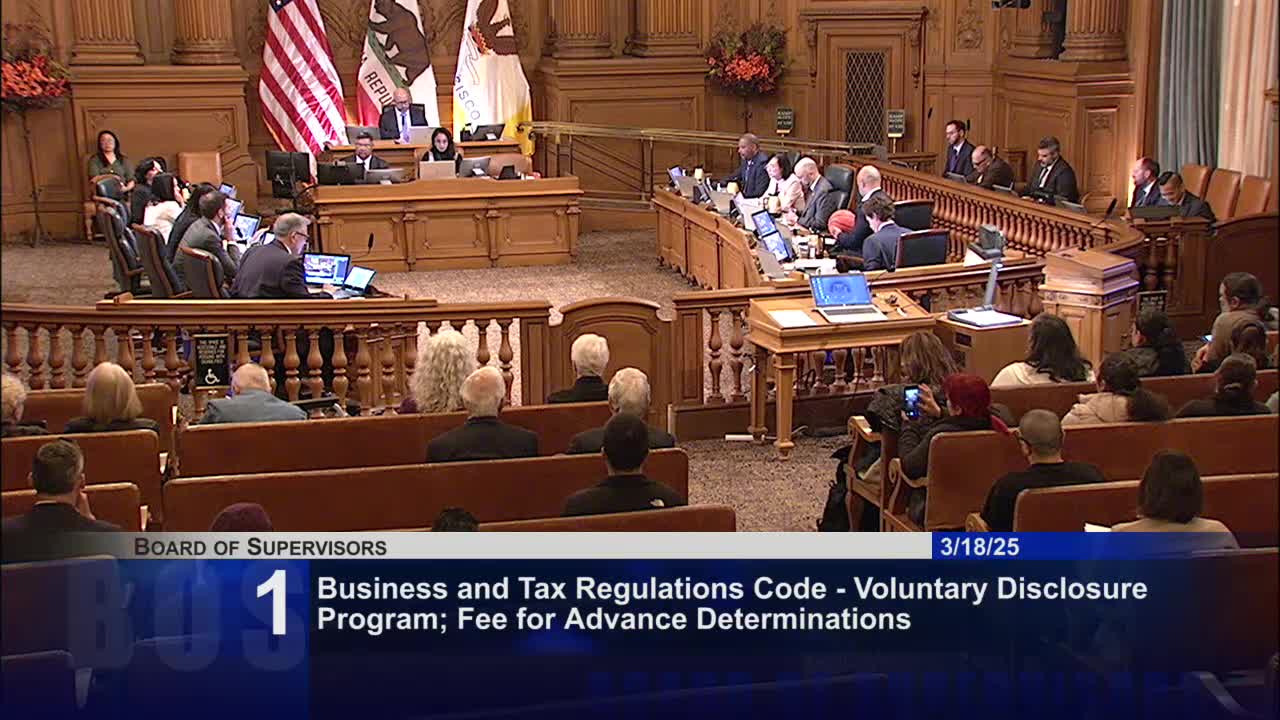
The San Francisco Board of Supervisors voted on March 18 to suspend the city’s voter-approved empty homes tax while a legal challenge proceeds, with nine supervisors voting in favor and two voting against.
Supporters said the suspension responds to practical and administrative concerns raised by the Treasurer and Tax Collector and the city’s budget analysts. Opponents said pausing collection could forfeit significant revenue in a city facing a budget shortfall.
The measure, read into the record by the clerk, would suspend the empty homes tax pending a final decision in the ongoing litigation brought by, among others, the San Francisco Apartment Association and the San Francisco Association of Realtors. Supervisor Connie Chan, chairing budget-related matters, said the city had to weigh whether the tax could be implemented without imposing an administrative cost burden on the Treasurer and Tax Collector’s Office. Controller Wagner told the board his office’s original ballot-handbook estimate for the tax was roughly $25 million annually, but staff and the Budget and Legislative Analyst later provided a revised estimate that the BLA reported at roughly $9 million in 2024 rising to about $15.4 million in 2026 and beyond.
Amanda Confried of the Treasurer and Tax Collector’s office described the practical challenges the office would face if the city were to collect while litigation was unresolved: up to roughly 80,000 parcels would receive annual declarations, the majority of which would not owe tax but would still require outreach and processing; the office would need expanded communications, possible paid media, multiple hard-copy mailings, and a specially trained unit working with the City Attorney. Confried said those steps would increase collection costs and could reduce net revenue, particularly during a period of legal uncertainty.
Supervisor Fielder said he opposed the suspension because the empty homes tax was intended as “one of the many tools” to address the housing affordability crisis and he urged swift resolution of the litigation; he announced he would vote no. Supervisor Walton also voted no at the final roll call. After debate and a clerk roll call, the board recorded nine ayes and two nos (Walton and Fielder) and passed the ordinance on first reading.
Why it matters: The empty homes tax was designed to discourage long-term vacancy by charging owners of certain unoccupied residential units; suspending collection delays any revenue the city expected to use for housing programs and leaves open questions about administrative cost versus gross yield.
What happens next: The ordinance was passed on first reading by the board. Because the item deals with implementation timing tied to litigation, the city will await the outcome of court proceedings before collecting the tax as set out in the ordinance.
Votes at the meeting: The clerk recorded nine ayes and two nos on the suspension ordinance, with Supervisors Walton and Fielder voting no.