Get AI Briefings, Transcripts & Alerts on Local & National Government Meetings — Forever.
New Rochelle police highlight youth programs, downtown bike unit and public-facing data at March 18 council meeting
Loading...
Summary
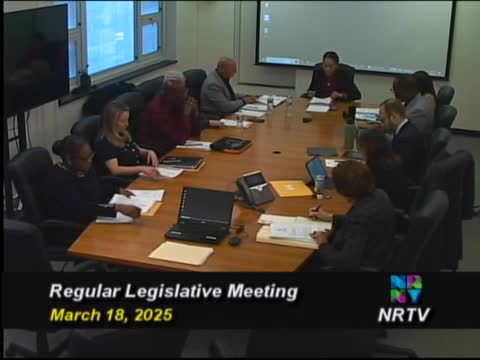
New Rochelle Police Commissioner Robert Gazzola and Deputy Commissioner Neil Reynolds briefed the City Council on the department's community engagement work and recent crime trends at the March 18 regular legislative meeting.
New Rochelle Police Commissioner Robert Gazzola and Deputy Commissioner Neil Reynolds briefed the City Council on the department's community engagement work and recent crime trends at the March 18 regular legislative meeting.
Gazzola said the department has emphasized outreach programs, youth mentoring and neighborhood presence as part of a long-running community policing effort that the department now calls "community engagement." He described programs ranging from a 10-week Citizens Police Academy and a six-week "learn and earn" summer program for 14- to 17-year-olds to a new youth cadet program and a mentorship initiative with the Boys & Girls Club aimed at older teens and young adults.
The programs are intended both to reduce tensions and to build recruitment pipelines. "We're...looking at engagement, and we're gonna give our officers credit for the times that they take time to stop their patrol, and just meet and greet, and...have conversations with our community members," Gazzola said.
Why it matters: City officials and council members asked specific questions about which neighborhoods and age groups receive the most engagement, how the department measures success and how new units will be deployed in the downtown commercial core. Council members repeatedly pressed for clarity about staffing and hours for a proposed downtown bike unit and for details about who the youth programs serve.
What the department described
- Youth programs: Gazzola said the Citizens Police Academy is a 10-week program and that the department was in about week two of a current cohort with roughly two dozen participants. He described a six-week summer program for 14- to 17-year-olds that the department has run for several years and a two-year youth cadet program for the same age group with 20 to 25 participants who meet about every two weeks. A separate mentorship and career-preparation program for 18- to 24-year-olds is running in partnership with the Boys & Girls Club and a nonprofit funder; Gazzola said the newer cohort is about 24 participants in a 12-week cycle.
- Downtown Bike Unit: The department proposed a small dedicated bike unit to address quality-of-life issues in the downtown Vanguard District and Library Green area. Gazzola said the unit would include three full-time bicycle officers, a likely fourth officer to assist for events or peak need, two beat officers to supplement coverage and a sergeant as supervisor. Staffing would be concentrated in the downtown/Library Green/Bracey House/Monroe University corridor for day, evening and weekend coverage; Gazzola said hours would be responsive to need and subject to change as the unit is evaluated.
- Mobile presence and hub: The department described using a community engagement van for events and a kiosk at the Library Green as a downtown hub where officers can be visible and residents can approach the department in a non-enforcement setting.
- Community partners and programs: Gazzola cited partnerships with Iona University, Monroe College, the Boys & Girls Club, the Youth Bureau (Kelly Johnson), the Clergy Rapid Response Team, and volunteer groups including Build-A-Bed. He credited a city staff member, Melissa Deniz, for social media and public outreach.
Transparency and data
Gazzola noted the department publishes crime and arrest data and civilian complaint and compliment portals on its website. "We publish that publicly," he said, adding that online dashboards include crime mapping and a portal that routes complaints to internal affairs and compliments to commanding officers.
Crime trends discussed
Gazzola told the council that part 1 crimes were lower overall last year compared with the prior year, but that the city was up modestly year-to-date for the first three months. He said the recent increases are concentrated in property crimes and are small in absolute terms: burglaries rose from 12 to 21 incidents (a 75% increase year-over-year in the short span cited), grand larceny of auto rose from eight to 13 incidents (about 62%), and larceny increased by roughly 18 incidents (reported as a 12% rise). He cautioned that percentages can overstate small raw-number changes: "The percentages seem higher than than they really are," Gazzola said. Gazzola also reported arrests were up about 20% and parking tickets had increased.
Council questions and next steps
Council members pressed department leaders on measurement of program success (attendance, participant feedback and community contacts were cited as markers), the unit-selection process for the bike unit (Gazzola said officers were "hand picked" by the division commander based on experience), and how the department works with county mental-health and social-service partners for people who are homeless or have behavioral health needs. Gazzola and the city manager said the city is convening service providers and county partners to identify daytime programming and gaps in services for people experiencing housing insecurity.
Ending
Council members thanked Gazzola and Deputy Commissioner Neil Reynolds for the briefing and for the department's outreach work. No council action was taken on the presentation; the discussion closed and the meeting moved on to agenda items.