Get Full Government Meeting Transcripts, Videos, & Alerts Forever!
Get email alerts on the City Tribal Relations topic
No spam. Unsubscribe anytime.
Tulsa tribal litigation stays in flux as city negotiates consent decree and state seeks to intervene
Summary
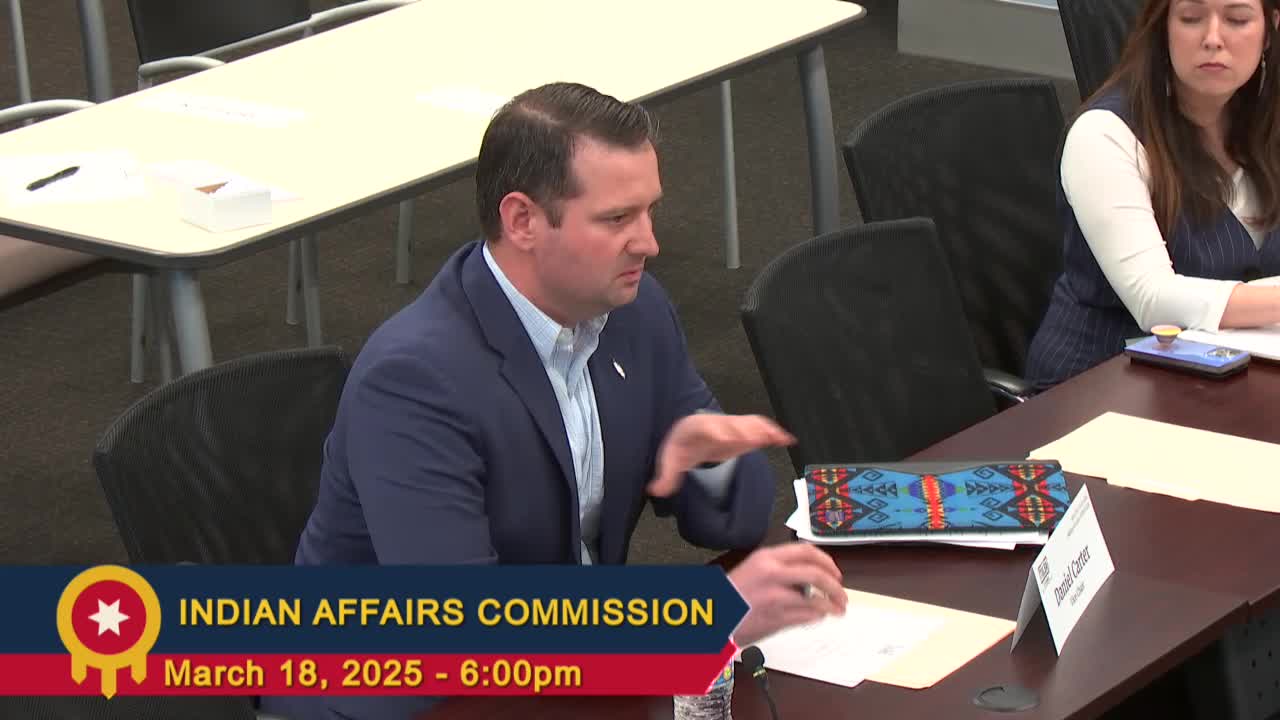
At the Greater Tulsa Area Indian Affairs Commission meeting, commissioners heard an update that the Muscogee (Creek) Nation's suit against the City of Tulsa remains unresolved while city negotiators and tribal leaders move toward a consent decree and another party seeks to join the case.
Acting chair (name not specified) told the Greater Tulsa Area Indian Affairs Commission that negotiations are underway between the City of Tulsa and the Muscogee (Creek) Nation over a lawsuit that seeks to limit certain municipal arrests of Native American citizens following the Supreme Court's McGirt decision.
The vice chair's update said the city had paused active defense of the case after the new mayor's office sought negotiated terms with the Muscogee Nation; those talks have produced draft consent-decree language that city legal staff are reviewing. The speaker characterized the negotiations as an effort to balance public-safety concerns with tribal sovereignty, and said further meetings of city and tribal leaders are scheduled.
Commissioners were also told that a third party has filed a motion in the case seeking to intervene. The transcript describes that motion as coming from a member of the Stitt family (identified in the meeting record as Keith Stitt), asking to take over or represent the city's interests in the litigation. The acting chair said it is unclear how the court will rule on that motion and noted the procedural complexity: whether a state actor may supplant municipal defense of a suit that involves intergovernmental negotiations.
Commissioners discussed related legal decisions that shape the field, including references to the McGirt decision and an "O'Brien" ruling mentioned in the meeting. The acting chair said the O'Brien matter had reached settlement and that earlier rulings illustrate how jurisdictional questions remain unsettled and can create uncertainty for cities and tribes.
City staff (tribal liaison) reported that the City of Tulsa's Tribal Relations Committee has been restructured to meet quarterly, with the mayor's office staffing a liaison role. That staff member told the commission the committee will keep a general quarterly meeting and create ad hoc work groups for focused issues such as budget priorities and intergovernmental projects. The liaison said council administration clarified that because the committee is televised, certain quorum-and-posting practices will be handled administratively to reduce procedural obstacles to convening.
Commissioners and staff also described ongoing intergovernmental conversations beyond litigation: the city has opened talks with Cherokee Nation and Osage Nation on economic development, and staff have connected tribal housing officials with city housing advisors as part of efforts to address homelessness and tribal housing needs. The acting chair said federal moves to allow tribal housing on federal lands (announced in the Secretary of the Interior/HUD initiative referenced in the meeting) might present opportunities, though she noted no specific federal land parcels were identified in the Tulsa area during the discussion.
Why it matters: The outcome of litigation or a consent decree would affect how municipal officers interact with tribal citizens inside reservation boundaries and could set precedents for intergovernmental policing, public-safety coordination, and jurisdictional clarity in northeastern Oklahoma.
Next steps: Commissioners were told city and tribal legal teams will continue drafting and reviewing consent-decree language and that additional negotiation sessions are scheduled. The meeting record shows a pending court motion to intervene; commissioners said they are monitoring the filing but did not direct legal action themselves.