Get Full Government Meeting Transcripts, Videos, & Alerts Forever!
Consultants: Olympia Hills covers operations but needs $3.2M–$4.2M in capital work; council seeks phased plan
Summary
A National Golf Foundation review found Olympia Hills profitable on-site but requiring multimillion-dollar capital investment and continued outside support from the cityvenue tax. Council members pressed for phased improvements, marketing changes and clearer performance reporting; council gave consensus to file the consultant report.
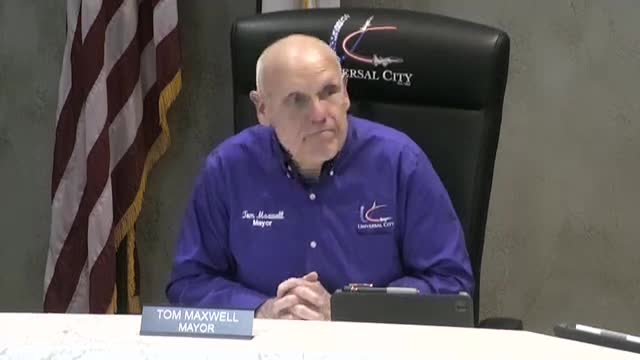
The Universal City City Council on an evening in June heard a strategic review of Olympia Hills Golf Course from the National Golf Foundation (NGF), which concluded the facility generally performs above average for municipal golf but will require $3.2 million to $4.2 million in capital improvements to address aging infrastructure and some original construction shortcuts.
In a presentation that included course condition observations, market analysis and a five-year financial projection, Richard Singer, director of consulting for the National Golf Foundation, told the council the course produced about $2.6 million in revenue in 2024 (a year in which greens renovations and discounting reduced revenue) and $2.9 million in 2023. Singer said the site generated an on-site operational profit in the range of $143,000 to $298,000 from 202123, but there are substantial "below the line" costsdepreciation, administrative allocations and a stormwater management line itemthat exceed what golf revenue alone can cover.
Singer said the capital items NGF identified include bunker renovations, irrigation expansion, cart path repairs, restroom and parking repairs and kitchen improvements; the full package was estimated "anywhere between 3 and a third to maybe a little more than $4,000,000". He recommended categorizing improvements as "need to have," "nice to have" and longer-term revenue-generating ideas (driving-range upgrades, patio coverings, event conveniences) and noted inflation makes cost estimates volatile.
Why this matters: Olympia Hills is a revenue-producing city-owned facility and a venue tax was created to support it. The consultant said the venue tax currently funds outside items the course does not generate from operations, but a remainder of that tax still exists and the council must decide how much to continue…
Already have an account? Log in
Subscribe to keep reading
Unlock the rest of this article — and every article on Citizen Portal.
- Unlimited articles
- AI-powered breakdowns of topics, speakers, decisions, and budgets
- Instant alerts when your location has a new meeting
- Follow topics and more locations
- 1,000 AI Insights / month, plus AI Chat