Get Full Government Meeting Transcripts, Videos, & Alerts Forever!
Get email alerts on the Humanitarian Crisis Gaza West Bank topic
No spam. Unsubscribe anytime.
U.N. official warns renewed airstrikes and blockade are driving humanitarian catastrophe in Gaza and West Bank
Summary
A U.N. official told the Security Council that resumed airstrikes and a closure of crossings have cut off food, medicine and fuel to Gaza, imperiling more than 2.1 million people and reversing aid gains made during a recent ceasefire. He urged reopening crossings, renewing the ceasefire and a major funding boost.
A United Nations official told the Security Council that renewed Israeli airstrikes and a blockade have cut off food, medicine and fuel to Gaza, imperiling more than 2.1 million people and reversing gains achieved during a recent ceasefire.
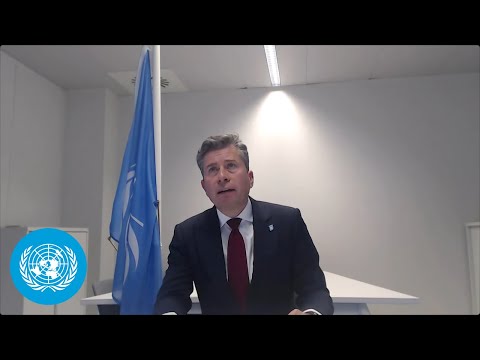
The official, identified in the meeting only as Fletcher, said overnight strikes resumed “across the entire Gaza Strip” and that there were “unconfirmed reports of hundreds of people killed.” He said Israeli authorities had “cut off the entry of all life saving supplies” and that food and medicines waiting at crossings were now rotting and expiring.
Fletcher told the council that aid deliveries made during the 42-day ceasefire showed what was possible when humanitarian operations were allowed to function: more than 4,000 trucks per week entered Gaza, polio vaccination targets were exceeded and thousands of shelter and maternal-health kits were distributed. “It proves what’s possible when we’re allowed to do our job,” he said.
Why this matters: Fletcher said that the suspension of commercial imports and humanitarian commodities is reversing progress made during the ceasefire and creating acute shortages of essentials for civilians and hospitals. He warned that the World Health Organization characterizes public-health risks as “very high,” citing overcrowding, poor sanitation and rising communicable-disease threats.
Key details Fletcher gave to the council include: - More than 2,100,000 people in Gaza have been cut off from food, medicine, fuel and cooking gas, he said. - Israel’s cutoff of power to a southern desalination plant limits access to clean water for an estimated 600,000 people. - Vegetable prices in northern Gaza had roughly tripled and six bakeries subsidized by the World Food Program had closed for lack of cooking gas. - About 631 temporary learning spaces were operating across Gaza, serving roughly 72,000 students, but Fletcher said those services could not be sustained without open crossings. - During the ceasefire period he summarized: 30 hostages and eight deceased hostages and 583 Palestinian detainees were released; more than 4,000 aid trucks per week entered Gaza; 13,000 tents and thousands of maternal/postpartum kits were distributed; polio vaccinations reached over 600,000 children.
Fletcher also flagged measures and legal changes he said were constraining humanitarian operations. He said Knesset legislation that took effect on Jan. 30, 2025, had prevented UNRWA international staff from rotating in and out of Gaza, and that new Israeli registration rules announced on March 9, if enforced, would impose strict conditions on international NGOs delivering aid. He warned that a proposed Knesset bill to tax donations to Israeli NGOs could “further erode the number of partners” able to implement protection interventions.
On the West Bank, Fletcher described “an urgent crisis” of protection and displacement, saying that since the start of the year 95 Palestinians — including 17 children — had been killed and 869 injured, and that operations deploying tanks had displaced about 40,000 people. He reported widespread infrastructure damage, new movement obstacles and restrictions that impede access to work, health care and holy sites.
Fletcher concluded with three explicit calls to the council and member states: allow humanitarian and commercial goods into Gaza without obstruction; renew the ceasefire; and fund the humanitarian response. “Blocking food, water, medicine for people who need them is unconscionable,” he said. He also reported that the U.N. appeal had received only about 4% of the funding needed to sustain the response for the quarter.
The remarks combined on-the-ground descriptions, operational figures and policy concerns about legal and administrative restrictions on aid agencies. Fletcher emphasized that limited rotations, reduced cash allowances for humanitarian personnel and potential new taxation on donors threaten the capacity of NGOs and U.N. partners to operate in the occupied Palestinian territory.
No formal Security Council action or vote on these recommendations was recorded in the transcript of Fletcher’s remarks. The speaker repeatedly distinguished between what humanitarian actors had accomplished under the ceasefire and the conditions that now prevent them from doing so, and he urged immediate steps to restore access and funding.
Fletcher closed by recalling a message he said he had seen written on a hospital whiteboard in Gaza: “Whoever stays until the end will tell the story. We did what we could. Remember us.”